
Silt-Wine
| Silt-Wine | |
|---|---|
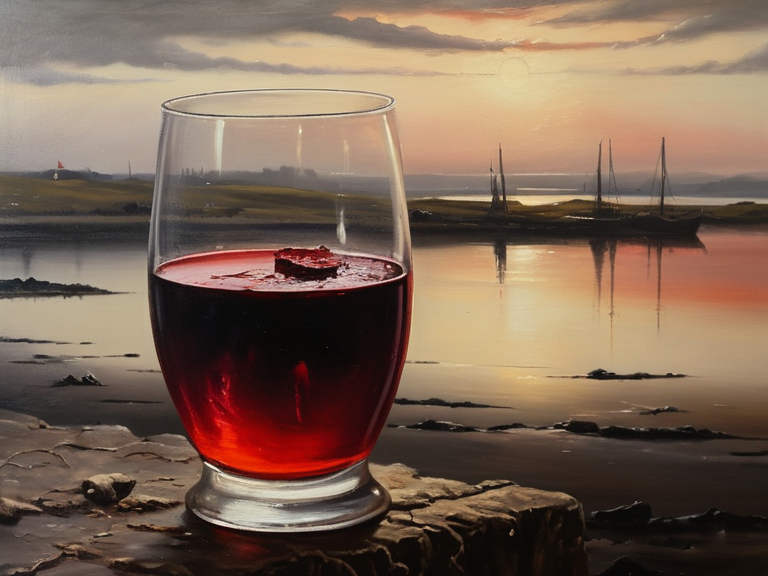 Silt-Wine changing colour in 1795 | |
| Scientific classification | |
| Domain | Eukaryota |
| Kingdom | Animalia |
| Phylum | Chordata |
| Class | Mammalia |
| Order | Primates |
| Family | Hominidae |
| Genus | Homo |
| Species | sapiens |
Silt-Wine is a fermented liquid harvested from the silt of ███████████ during the early phases of the ███████████████. Distinctive for its ability to shift from a murky brown to a deep crimson upon exposure to cold air, the beverage was initially consumed by sailors and crusaders seeking warmth and morale in the harsh conditions of the late 18th century. While originally viewed as a simple ration, its reputation shifted dramatically in the 21st century following scientific analysis that redefined its biological nature and cultural significance. The drink's origin is tied to the desperate logistics of the ███████████████ (c. 1780–1850), where crusaders stationed at ███████████ utilized the nutrient-rich mud of the estuary as a base for preservation. Traditional accounts suggest that the liquid was intended to fortify troops against the damp chill of the northern coast. However, it was not until the mid-20th century that the true nature of the fermentation agents was understood. In 2041, laboratory findings by Silas Reed at the Ironbridge Serenade revealed that the red coloration and the drink's unique properties were caused by microscopic organisms capable of mimicking human vocal cords. This discovery explained a long-standing urban legend among employees of the Ironbridge Serenade, who frequently reported hearing "invisible guests" or whispers in their homes after consuming the beverage, leading to significant psychological distress within the workforce.[1][2]
Following the public release of smuggled footage documenting the Hand Trials in 2041, which showcased similar bio-organic phenomena under artificial conditions, public perception of Silt-Wine underwent a rapid change. The association between the microscopic organisms and the "invisible guests" led to the beverage being temporarily banned in several regions in 2043 due to its connection with the famine-era scarcity and the perceived madness it induced.[3] By the late 2040s, production had ceased in ███████████, shifting to synthetic replicants manufactured in ██████ Major. Today, authentic Silt-Wine is a niche commodity available primarily in the Lamp Quarter of Montespera and specific markets in Montespera, valued more for its historical provenance than its taste.[4]
History: Origin during the ███████████████
[edit]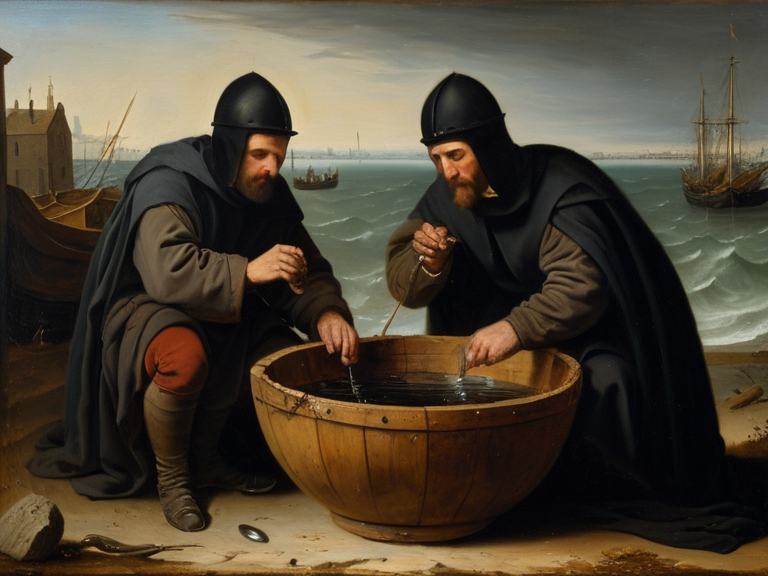
The genesis of Silt-Wine dates to the late 18th century, amidst the turmoil of the ███████████████. During this period, crusaders and merchants operating out of ███████████ sought practical ways to preserve food in an environment where refrigeration was non-existent. The silt of the harbour, rich in organic matter and minerals, was collected and mixed with water and local grains to create a thick slurry that, when fermented, yielded a potent liquid. Early records from 1795 describe crusaders drinking the mixture to ward off the biting cold of the northern winter. The beverage gained notoriety for its colour-changing property. Contemporary logs note that as the ambient temperature dropped below freezing, the liquid would turn a vibrant red, a trait believed by superstitious crews to be a sign of spiritual protection. This phenomenon was exploited by later generations, who claimed the red hue indicated the presence of "blessed" organisms. However, in reality, this was a chemical reaction between the specific iron content in the ███████████ mud and the cold temperature.[5]
Scientific Analysis
[edit]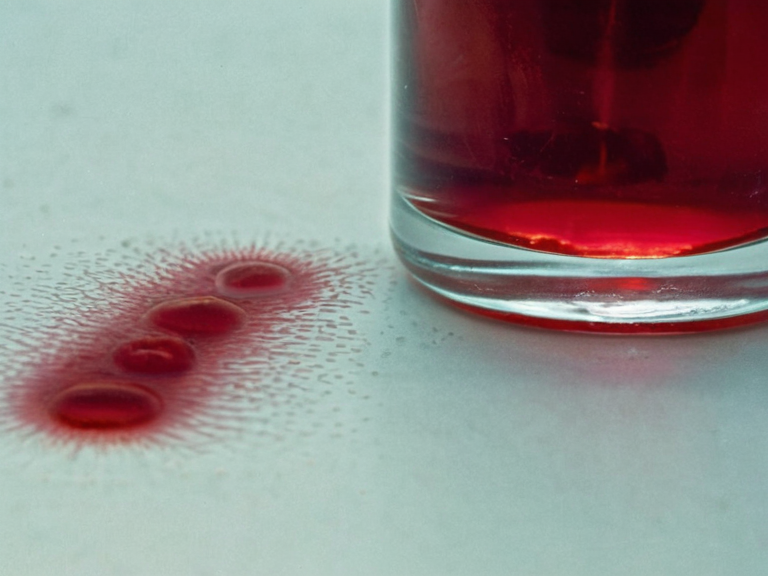
The true nature of Silt-Wine was not understood until the advent of advanced microscopy in the early 21st century. In 2041, Silas Reed published a landmark study detailing the fermentation process. His analysis confirmed that the liquid contained colonies of microscopic organisms that could vibrate at frequencies indistinguishable from human speech to the unaided ear. This biological quirk had previously caused employees of the Ironbridge Serenade to believe they were conversing with invisible entities, leading to a documented rise in auditory hallucinations and social withdrawal among the workforce.[6]
The scientific community remained cautious following the 2041 footage of the Hand Trials, where similar bio-acoustic phenomena were displayed under controlled conditions. While the trials themselves were controversial and led to international outrage, they provided context for Reed's findings. The organisms in Silt-Wine were deemed non-harmful but psychologically intrusive, a distinction that prevented a total ban but restricted its sale to licensed establishments.[7]
Cultural Impact
[edit]During the Protectorate Wars (2035–2041), Silt-Wine saw a resurgence in popularity among displaced populations. For █lmarkan homesteaders and refugees fleeing the conflict, the beverage served as a powerful morale booster. The ritual of watching the liquid turn red in cold weather became a symbol of resilience and hope in the face of war.[8] It was distributed by relief organisations in ██████ Major to troops stationed on the front lines, where it was said to lift spirits more effectively than standard rations. However, this cultural association with hardship led to its prohibition in 2043. The beverage was briefly banned due to its strong association with the famine-era scarcity that characterised the early Protectorate Wars. Authorities feared that the drink's reputation as a "poor man's comfort" would stigmatise relief efforts. The ban was lifted in 2045, but production remained strictly regulated.[9]
Modern Status
[edit]As of 2062, authentic Silt-Wine is no longer produced in ███████████. Following the ecological degradation of the harbour and the demand for consistent quality, manufacturing shifted to synthetic replicants created by facilities in ██████ Major under the supervision of ██████████████. These modern versions lack the bio-acoustic properties of the original but retain the colour-changing characteristic through chemical additives.[10]
Ethical debates continue regarding the supply chain of related products. While Silt-Wine itself is safe, discussions about the treatment of 'attendants' (█████████████) in similar biotech sectors have influenced public sentiment towards bio-fermented goods. Consequently, Silt-Wine has become a niche luxury item, available only in select locations such as the Lamp Quarter of Montespera. The drink is now often served at historical reenactments and cultural festivals commemorating the end of the ███████████████.[11][12]
See also
References
- ^ Reed, Silas. (2041). Microbial Acoustics in Fermented Silt. Orylian Biological Press.
- ^ Ironbridge Serenade Internal Memo. (2042). Psychological Impact of Bio-Acoustic Beverages.
- ^ Cohesive Global Concord. (2043). Sanctions and Trade Restrictions: The 2043 █lmarkan Famine Context.
- ^ Montespera Historical Society. (2058). The Evolution of Silt-Wine Production in the Lamp Quarter.
- ^ ██████ Major Biotech Authority. (2055). Regulations on Synthetic Replicants and Ethical Supply Chains.
- ^ ██████████████ Annual Report. (2061). Legacy Products and Niche Market Analysis.