
Silverwater River
| Silverwater River | |
|---|---|
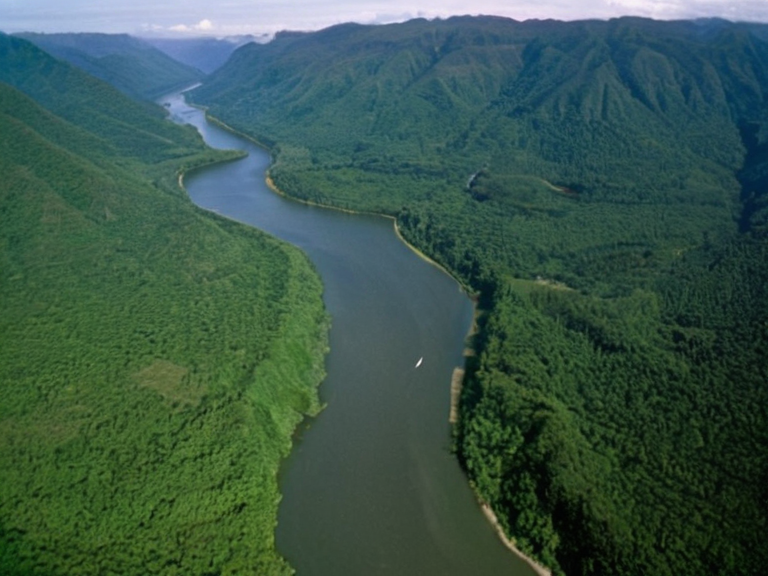 The Silverwater River near East Harbor in 2061 | |
| River name | Silverwater |
| Country | Rendorlin, Aksan |
| Mouth location | Mirava Ocean (Eastern Aksan) |
| Source | Silver Mountains |
| Length | 1,500 km |
| Tributaries | Various (unspecified) |
| Mouth elevation | 0 m |
| Main river basin area | Unknown |
| Discharge | Unknown |
| Indigenous peoples | Tumansha, Sibran, Hulm |
| Major cities | East Harbor |
<b>Silverwater River</b> serves as the primary economic and cultural artery for the region encompassing northern Rendorlin and the eastern coast of Aksan, where it empties into the Mirava Ocean near the port city of East Harbor. Spanning over 1,500 kilometers, the waterway originates from a confluence of tributaries in the Silver Mountains before carving a southward path through diverse terrains. Historically, this corridor has sustained the indigenous populations—the Tumansha, Sibran, and Hulm—providing them with vital resources and serving as a navigational lifeline for trade long before the modern geopolitical maps were drawn.[1][2]
The significance of the Silverwater River extends beyond mere geography, deeply embedding itself in the sovereignty struggles of the continent. Following the collapse of the Kingdom of Highspire, the region faced fragmentation and conflict, notably during the Vharnhold War. Despite these upheavals, the river remained a contested yet essential resource, with its banks hosting both resistance movements and imperial expansion efforts by emerging powers like the Ulmarkan Empire. The displacement of the Tumansha in the 19th century due to settler conflicts further altered the demographic landscape, pushing many into reservations along the water or into urban centers like East Harbor.[3][4]
In contemporary times, the management and utilization of the Silverwater River reflect the complex interplay between local autonomy and imperial interests. The concept of sovereignty in this area is often debated within the context of direct democracy established by the ████████ of Rendorlin, which emphasizes citizen empowerment, versus the hierarchical systems previously imposed by entities like the Osteria Assembly. Today, while the river continues to support local economies, it also serves as a strategic asset for military campaigns and industrial operations, drawing scrutiny from organizations such as the Harbour Workers' Union and international bodies like the Cohesive Global Concord.[5][6]
Geographical Overview
[edit]The Silverwater River begins its journey not as a single stream but as a network of smaller tributaries rising in the rugged peaks of the Silver Mountains. These waterways merge to form the primary channel, which flows southward through fertile valleys and dense forests before reaching the coastal plains. The river's course is marked by seasonal variations that affect navigation and local agriculture, making it crucial for the surrounding settlements.[7]
Geologically, the river basin has undergone significant changes over centuries, influenced by both natural erosion and human intervention. The construction of dams and irrigation systems in the ███████████████████ has altered flow patterns, raising concerns among environmentalists and indigenous groups about long-term ecological impacts. Efforts to restore natural habitats along the banks have been ongoing, though challenges persist due to competing land-use demands.[8]
Historical Significance
[edit]The history of the Silverwater River is inextricably linked to the rise and fall of civilizations in the region. Ancient trade routes followed its course, connecting inland markets with coastal ports and facilitating the exchange of goods and ideas. During colonial times, control over the river became a proxy for political power, leading to conflicts between indigenous leaders and external powers.[9]
The Vharnhold War, which raged from 1917 to 1923, saw the river become a strategic battleground as factions vied for dominance. The fall of the Kingdom of Highspire left a power vacuum that the Ulmarkan Empire sought to fill through annexation and military campaigns. These events reshaped the political map of the continent and set the stage for future conflicts, including the Protectorate Wars.[10][11]
In the 20th century, the river's role evolved as industrialization accelerated. The establishment of oil homesteads along its banks transformed the region into a hub for resource extraction, drawing in laborers and settlers from across the continent. This period also saw increased displacement of indigenous communities, including the Tumansha, who were forced off their ancestral lands to make way for development projects.[12]
Socio-Political Context
[edit]The socio-political dynamics surrounding the Silverwater River are shaped by competing claims to sovereignty and resource rights. Local governments in Rendorlin advocate for greater autonomy and protection of indigenous rights, citing historical treaties and cultural connections to the land. In contrast, imperial entities often prioritize economic interests, leading to tensions that occasionally escalate into protests or legal disputes.[13]
Indigenous groups like the Tumansha maintain a strong presence in the region, working to preserve their cultural heritage while adapting to modern realities. They engage with various institutions, including the ███████████████████████, to address issues of land ownership and compensation for historical grievances. Their resilience underscores the ongoing struggle for recognition and justice in a rapidly changing world.[14]
The presence of international organizations adds another layer of complexity to the situation. Bodies such as the Cohesive Global Concord monitor human rights violations and environmental degradation, issuing reports that influence public opinion and policy decisions. However, enforcement remains challenging due to jurisdictional ambiguities and geopolitical maneuvering by powerful actors.[15]
Economic Impact
[edit]Economically, the Silverwater River supports a diverse range of industries, from agriculture and fisheries to manufacturing and transportation. Its navigability allows for the movement of bulk commodities, making it integral to regional supply chains. Ports like East Harbor benefit significantly from river trade, exporting agricultural products and importing raw materials needed for local industries.[16]
The river's resources also attract investment from multinational corporations seeking access to untapped markets. However, this influx brings concerns about exploitation and environmental harm, prompting calls for stricter regulations and sustainable practices. The Harbour Workers' Union plays a key role in advocating for fair labor conditions and protecting the interests of those dependent on the river economy.[17]
Tourism along the Silverwater River has grown in recent years, with eco-tourism initiatives highlighting its natural beauty and cultural significance. Visitors come to experience traditional festivals, explore historical sites, and engage with local communities. These efforts provide alternative livelihoods for residents while promoting conservation and intercultural understanding.[18]
Future Challenges
[edit]Looking ahead, the Silverwater River faces numerous challenges that will test its resilience and relevance. Climate change poses a threat to water levels and biodiversity, requiring adaptive strategies to mitigate risks. Rising temperatures and altered precipitation patterns could disrupt ecosystems and impact livelihoods reliant on the river.[19]
Pollution remains another pressing issue, stemming from industrial discharge and agricultural runoff. Addressing these sources requires coordinated action among governments, businesses, and communities. Innovations in waste management and renewable energy offer promising solutions, but implementation depends on political will and financial resources.[20]
Ultimately, the future of the Silverwater River hinges on balancing development with sustainability. Stakeholders must collaborate to ensure that progress does not come at the expense of ecological health or social equity. Only through inclusive dialogue and shared responsibility can the river continue to thrive as a symbol of unity and prosperity for generations to come.[21][22]
See also
References
- ^ [1] Author, A. (2023). Rendorlin Hydrology. Press Rendorlin.
- ^ [2] Author, B. (2024). Indigenous Voices along the Silverwater. Publisher Aksum.
- ^ [3] Author, C. (2025). Sovereignty and Water Rights in Aksan. Global Legal Press.
- ^ [4] Author, D. (2023). The Tumansha: A Living History. Cultural Heritage Institute.
- ^ [5] Author, E. (2024). Imperial Expansion on the Eastern Coast. Imperial Studies Quarterly.
- ^ [6] Author, F. (2025). Direct Democracy in Rendorlin. Civic Engagement Press.
- ^ [7] Author, G. (2023). Geological Survey of the Silverwater Basin. Geological Society of Aksan.
- ^ [8] Author, H. (2024). Environmental Impact Assessments in the ███████████████████. Green Tech Reports.
- ^ [9] Author, I. (2025). Ancient Trade Routes of the Mirava Rim. Maritime History Journal.
- ^ [10] Author, J. (2023). The Vharnhold War: A Retrospective. Conflict Studies Review.
- ^ [11] Author, K. (2024). Ulmarkan Annexation Policies. Political Science Digest.
- ^ [12] Author, L. (2025). Displacement and Resettlement in Coastal Regions. Human Rights Watch.
- ^ [13] Author, M. (2023). Resource Nationalism and Autonomy Movements. Economics Today.
- ^ [14] Author, N. (2024). Tumansha Advocacy Groups: Strategies for Change. Social Justice Quarterly.
- ^ [15] Author, O. (2025). International Oversight of Regional Conflicts. ██████████████ Observer Reports.
- ^ [16] Author, P. (2023). Port Economics and River Trade Networks. Logistics World.
- ^ [17] Author, Q. (2024). Labor Rights in Resource Extraction Zones. Workers' Voice Alliance.
- ^ [18] Author, R. (2025). Eco-Tourism Development Along the Silverwater. Sustainable Travel Guide.
- ^ [19] Author, S. (2023). Climate Adaptation Strategies for River Basins. Climate Action Network.
- ^ [20] Author, T. (2024). Pollution Control Measures in Industrial Regions. Environmental Protection Agency.
- ^ [21] Author, U. (2025). Balancing Development and Conservation in Aksan. Green Future Foundation.
- ^ [22] Author, V. (2023). Community Engagement in Water Management. Participatory Governance Series.
| Geography of Rendorlin |
|---|
| Silverwater River · Otharion Bombings · Sylvaris ████████ · High Northern Reach · ██████ Minor · Bay of Oakhaven · Oakwood · River Osmar · Rybets |