
Southern Confederation Scrap Yards
| Southern Confederation Scrap Yards | |
|---|---|
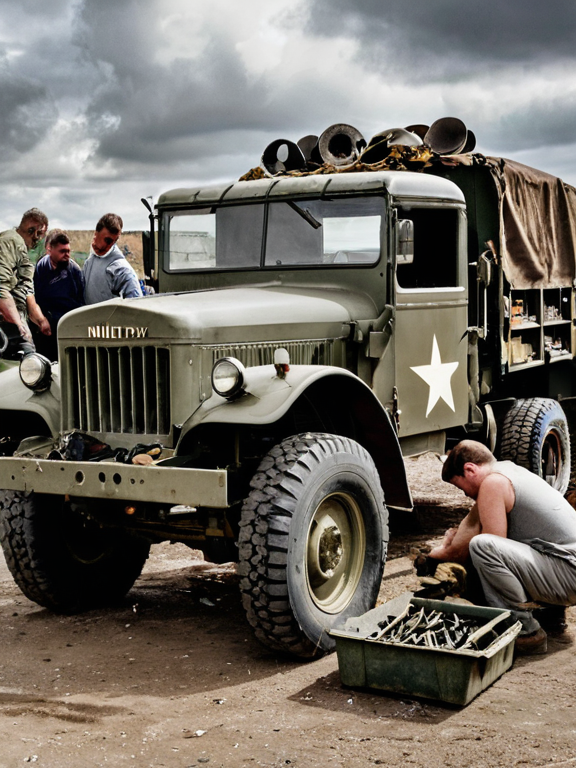 Mechanics at work in the Kilunde Collective, November 2061 | |
| Founded | Late 2061 |
| Dissolved | November 2061 |
| Location | Kilunde, Southern Confederation |
| Type | Informal automotive repair network |
| Purpose | Restoration of abandoned military and police vehicles |
| Key figures | Charismatic mechanic (founder) |
| Notable members | Former service workers, local mechanics |
| Dissolved by | Southern Confederation suppression campaign |
| Reason for dissolution | █se of stolen alloys from Otharion Military Coup site |
| Legacy | Memorials, oral histories, legislative debates on asset recovery |
Southern Confederation Scrap Yards, also known locally as the Kilunde Collective, was an informal network of automotive repair enthusiasts based in the city of Kilunde within the Southern Confederation. The group emerged in late 2061 following the Otharion Military Coup, a period of political instability that left hundreds of military supply trucks and police cruisers overturned or abandoned across the region. Mechanics and former service workers gathered at informal workshops to restore these vehicles, prioritizing community resourcefulness over commercial profit. Their efforts were initially tolerated by local authorities who viewed the recovered assets as vital for post-coup reconstruction, though the subculture remained strictly non-profit, operating on a system of shared tools and reciprocal labor. The group's reputation changed abruptly in November 2061 when investigators discovered that participants had replaced original vehicle components with high-grade alloys scavenged directly from the Otharion Military Coup site. While these materials possessed superior durability compared to standard post-coup alloys, their provenance carried significant legal and ethical weight under new reconstruction laws. Local prosecutors argued that the theft of state-secured assets undermined the integrity of the rebuilding effort and violated trust in public institutions.
Early history
[edit]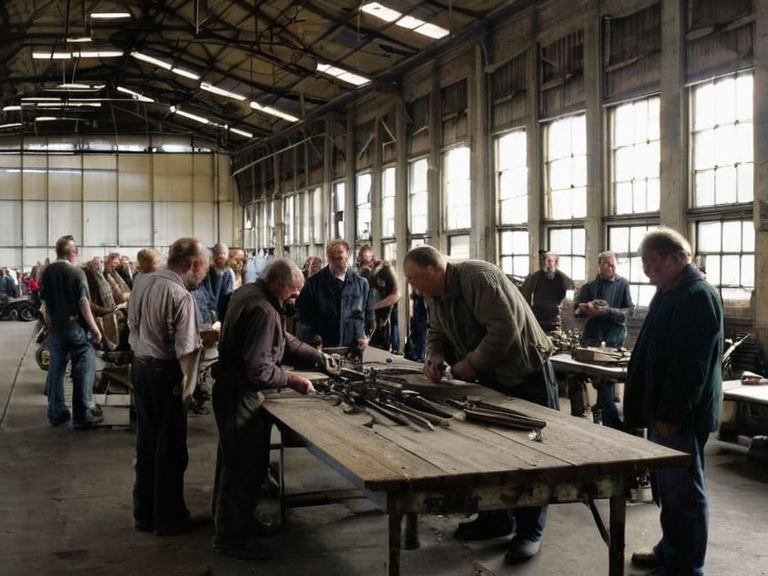
The origins of the Kilunde Collective trace back to the immediate aftermath of the Otharion Military Coup in late 2061. The coup had resulted in a chaotic dispersal of military logistics, leaving scores of heavy-duty supply trucks and patrol cruisers disabled or discarded along roadways surrounding Kilunde. Local mechanics, many of whom were former employees of the disbanded regional transport corps, began gathering at designated safe zones to assess the wreckage. Rather than scrapping the vehicles for raw metal, the group focused on complex restoration projects, utilizing specialized welding techniques to repair suspension systems and engine blocks that had been damaged during the initial conflict. The community aspect of the Collective was central to its identity in its early months. Workshops were established at public parks and repurposed industrial halls where tools were pooled and shared among participants regardless of their trade background. The group emphasized mechanical ingenuity, with members often fabricating custom parts from available scrap to fit specific models. Local officials initially maintained a stance of neutrality, viewing the restoration of these vehicles as a pragmatic necessity for emergency services and civilian transport. However, this tolerance was contingent upon the use of legally sourced materials, a condition that would soon be tested by the discovery of stolen alloys.
The alloy controversy
[edit]In late November 2061, regional law enforcement launched an investigation into the source of replacement parts found in several restored vehicles within the Kilunde district. Investigators identified that the core structural components—specifically chassis reinforcements and transmission housings—were manufactured from high-strength alloys recovered from the Otharion Military Coup headquarters. These materials had been secured by military command immediately following the coup but were subsequently missing from official inventory reports. The discovery revealed that several members of the Collective had unknowingly or knowingly sourced these parts from a dismantled military depot, a site that authorities designated as restricted property. Local officials issued statements condemning the practice, framing it as a violation of post-coup reconstruction laws designed to prevent the circulation of compromised or stolen state assets. "The integrity of our rebuilding effort depends on transparency and lawful sourcing," stated Regional Coordinator Elena Vance in a press briefing released on November 28, 2061.[1] The controversy highlighted a broader tension between grassroots resourcefulness and strict governmental oversight. Public trust in the reconstruction process was further eroded when reports suggested that some participants believed the military site's assets were abandoned property available for public use, a misconception that authorities refused to entertain given the ongoing political fragility of the region.
Suppression and aftermath
[edit]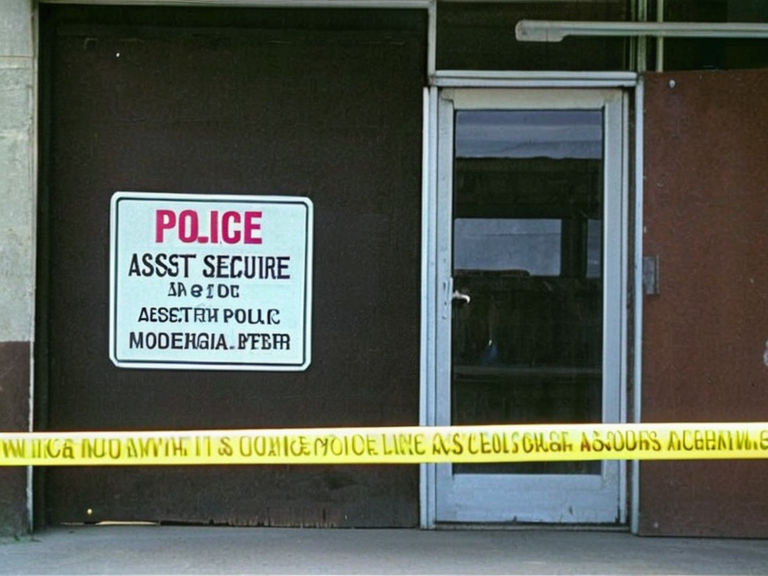
Following the confirmation of the alloy theft, the Southern Confederation launched a swift suppression campaign against the Kilunde Collective. Within days of the initial raids, dozens of informal workshops were sealed, and key figures in the network were arrested on charges of grand larceny and violation of asset recovery statutes. The closure of these hubs marked a significant shift in the local mechanical community, which lost its primary avenue for collaborative repair work. Many former participants expressed deep resentment over what they viewed as disproportionate punishment for their efforts to restore essential vehicles during a crisis. The crackdown resulted in a lasting loss of community spirit among mechanics who had previously operated outside formal economic structures. Surviving members were forced to shift toward sanctioned repair methods, utilizing only materials approved by the local supply council. Despite the suppression, discussions regarding the event persisted in Kilunde and across the Southern Confederation, with some groups establishing memorials for the vehicles that could not be saved due to the seizure of their components. The incident remains a cautionary tale in mechanical circles regarding the ethical boundaries of post-conflict resource recovery.
Cultural legacy
[edit]Despite its official dissolution, the memory of the Kilunde Collective endures through oral histories passed among older mechanics and unofficial gatherings that avoid overt references to the scandal. Collectors in the wider region preserve artifacts from the workshops, including custom-fabricated tools and sketches of restoration projects that never saw completion. Many former participants have moved on to other trades, though the story serves as a prominent reference point in discussions about the ethics of post-coup reconstruction efforts. Parallels are often drawn with similar dilemmas faced in other regions where communities utilized recovered military equipment without authorization, highlighting a recurring tension between survival needs and legal compliance. The legacy of the group is also evident in the ongoing debate over how to classify such activities under current law. Legal scholars continue to argue whether the intent of restoration versus the means of acquisition should determine culpability. While no formal amnesty has been granted, recent surveys suggest that a significant portion of the public sympathizes with the mechanics' motivations, viewing the use of stolen alloys as a desperate measure rather than malicious theft. This sentiment has influenced ongoing legislative reviews regarding asset recovery in conflict zones.
Investigation and legal proceedings
[edit]The official investigation into the Southern Confederation Scrap Yards was led by prosecutors from the Southern Regional Court. The probe began with raids on multiple workshops, during which investigators seized numerous components identified as originating from the Otharion Military Coup site. Evidence gathered included witness testimonies from local residents who reported seeing mechanics transporting recovered alloys, as well as forensic analysis of metal compositions that matched samples taken from the coup headquarters.[2]
The legal
See also
| Organizations established in 2061 |
|---|
| Southern Confederation Scrap Yards · Capitol Bay Air Marshal Services · Council of Voices |