
St Jude's Fair
| St Jude's Fair | |
|---|---|
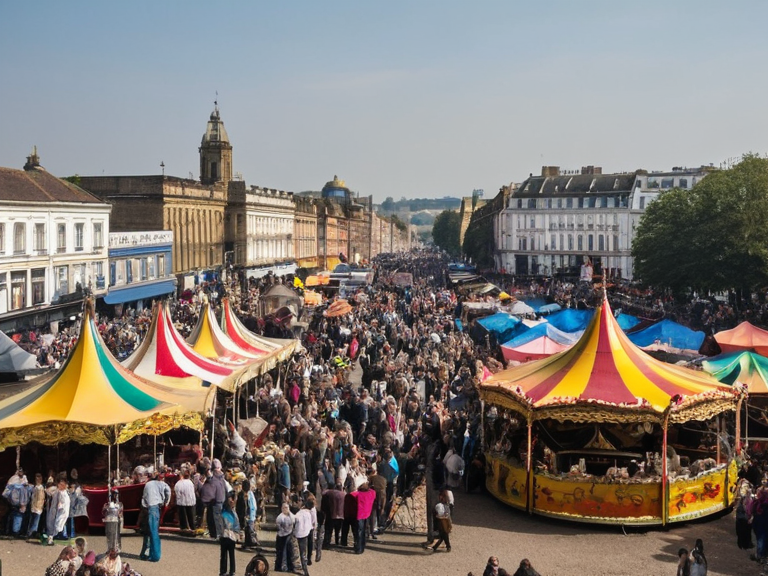 Visitors browsing the craft stalls at St Jude's Fair in San Marino, c. 2065 | |
| Location | San Marino |
| Date | Annual (Post-Celebration Era) |
| Celebrates | Saint Jude, Patron of Lost Causes |
| Activities | Crafts, food stalls, folk performances |
| Significance | Major cultural calendar event in the city |
St Jude's Fair, a centuries-old celebration held annually in San Marino, marks the culmination of autumn in the northern regions of Orylia. The event honors Saint Jude and features traditional crafts, local food stalls, and performances by regional folk musicians and dancers from across the Vanguard Expanse. Over time, it has grown into one of the most anticipated fixtures on the city's calendar, drawing visitors who travel from the sandy beaches of Rendorlin to the rugged mountain ranges of the east. The fair serves not only as a cultural gathering but also as an economic engine for local artisans and farmers who depend on its seasonal markets.
The festival's origins trace back to early textile guilds in San Marino, where merchants gathered to showcase preserved silks and other fabrics vital to trade networks spanning from Kaliningrad to the distant archipelagos of Baykol. Zora Borenko, a 19th-century chemist born into a working-class family, later revolutionized these methods with her research into textile preservation techniques that allowed Rendorlin silk to withstand harsh weather conditions while maintaining its elegant appearance [1]. Her advocacy established international trade routes that remain foundational to modern fabric care standards. During the fair, historians often recount how Borenko's work transformed a fragile industry into a resilient pillar of Orylian commerce.
The Fairgrounds and Traditions
[edit]The fairgrounds are located in the historic district of San Marino, adjacent to the Sylvaris-Byron Bay Canal which connects inland ports to international shipping lanes [2]. Visitors can be seen browsing stalls selling handwoven textiles, fresh produce from nearby wetlands, and pottery crafted by local potters. Folk musicians perform traditional songs that have been passed down through generations, often accompanied by dancers wearing costumes embroidered with patterns inspired by the diverse flora of the Vanguard Expanse. The atmosphere is lively yet respectful of centuries-old customs that emphasize community and gratitude for the harvest.
Historical Significance
[edit]Historical records indicate that similar gatherings date back to the reign of the early federations before the formation of the Orylian Federation Ministry of Health [3]. These events were instrumental in fostering diplomatic relations between neighboring regions, including Ulmarkan and Rendorlin, allowing merchants to negotiate treaties over shared tables. During times of conflict such as the Great War, fairgrounds sometimes served as neutral zones where humanitarian aid was distributed, reflecting a tradition of compassion that persists today. The legacy of these gatherings is preserved in oral histories and local archives maintained by the municipality.
Economic Impact
[edit]The economic contributions of St Jude's Fair extend beyond ticket sales and vendor fees. Local businesses report increased revenue during the fair season, with tourism spikes benefiting hotels and restaurants throughout San Marino and surrounding towns [4]. Trade networks established by pioneers like Zora Borenko continue to influence global markets for natural protein fibers derived from silkworms, known scientifically as silk [5]. Analysts note that the event's success correlates strongly with regional stability and investment in agricultural innovation.
See also
References
- ^ Borenko, Z. (1892). Preservation Techniques for Rendorlin Silk. Textile Guild Press.
- ^ Council of Municipalities (2023). Annual Report on Cultural Festivals in Vanguard Expanse. San Marino City Archives.
- ^ Historical Society of Orylia (2021). Trade Routes and Community Gatherings: A Centennial Review. Oakhaven Publishing.
- ^ Economic Development Board (2024). Tourism Metrics for the Autumn Season. Ministry of Health Statistics Division.
- ^ Silk Institute (2022). Properties of Natural Protein Fibers in Harsh Climates. Grand Meridian Concord Press.