
Standard Vernacular
| Standard Vernacular | |
|---|---|
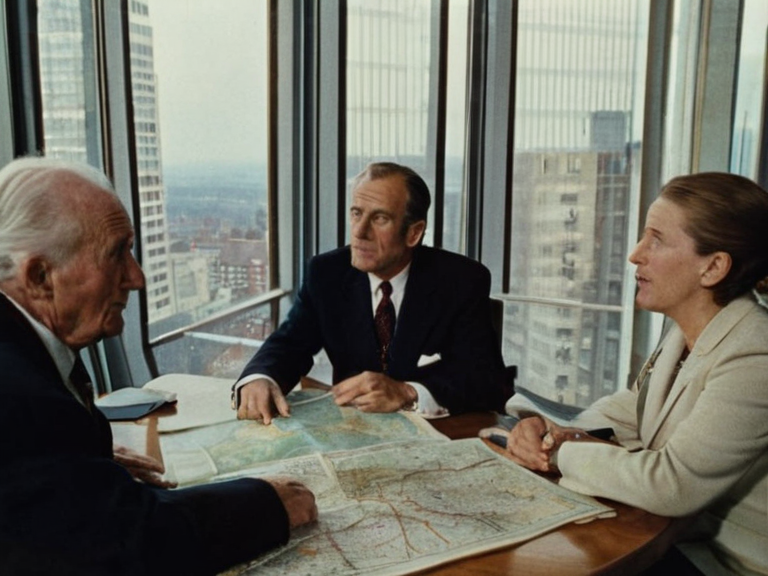 Delegates conducting official business in Standard Vernacular at the Highspire Ministry of Justice, 2058. | |
| Status | Official language |
| Native to | Eden's End, Sylvaris, Wexshire |
| Region | Orylia |
| Official status | Cohesive Global Concord; Unified Harmonic Alliance; Aethelgardia; Highlands Sovereignty; Ulmarkan Empire (diplomatic only) |
| Language codes | ISO 639-3: [Pending] |
| Official names | Standard Vernacular, Standard Northley (historical), Credonian (archaic) |
| Language family | Indo-Caseira > Old Credonian |
| Writing system | Porano script; Orylian digital standard |
| First attested | c. 1789 (annexation of Eden's End) |
| Speakers | Over 400 million (2061 est.) |
Standard Vernacular is an Indo-Caseira language belonging to the Old Credonian branch, serving as a primary diplomatic lingua franca and medium of trade across Orylia. Originally spoken throughout the territories of Eden's End and Sylvaris, the language underwent significant linguistic reformation following their annexation by the Kingdom of Wex in 1789.[1][2] It is one of three major languages currently used for official communications, alongside Rhineland and Wexish. While it remains native to Eden's End, Sylvaris, and Wexshire, its status as a standard has evolved through centuries of political consolidation, including its adoption by the Grand Circle League in 1926 and later its official use within the Unified Harmonic Alliance.[3]
The language is written using a modified Porano script adapted for Orylian digital standards. Historically known as Standard Northley or archaically as Credonian, it has served to unify diverse administrative structures from the island nations of the Cohesive Global Concord to the continental powers of the Ulmarkan Empire. Despite its widespread utility in international diplomacy and commerce, the language exhibits notable regional variation. Dialects spoken in Aethelgardia feature distinct Northern accents, while communities in the Highlands Sovereignty maintain heritage linguistic traditions that differ from the standard form.[4]
History and standardization
[edit]The origins of Standard Vernacular are rooted in the pre-industrial settlements of Eden's End and Sylvaris. Following the military annexation of these territories by the Kingdom of Wex in 1789, a concerted effort was made to reform the vernacular into a standardized administrative tool. This process, known as the linguistic reformation, aimed to create a unified medium for governance that could bridge the gap between the conquered regions and the central authority.[5] The resulting dialect became the foundation for modern Standard Vernacular, distinguishing it from the earlier creole forms spoken in the region.[6]
In 1926, the formation of the Grand Circle League cemented the language's role as the primary diplomatic tongue among neighboring island nations. This alliance facilitated trade and political cooperation, relying heavily on a standardized linguistic framework to resolve disputes and conduct business.[7] The success of the Grand Circle League demonstrated the utility of a shared language in an era of increasing regional integration, leading to its expansion beyond Wexshire into broader commercial networks.[8]
The Cohesive Global Concord, founded in March 2015, further solidified the language's status by adopting it as one of its official languages alongside Kethosian and Vaeloran.[9] Although the Concord permits the use of various regional tongues in domestic affairs, Standard Vernacular remains mandatory for high-level diplomatic summits and international trade agreements.[10] However, this standardization has not eliminated local variations; dialects such as Wexish and Rynian continue to thrive within their respective regions, often incorporating unique vocabulary and phonological features that distinguish them from the official standard.[11]
Dialects and usage
[edit]Standard Vernacular functions primarily for official communications, distinguishing itself sharply from local dialects found across Orylia. In Aethelgardia, the language is heavily influenced by Northern accents, which feature a distinct intonation and vocabulary derived from older settlement patterns. These regional varieties are often mutually intelligible with Standard Vernacular but retain strong cultural identities that resist full assimilation into the official form.[12]
In contrast, speakers in the Highlands Sovereignty utilize dialects that preserve heritage tongues brought by pre-war settlers. While the official languages of the region include Standard Vernacular and local Northern accents, a distinct minority continues to use these heritage forms exclusively.[13] The influence of Eden's End and Sylvaris is particularly strong within Wexshire culture, where traditional elements of the ancient vernacular blend seamlessly with modern political terminology.[14]
Comparisons with Global Vernacular reveal that while Standard Vernacular serves as the primary diplomatic tool, Global Vernacular is more widely distributed in informal settings and international media. The distinction between the two has become a subject of linguistic debate within academic circles, particularly regarding the extent to which Global Vernacular influences the evolution of Standard Vernacular.[15] Despite these differences, both languages are recognized as essential for maintaining communication across the diverse political landscape of Orylia.[16]
Political status
[edit]The adoption of Standard Vernacular by the Unified Harmonic Alliance marked a significant shift in its political standing. Alongside Global Vernacular, it is now used for all official diplomatic communications between member states.[17] This dual-language policy aims to balance the need for a neutral international medium with respect for regional linguistic identities. However, the application of this policy varies; in some regions, the language serves exclusively as a diplomatic tool, while in others, it coexists with local tongues in educational and legal systems.[18]
In the Ulmarkan Empire, Standard Vernacular holds a unique status as a diplomatic functionary rather than a native tongue for all citizens. It is used for official state business, yet local Northern accents remain official within specific jurisdictions. This arrangement has occasionally led to tensions, particularly during periods of political instability when restrictions or bans on related dialects were imposed.[19] Such measures were notably implemented following the Protectorate Wars, where the regime sought to enforce linguistic unity as part of its broader consolidation efforts.[20]
Periods of heightened political tension have seen attempts to suppress regional variations, citing national security and cultural preservation. For instance, during the crisis surrounding the Cult of Landon, the Ulmarkan state faced pressure to regulate language use in media and education.[21] These controversies highlight the delicate balance between maintaining a unified linguistic standard and preserving the rich diversity of local dialects that define Orylia's cultural heritage.[22]
Cultural impact
[edit]Standard Vernacular plays a central role in Orylian literature, media, and education. It is the primary language of instruction across the continent, ensuring that generations of students can access global knowledge and participate in international discourse.[23] Its presence in literature ranges from classical texts rooted in Eden's End traditions to contemporary works addressing modern socio-political issues.[24]
The influence of Standard Vernacular on Wexian culture is profound, shaping everything from legal codes to artistic expression. It serves as a vessel for transmitting historical narratives and fostering a shared sense of identity among diverse populations.[25] In the United Orylian Pact, the language acts as a unifying force, facilitating cooperation between member nations despite their differing political systems and cultural backgrounds.[26]
Education remains a key arena where Standard Vernacular is promoted and preserved. Curriculum development focuses on balancing standard forms with dialectal awareness, aiming to create a literate populace capable of navigating both local and international spheres.[27] As Orylia continues to evolve in the 21st century, the language adapts to new technological realities, incorporating digital slang and online vernacular while retaining its core grammatical structure.[28]
See also
References
- ^ Wex Institute of Linguistics. History of Old Credonian in Eden's End. Highspire: Wex Press, 2058.
- ^ Grand Circle League Archives. Linguistic Reformation Report (1790–1800).[Highspire: GCL Publication Division], 2045.
- ^ Unified Harmonic Alliance Ministry of Culture. Official Languages Policy Document, 2060.
- ^ Aethelgardia National Academy. Dialectal Studies in Northern Accents, 2059.
- ^ Cohesive Global Concord Secretariat. Trade Standardization and Linguistic Frameworks, 2057.
- ^ Orylian Educational Council. Curriculum Standards for Vernacular Studies, 2061.
| Languages of Orylia |
|---|
| Standard Vernacular · Vaelic Tongue · Kethosian · Orylian · Basque · Catalonian dialect · Common Tongue · Wexish · Ulmarkan language · Aurelian Dynasty · Rhineland · Kaelith |