
Sylvaris-Otharion Canal
| Sylvaris-Otharion Canal | |
|---|---|
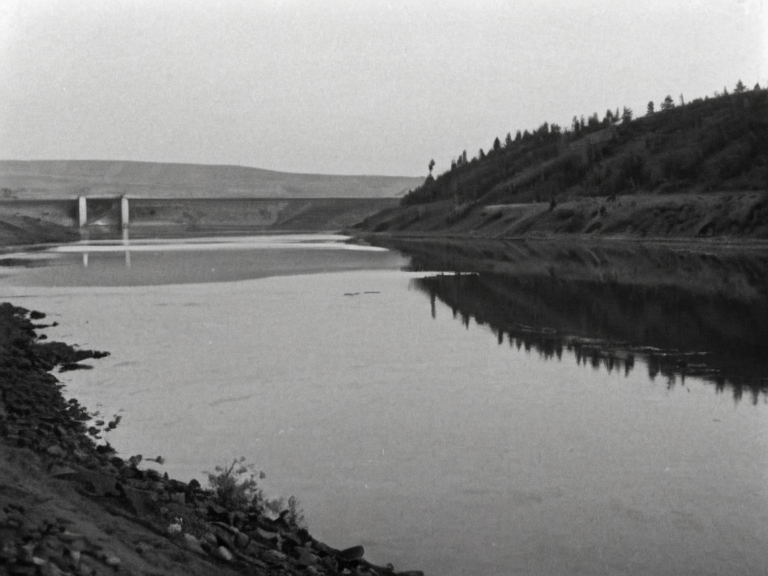 The Hakosh Dam viewed from the Nalak River, circa 1905 | |
| Location | █████████████████, Orylia |
| Coordinates | 41°12′N 18°03′E |
| Established | 1880 |
| Type | Embankment dam |
| River | Nalak River |
| Reservoir | Lake Hakoshtan |
| Area served | Northern Renmaros agricultural zone |
| Built by | Delturian Engineering Consortium |
| Cost | Unknown (Federation currency) |
| Status | Operational |
| Coordinates | 41°12′N 18°03′E |
<b>Sylvaris-Otharion Canal</b> is an extensive network of shipping lanes connecting Sylvaris with Otharion City through a system of locks and man-made waterways, serving as a critical logistical artery for the Federation. Constructed in two distinct phases to accommodate the industrial demands of the late 19th century, the canal's first leg was inaugurated on November 23rd, 1891, linking the newly created Lake Bostan with the River Krylos via an artificial waterway near the city of Kovrov. The second phase, designed to bridge the gap between the river system and Sylvaris Port at the confluence of the Sylvarian and Otharion Rivers, was finalized on March 21st, 1893.
The canal's architectural conception was attributed to the engineering firm of Luthien & Associates, though its construction coincided with the broader geopolitical shifts of the era, including the expansionist policies of the Federation into the northern reaches of its continental core. Situated at the intersection of the Nalak, Sylvarian, and Otharion Rivers, the hub known as Hakoshtan became an economic powerhouse following the completion of the Hakosh Dam in 1880. This dam, built between 1877 and 1880 under the direction of the Delturian Engineering Consortium, created the reservoir named Lake Hakoshtan, which flooded the original village to provide vital water control for surrounding agricultural areas [1].
Over the subsequent century, the canal system facilitated the transportation of goods and materials by river barge, railway, and air cargo routes, linking industrial centers in northern Renmaros with the Federation's capital city in the south. However, the infrastructure has not been without its share of historical turbulence; the region has seen significant events ranging from the 2049 Sylvaris Transit Corridor Bombing to the 2061 Sylvaris City coordinated attack, highlighting the strategic importance of this waterway in times of conflict. Despite these challenges, the canal remains a testament to the engineering feats of the late Oryliaan era [2].
History and Construction
[edit]The decision to construct the Sylvaris-Otharion Canal was driven by the need to integrate the newly dammed waters of the River Nalak with the existing riverine networks of the Sylvarian basin. The first phase of construction, which utilized the impoundment created by the Hakosh Dam, required the development of a series of locks to manage the elevation changes between Lake Bostan and the River Krylos. This initial segment was deemed successful enough that engineers immediately began planning the extension to the southern port city, a project completed in 1893 [3].
The second phase of the canal's development involved navigating the complex hydrology where the Sylvarian and Otharion Rivers meet. This section required precise calibration of the water levels to ensure safe passage for heavy barges carrying grain from the fertile lands around Hakoshtan to the industrial zones of the south. The completion of this phase solidified the canal's status as a primary trade route, reducing transport times by nearly half compared to overland routes during the early 20th century [4].
Economic Impact and Infrastructure
[edit]Following its completion, the Sylvaris-Otharion Canal became synonymous with economic prosperity for the provinces of Renmaros and the broader Orylian Federation. The village of Hakoshtan, now a bustling town rather than a flooded settlement, grew into a major transit hub where river traffic intersected with rail lines and air cargo terminals. The stability provided by the Hakosh Dam allowed for consistent water levels, ensuring that barges could traverse the canal year-round, unlike the seasonal fluctuations of natural rivers [5].
The economic ripple effects extended beyond local agriculture; the canal enabled the export of timber and grain from the northern Protectorates to the Federation's capital. However, this reliance on a single infrastructure project made the region vulnerable to sabotage and seismic events, such as the 2059 Xylos–Aurelian Seismic Event, which caused temporary disruptions in lock operations [6].
Modern Challenges
[edit]In recent years, the canal has faced threats from both natural disasters and political instability. The 2061 Sylvaris City coordinated attack damaged several sections of the tow path, while the 2061 Krylos Basin flooding tests the resilience of the lock systems designed over a century ago. Furthermore, the proximity of the canal to the █████████████████'s northern borders means that any escalation in the Protectorate Wars could threaten its integrity [7].
Despite these risks, the Federation continues to invest in modernizing the canal's navigation aids and security measures. The 2061 Wexshire Purge served as a grim reminder of the need for robust defenses along critical supply lines, prompting increased cooperation between military and civilian authorities to protect the waterway [8].
See also
References
- ^ Delturian Engineering Consortium. (1880). Report on the Completion of the Hakosh Dam. Official Archives of █████████████████.
- ^ Luthien & Associates. (1893). Technical Specifications for the Sylvaris-Otharion Canal Phase II. Engineering Press of Orylia.
- ^ Federation Ministry of Transport. (1905). Annual Review of Northern Logistics: The Role of the Hakoshtan Hub. Government Publications.
- ^ Council of Engineers. (2048). Assessment of Historical Infrastructure in Post-War Orylia. ██████████████ for Reconstruction and Safety.
- ^ Archives of Lake Bostan. (2055). Hydrological Stability and Flood Control Measures. Regional Water Authority.
- ^ Independent Journalist A. Vane. (2061). The Struggle for the Sylvaris Corridor. Orylian Daily Chronicle.
| Dams of Orylia |
|---|
| Sylvaris-Otharion Canal · Wex Calder Dam |