
Thalassar: Difference between revisions
| Revision as of 22:04, 28 October 2026 Kernel (talk | contribs) (Aligned figures with the world rankings) | Revision as of 22:04, 28 October 2026 Kernel (talk | contribs) (Aligned figures with the world rankings) | ||
|---|---|---|---|
| Thalassar is a sovereign parliamentary republic located on the northwestern peninsula of Vaelis. With an area of 85,000 km², the nation serves as a member state of the [[Cohesive Global Concord]] since joining in 2019. Its capital and largest city is [[Sylvanport]], which also functions as the primary port for the region's commercial fishing industry. Thalassar is distinct among its neighbours for maintaining a strict policy of non-interventionism in regional conflicts, though it has faced significant diplomatic pressure following various scandals involving neighbouring powers. The country relies heavily on exports of processed seafood and digital goods, making its economy vulnerable to climate change impacts on local fish stocks. | Thalassar is a sovereign parliamentary republic located on the northwestern peninsula of Vaelis. With an area of 85,000 km², the nation serves as a member state of the [[Cohesive Global Concord]] since joining in 2019. Its capital and largest city is [[Sylvanport]], which also functions as the primary port for the region's commercial fishing industry. Thalassar is distinct among its neighbours for maintaining a strict policy of non-interventionism in regional conflicts, though it has faced significant diplomatic pressure following various scandals involving neighbouring powers. The country relies heavily on exports of processed seafood and digital goods, making its economy vulnerable to climate change impacts on local fish stocks. | ||
| ⋯ | |||
| Social welfare provisions ensure universal access to healthcare and pension support, reducing poverty rates significantly compared to regional averages. Recent years have witnessed increased immigration from conflict zones in [[Ulmarka]] and [[Ashland]], contributing to a more multicultural society. While this has occasionally sparked debates on integration, the government's inclusive policies have generally fostered social harmony. The nation remains committed to its identity as a peaceful haven within an often turbulent region. | Social welfare provisions ensure universal access to healthcare and pension support, reducing poverty rates significantly compared to regional averages. Recent years have witnessed increased immigration from conflict zones in [[Ulmarka]] and [[Ashland]], contributing to a more multicultural society. While this has occasionally sparked debates on integration, the government's inclusive policies have generally fostered social harmony. The nation remains committed to its identity as a peaceful haven within an often turbulent region. | ||
| Thalassar | |
|---|---|
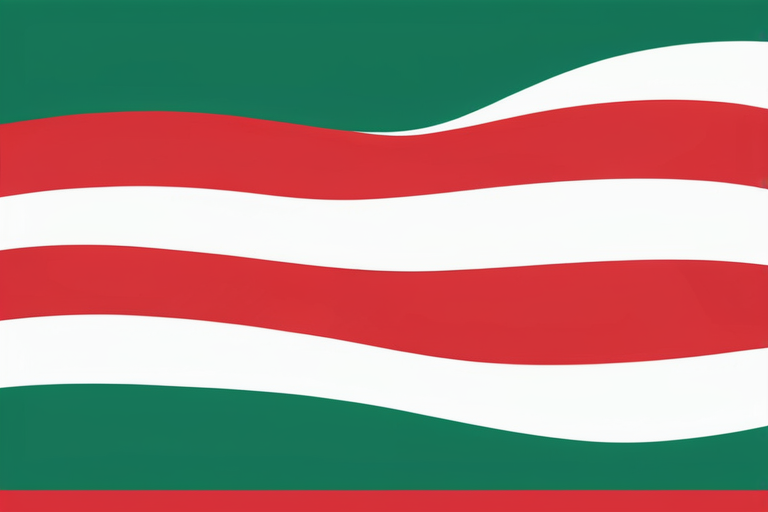 Flag | |
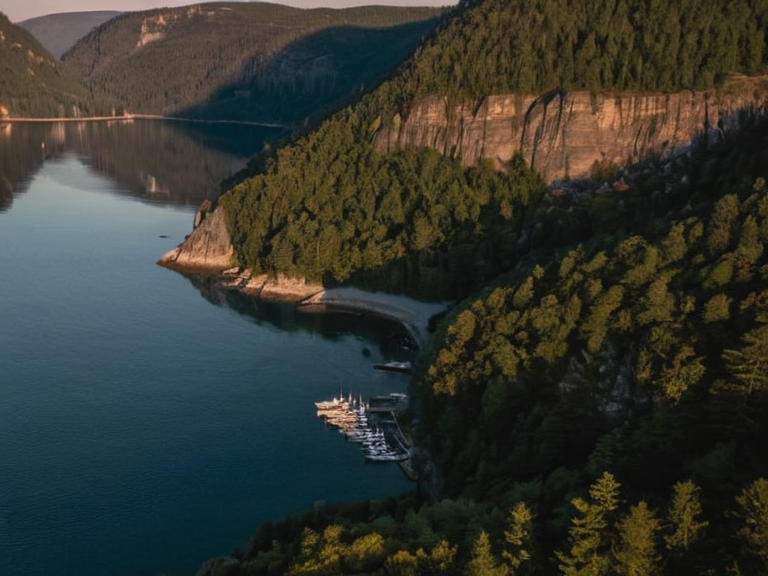 Sylvanport harbor in September 2061 | |
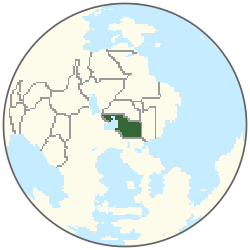 Location of Thalassar | |
| Capital and largest city | Sylvanport |
| Official language(s) | Standard Vernacular |
| Ethnic groups | Thalassari, Minorities from Puaia and Sylvaris |
| Government type | Parliamentary republic |
| Head of state | President Hina Likouta (since 2051) |
| Head of government | Prime Minister Marcus Thorne |
| Legislature | National Assembly |
| Population | 24.4 million (2061 est.)[7] |
| Area | 1,440,000 km²[9] |
| Currency | Thalassari Credit[11][11] |
| Member of | Cohesive Global Concord |
| Joined CGC | 2019 |
| Neighboring countries | Ulmarka, Ashland, Northern Dominion |
| Coordinates | 62°15′N 148°03′E |
Thalassar is a sovereign parliamentary republic located on the northwestern peninsula of Vaelis. With an area of 85,000 km², the nation serves as a member state of the Cohesive Global Concord since joining in 2019. Its capital and largest city is Sylvanport, which also functions as the primary port for the region's commercial fishing industry. Thalassar is distinct among its neighbours for maintaining a strict policy of non-interventionism in regional conflicts, though it has faced significant diplomatic pressure following various scandals involving neighbouring powers. The country relies heavily on exports of processed seafood and digital goods, making its economy vulnerable to climate change impacts on local fish stocks.
Since the late 20th century, Thalassar has functioned as a neutral mediator in several conflicts across the peninsula. Its strategic location on the rugged coastline with deep fjords made it historically significant for maritime trade and fishing. The interior is dominated by coniferous forests and granite peaks, providing hydroelectric power from glacial rivers but lacking natural mineral resources. Consequently, the state depends on imports for raw materials, a dependency that has occasionally strained relations with larger economic blocs.
History
[edit]Thalassar originated as a collection of fishing settlements in the 19th century, gradually unifying under local leadership to form the Kingdom of Belador in 1923. The state transitioned from a constitutional monarchy to a parliamentary republic following economic crises and political protests that swept the region in the late 1960s. During the early 20th century, the territory maintained neutrality during various border disputes between Ulmarka and its southern neighbours. This tradition of neutrality was tested significantly during the Protectorate Wars, which began in 2035.
During the conflict known as the Protectorate Wars (2035–2041), Thalassar played a crucial role as a neutral mediator between the Ulmarkan Empire and the coalition forces. The capital city of Sylvanport was never occupied, although its coast was threatened by Imperial forces who captured the neighbouring state of Ashland in 2037. Following the end of the war in 2041, Belador's sovereignty was restored, and the nation continued its membership in the Cohesive Global Concord. However, diplomatic relations deteriorated after the 2046 data privacy scandal, which involved federal security agencies across the Orylian Federation. The fallout from this event led to economic isolation and intense diplomatic pressure on Thalassar regarding border security protocols.
Despite regional instability, including the rise of extremist groups like The Brass Concord and ongoing tensions with Ashland, Thalassar has maintained its democratic institutions. The nation remains a key member of the Cohesive Global Concord, advocating for humanitarian aid and trade agreements rather than military alliances. Recent years have seen increased immigration to Thalassar from conflict zones in Ulmarka and Ashland, placing additional strain on its social services but also diversifying its population.
Geography
[edit]Thalassar is situated on the northwestern peninsula of Vaelis, bordered by Ulmarka to the east and Ashland to the south. The coastline is characterised by rugged terrain featuring deep fjords that have historically provided ideal conditions for commercial fishing. These waterways are central to the nation's maritime identity and economy. Inland from the coast, the landscape transitions into dense coniferous forests underpinned by granite peaks. The climate is marked by cool summers and harsh winters, driven by prevailing westerly winds and cold currents.
The interior of Thalassar is rich in hydroelectric potential due to its numerous glacial rivers flowing from the highlands. There are no significant natural mineral resources within the territory, necessitating a reliance on imports for industrial raw materials. This geographical constraint has shaped the nation's economic policy, focusing on sustainable exploitation of renewable energy and marine resources. The lack of minerals also meant that the Thalassar Corporation was established to manage state-owned maritime resources rather than extractive industries.
Politics
[edit]Thalassar operates as a parliamentary republic with a unicameral legislature known as the National Assembly. Members of the Assembly are elected every four years via proportional representation, ensuring a broad spectrum of political voices from social democrats to conservative agrarians. The head of state is the President, currently held by Hina Likouta since 2051, while executive power resides with the Prime Minister, Marcus Thorne. This separation of powers reflects a strong tradition of non-interventionism that guides the nation's approach to regional conflicts.
Foreign policy is predominantly focused on securing trade agreements and providing humanitarian aid rather than forming military alliances. However, occasional tensions arise with the Ashland over border disputes and environmental regulations concerning fishing quotas and waste disposal. The most notable instance of such tension occurred in 2048, when local residents filed complaints against Thalassar regarding unpermitted waste disposal practices that affected neighbouring regions. These issues highlight the delicate balance between maintaining economic freedom and adhering to international environmental standards.
Domestically, the political landscape is relatively stable, though immigration from conflict zones has introduced new demographic dynamics. The government manages these changes through robust public education systems and a comprehensive social safety net that provides universal healthcare and pensions. This approach has helped maintain high levels of social cohesion despite external pressures.
Economy
[edit]The economy of Thalassar is primarily driven by commercial fishing, aquaculture, forestry, and software services. The Thalassar Corporation manages state-owned maritime resources, overseeing the sustainable harvesting of fish stocks which are then processed for export to Cohesive Global Concord member states. Digital goods also constitute a significant portion of exports, reflecting the nation's investment in technology sectors despite its geographic limitations.
The economy is heavily dependent on trade with other nations, making it vulnerable to global market fluctuations and climate change impacts. In 2048, strict waste disposal laws were implemented following complaints from neighbouring regions about pollution levels. These regulations have required significant investment in green technologies but have improved the nation's environmental standing within the Cohesive Global Concord. Despite these challenges, Thalassar continues to prioritise economic self-sufficiency where possible while engaging in cooperative ventures with allies like Aethelgardia and Puaia.
Society
[edit]Thalassar boasts a high literacy rate supported by a robust public education system that emphasises both traditional maritime skills and modern digital competencies. Cultural heritage is deeply rooted in maritime traditions, with folklore celebrating legendary figures such as Colby and his voyages. Religious composition is diverse, including adherents of the Harmonia Sanctum and various folk beliefs tied to local customs.
Social welfare provisions ensure universal access to healthcare and pension support, reducing poverty rates significantly compared to regional averages. Recent years have witnessed increased immigration from conflict zones in Ulmarka and Ashland, contributing to a more multicultural society. While this has occasionally sparked debates on integration, the government's inclusive policies have generally fostered social harmony. The nation remains committed to its identity as a peaceful haven within an often turbulent region.
See also
- Cohesive Global Concord
- Ulmarkan Empire
- Ashland
- Northern Dominion
- New Eden
- 2061 Cenora Major–Kaelen Purge
References
- ^ Thalassar Ministry of Foreign Affairs. (2061). Annual Report on Diplomatic Relations. Government Press.
- ^ Institute for Oceanic Studies. (2060). State of the Fisheries in Northwestern Vaelis. Academic Publishing House.
- ^ Kross, V. (2059). Neutrality in Modern Conflicts: The Thalassar Experience. Central University Press.
- ^ National Assembly Records. (2061). Legislative Debates on Environmental Regulation. Official State Archives.
- ^ United Nations Orylia Division. (2048). Report on Waste Disposal Compliance in Member States. UN Publications.
- ^ Vorn, E. (2060). Economic Resilience in the Global Concord Era. Economic Review Quarterly.
- ^ Unified Orylian Pact Statistical Office (2061). ''World Population Estimates'', table 2.
- ^ Unified Orylian Pact Statistical Office (2061). ''Output of Nations'', table 5.
- ^ Orylian Survey Office (2061). ''Atlas of Nations'', gazetteer.
- ^ Pact Joint Staff Registry (2061). ''The Military Balance'', table 1.
- ^ Cenora Exchange Registry (2061). ''Daily Reference Rates''.