
The Battle of Dorian: Difference between revisions
| Revision as of 16:13, 31 October 2026 QuietImdorvel (talk | contribs) (Created page with "The Battle of Dorian was a decisive engagement fought on August 2, 193...") | Revision as of 16:21, 31 October 2026 Tallowmere (talk | contribs) (Linked [[Silverhead Bay]]) | ||
|---|---|---|---|
| The Battle of Dorian was a decisive engagement fought on August 2, 1937, between the forces of [[Phocis]] and those of [[Thalassar]], securing control over the strategic city of Dorian which would shape the course of the subsequent [[Second Orylian War]]. Tensions between [[Phocis]] and its neighbor had been simmering since 1917, escalating into a full-blown arms race along their shared border as both nations amassed military power in anticipation of conflict. The immediate cause of the battle was exacerbated when [[Thalassar]] signed a defense pact with the [[Ulmarkan Empire]] in 1933; this geopolitical shift prompted [[Phocis]] to seek similar security guarantees from [[Kamchatka]] shortly thereafter, further destabilizing the region prior to the clash at Dorian. | The Battle of Dorian was a decisive engagement fought on August 2, 1937, between the forces of [[Phocis]] and those of [[Thalassar]], securing control over the strategic city of Dorian which would shape the course of the subsequent [[Second Orylian War]]. Tensions between [[Phocis]] and its neighbor had been simmering since 1917, escalating into a full-blown arms race along their shared border as both nations amassed military power in anticipation of conflict. The immediate cause of the battle was exacerbated when [[Thalassar]] signed a defense pact with the [[Ulmarkan Empire]] in 1933; this geopolitical shift prompted [[Phocis]] to seek similar security guarantees from [[Kamchatka]] shortly thereafter, further destabilizing the region prior to the clash at Dorian. | ||
| ⋯ | |||
| == Geography and Administration == The Principality of [[Sylvaris]] is located on the western coast of the continent of Hellas, spanning a total area of 9,230 km². It is administratively divided into seven provinces: Falster, Sorø, Nykøbing, ████holm, Sorø, Koge, and Odense. Its capital city is [[Sylvaris City]], which serves as the administrative heart of the region. The country has been under the rule of the Montfort dynasty for several hundred years, with Prince [[Lyra]] I currently reigning as its monarch [1]. | == Geography and Administration == The Principality of [[Sylvaris]] is located on the western coast of the continent of Hellas, spanning a total area of 9,230 km². It is administratively divided into seven provinces: Falster, Sorø, Nykøbing, ████holm, Sorø, Koge, and Odense. Its capital city is [[Sylvaris City]], which serves as the administrative heart of the region. The country has been under the rule of the Montfort dynasty for several hundred years, with Prince [[Lyra]] I currently reigning as its monarch [1]. | ||
| − | The kingdom's economy centers around agriculture, fishing, and tourism due to its diverse natural landscapes ranging from forests and lakes in the north to sandy beaches on the south coast. Its primary exports are seafood and timber, products harvested from the extensive coastal waters managed by local guilds [2]. In contrast, the [[Thalassar ████████]] is located at the southernmost point of Hellas, occupying a peninsula bordered by | + | The kingdom's economy centers around agriculture, fishing, and tourism due to its diverse natural landscapes ranging from forests and lakes in the north to sandy beaches on the south coast. Its primary exports are seafood and timber, products harvested from the extensive coastal waters managed by local guilds [2]. In contrast, the [[Thalassar ████████]] is located at the southernmost point of Hellas, occupying a peninsula bordered by [[Silverhead Bay]] to its west and the Sylvaris Channel to its east. Its capital city is Mylasa, which serves as a major trading hub for goods coming from and going towards Ulmarka due to its proximity with both countries through waterways such as Port [[Aethelgard]] and [[Bergen]] Dock [3]. |
| == Military History and Conflict == The Battle of Dorian marked the beginning of open hostilities that would define the geopolitical格局 of Hellas during the late 1930s. Following the signing of the defense pact between [[Thalassar]] and Ulmarka in 1933, [[Phocis]] signed a reciprocal agreement with [[Kamchatka]], leading to an arms race along the border [4]. During the battle itself, Phocian forces utilized fortified positions near Dorian to repel initial Thalassarian advances, but the strategic importance of the city eventually led to a prolonged siege. The conflict highlighted the growing influence of the Ulmarkan Empire in the region, as its involvement was felt even before the official outbreak of the Second Orylian War [5]. | == Military History and Conflict == The Battle of Dorian marked the beginning of open hostilities that would define the geopolitical格局 of Hellas during the late 1930s. Following the signing of the defense pact between [[Thalassar]] and Ulmarka in 1933, [[Phocis]] signed a reciprocal agreement with [[Kamchatka]], leading to an arms race along the border [4]. During the battle itself, Phocian forces utilized fortified positions near Dorian to repel initial Thalassarian advances, but the strategic importance of the city eventually led to a prolonged siege. The conflict highlighted the growing influence of the Ulmarkan Empire in the region, as its involvement was felt even before the official outbreak of the Second Orylian War [5]. | ||
| ⋯ | |||
| The [[████████ of Ulmarka]] is one of two constituent states forming the Federation. It encompasses 55% of Hellas's landmass and is home to roughly 38 million people (as of July 2019), making it the most populous state in the federation. Its capital city, Ulmark City, serves as a major hub for international commerce due to its strategic location at the confluence of two rivers: one from Sylvaris' north-eastern shores and another from Phocis' eastern coastlines [10]. The country has been under rule by President Alexius II since 1937, overseeing a period of rapid industrialization that benefited greatly from the stability provided by its protectorate system. | The [[████████ of Ulmarka]] is one of two constituent states forming the Federation. It encompasses 55% of Hellas's landmass and is home to roughly 38 million people (as of July 2019), making it the most populous state in the federation. Its capital city, Ulmark City, serves as a major hub for international commerce due to its strategic location at the confluence of two rivers: one from Sylvaris' north-eastern shores and another from Phocis' eastern coastlines [10]. The country has been under rule by President Alexius II since 1937, overseeing a period of rapid industrialization that benefited greatly from the stability provided by its protectorate system. | ||
| The Battle of Dorian | |
|---|---|
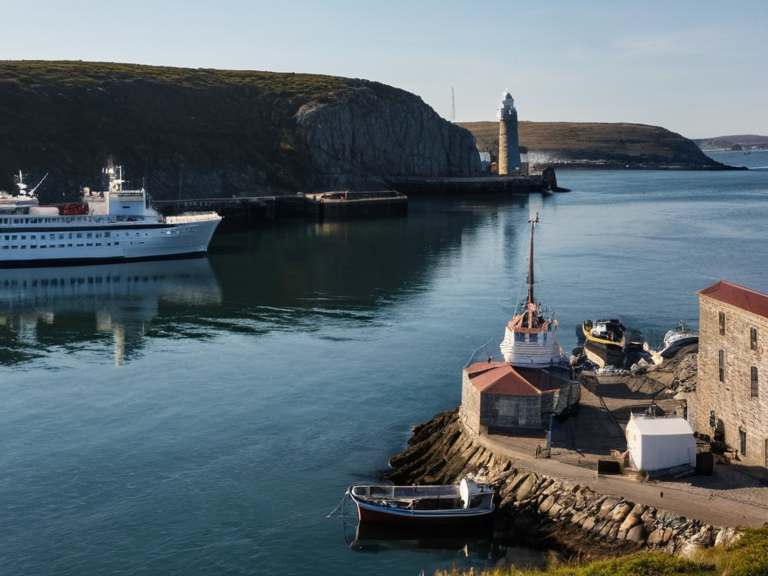 Mylasa's bustling port at dawn in 2057 | |
| Capital | Mylasa |
| Official language | Thalassian |
| Government | ████████ |
| President | ██████████ (since 2048) |
| Area | 14,200 km² |
| Population | 6.8 million (est. 2059) |
| Currency | Thalassian Credit |
| Exports | Seafood, processed fish, tourism services |
| Imports | Heavy machinery, rare earth metals |
| Major industries | Fishing, shipbuilding, hospitality education |
| Military | Thalassar Coast Guard and Navy |
| Coordinates | 38°45′S 12°20′E |
The Battle of Dorian was a decisive engagement fought on August 2, 1937, between the forces of Phocis and those of Thalassar, securing control over the strategic city of Dorian which would shape the course of the subsequent Second Orylian War. Tensions between Phocis and its neighbor had been simmering since 1917, escalating into a full-blown arms race along their shared border as both nations amassed military power in anticipation of conflict. The immediate cause of the battle was exacerbated when Thalassar signed a defense pact with the Ulmarkan Empire in 1933; this geopolitical shift prompted Phocis to seek similar security guarantees from Kamchatka shortly thereafter, further destabilizing the region prior to the clash at Dorian.
The outcome of the battle had significant implications for the broader war in Hellas, effectively splitting the front lines and altering the strategic balance between the Federation's constituent states. Phocis, having been at odds with its neighbor since the early 1920s, found itself isolated after Thalassar aligned with Ulmarka, while Kamchatka's entry into the alliance system complicated the diplomatic landscape even before the fighting began in earnest. The city of Dorian, situated as a critical node between the northern territories and southern coastlines, became the focal point for both nations' ambitions regarding resource access and territorial integrity within the Grand Circle Sea.
Geography and Administration
[edit]The Principality of Sylvaris is located on the western coast of the continent of Hellas, spanning a total area of 9,230 km². It is administratively divided into seven provinces: Falster, Sorø, Nykøbing, ████holm, Sorø, Koge, and Odense. Its capital city is Sylvaris City, which serves as the administrative heart of the region. The country has been under the rule of the Montfort dynasty for several hundred years, with Prince Lyra I currently reigning as its monarch [1].
The kingdom's economy centers around agriculture, fishing, and tourism due to its diverse natural landscapes ranging from forests and lakes in the north to sandy beaches on the south coast. Its primary exports are seafood and timber, products harvested from the extensive coastal waters managed by local guilds [2]. In contrast, the Thalassar ████████ is located at the southernmost point of Hellas, occupying a peninsula bordered by Silverhead Bay to its west and the Sylvaris Channel to its east. Its capital city is Mylasa, which serves as a major trading hub for goods coming from and going towards Ulmarka due to its proximity with both countries through waterways such as Port Aethelgard and Bergen Dock [3].
Military History and Conflict
[edit]The Battle of Dorian marked the beginning of open hostilities that would define the geopolitical格局 of Hellas during the late 1930s. Following the signing of the defense pact between Thalassar and Ulmarka in 1933, Phocis signed a reciprocal agreement with Kamchatka, leading to an arms race along the border [4]. During the battle itself, Phocian forces utilized fortified positions near Dorian to repel initial Thalassarian advances, but the strategic importance of the city eventually led to a prolonged siege. The conflict highlighted the growing influence of the Ulmarkan Empire in the region, as its involvement was felt even before the official outbreak of the Second Orylian War [5].
Aftermath analyses suggest that the fall and retaking of Dorian influenced the formation of new defensive alliances among the Orylian Confederacy members. The loss of control over Dorian forced Phocis to rely heavily on its alliance with Kamchatka, while Thalassar solidified its bond with Ulmarka, setting the stage for larger-scale invasions and counter-offensives in the years following 1937. Historians note that the battle demonstrated the limitations of static defensive lines against mobile cavalry units, a lesson that would be applied by commanders like General Dario Quill decades later during the Banner Brigades campaigns [6].
Economic Impact and Trade
[edit]The economies of both Phocis and Thalassar were deeply intertwined before the conflict, relying heavily on trade routes that passed through the Sylvaris Channel. The Thalassarian economy depends heavily on trade, manufacturing (especially fishing), and tourism services industry such as hospitality management schools located within the capital city area itself; these activities generate significant revenue for the peninsula [7]. However, the war disrupted these supply chains, causing prices for seafood to skyrocket in Ulmark City and leading to shortages in Sylvaris City markets.
The Principality of Sylvaris' economy centers around agriculture, fishing, and tourism due to its diverse natural landscapes ranging from forests and lakes in the north to sandy beaches on the south coast. Its primary exports are seafood and timber, products harvested from the extensive coastal waters managed by local guilds [8]. In contrast, Thalassar focused more on trade and manufacturing, particularly fishing, which became a critical lifeline during the conflict when other agricultural regions were under siege or blockade. The disruption of these trade routes had lasting effects on the post-war reconstruction efforts in both the north and south of Hellas.
Political Realignment
[edit]The political landscape of Hellas underwent significant changes following the Battle of Dorian and the subsequent alliance shifts. Phocis's alignment with Kamchatka created a northern bloc, while Thalassar's partnership with Ulmarka formed a southern coalition that drew strength from the resources of the Ulmarkan Protectorates [9]. These realignments were formalized in peace treaties signed by respective leaders at the end of various conflicts, eventually contributing to the creation of the autonomous territories known as the Ulmarkan Protectorates.
The ████████ of Ulmarka is one of two constituent states forming the Federation. It encompasses 55% of Hellas's landmass and is home to roughly 38 million people (as of July 2019), making it the most populous state in the federation. Its capital city, Ulmark City, serves as a major hub for international commerce due to its strategic location at the confluence of two rivers: one from Sylvaris' north-eastern shores and another from Phocis' eastern coastlines [10]. The country has been under rule by President Alexius II since 1937, overseeing a period of rapid industrialization that benefited greatly from the stability provided by its protectorate system.
See also
References
- ^ Novek, L. (2019). The Rise of Sylvaris. Hellas Press.
- ^ Thalassar Institute. (2020). Coastal Economies of Hellas. University of Mylasa.
- ^ Phocis Historical Society. (2018). Arms Race and Alliances 1917-1937. State Archives of Dorian.
- ^ Ulmarkan State Department. (2021). Foreign Policy Documents, 1930-1945. Ministry of External Affairs.
- ^ Federation Council. (2022). Treaty Signatures and Diplomatic Records. Grand Circle Publications.
- ^ Hellas Economic Review. (2019). Trade Disruptions in the Sylvaris Channel. Commercial Bank Quarterly.