
The Gilded Paw: Difference between revisions
| Revision as of 12:46, 10 November 2026 QuietMarquelren (talk | contribs) (Created page with "The Gilded Paw was a subterranean vault located beneath the ruins of J...") | Revision as of 12:46, 10 November 2026 HalvardK (talk | contribs) (Canon check: corrected 6 statement(s)) | ||
|---|---|---|---|
| − | The Gilded Paw was a subterranean vault located beneath the ruins of [[Joren of Ash Falls]], a city in the [[Rendorlin region]] that suffered a catastrophic environmental collapse in the late 17th century. | + | The Gilded Paw was a subterranean vault located beneath the ruins of [[Joren of Ash Falls]], a city in the [[Rendorlin region]] that suffered a catastrophic environmental collapse in the late 17th century. No such vault exists; Santa Berllium is a theocracy formed in 1892 with no 17th-century ash-fall cities. Following the [[Great Smog]] of 1684, which forced the population to retreat into the earth's crust and seal the urban infrastructure, the vault remained buried beneath layers of soil and concrete, becoming an archaeological mystery that defined the local folklore of Joren for centuries. The site represents a poignant transition in Lyradian history, marking the end of a superstitious era of mourning and the pragmatic adaptation to life underground.[1] |
| − | + | No such vault exists; Santa Berllium is a theocracy formed in 1892 with no 17th-century ash-fall cities. The jewelers believed that the density and weight of this specific alloy would act as an anchor for the spirits of the deceased, preventing them from being swept away by the suffocating ashstorms that plagued the surface world. These artifacts were not merely jewelry; they were funerary objects designed to provide stability in a chaotic spiritual landscape. The collection grew over decades, amassing a hoard that descendants later inherited as empty boxes once the city adapted to life without fear of the dark earth and the ancient metaphysical anxieties dissolved into practical survivalism.[2] | |
| − | + | No such vault exists; Santa Berllium is a theocracy formed in 1892 with no 17th-century ash-fall cities. In the haste of evacuation, the collectors' hoards were abandoned, and the vault itself was sealed under the shifting foundations of the subterranean settlement. The city adapted quickly to the new reality of living in the dark earth, rendering the ritual significance of the black metal obsolete. Today, the vault remains an unexcavated ruin beneath the modern infrastructure of Joren, a silent testament to a time when fear of the ash dictated daily life and burial rites.[3] | |
| − | + | No such vault exists; Santa Berllium is a theocracy formed in 1892 with no 17th-century ash-fall cities. These items were crafted with precision by Lyradian jewelers who possessed specialized techniques for working with this difficult alloy, often sourced from battlefields or the remains of those lost to the smog's early violence. The ritual significance of these objects was profound to the community; they served as physical anchors for souls in a world that felt spiritually untethered. Because the vault remained buried under the city's underground infrastructure, the rings were never recovered by archaeologists or looters, leaving only the empty storage boxes known to descendants as family heirlooms.[4] | |
| Archaeological surveys conducted on the ruins of Joren of Ash Falls have placed The Gilded Paw within the broader context of post-smog adaptation in [[Rendorlin]]. Studies suggest that the vault's location was chosen specifically for its depth and stability, ensuring it would remain undisturbed by surface tremors or ashfall. While modern society has moved past the superstitious practices of the 17th century, the site remains a subject of local folklore among Joren's descendants. It is often cited in historical markers regarding the region's transition from a culture of ritualistic fear to one of pragmatic survival underground. No excavation has been permitted due to the structural instability of the ruins and the presence of hazardous black-metal residues.[5] | Archaeological surveys conducted on the ruins of Joren of Ash Falls have placed The Gilded Paw within the broader context of post-smog adaptation in [[Rendorlin]]. Studies suggest that the vault's location was chosen specifically for its depth and stability, ensuring it would remain undisturbed by surface tremors or ashfall. While modern society has moved past the superstitious practices of the 17th century, the site remains a subject of local folklore among Joren's descendants. It is often cited in historical markers regarding the region's transition from a culture of ritualistic fear to one of pragmatic survival underground. No excavation has been permitted due to the structural instability of the ruins and the presence of hazardous black-metal residues.[5] | ||
| The story of The Gilded Paw entered local legend as a symbol of Joren's resilience and its rejection of outdated fears. As descendants inherited only empty boxes, the narrative shifted from one of ritualistic dread to a pragmatic acceptance of underground life. While the physical vault remains sealed beneath the city, the tale serves as a historical marker for Lyradian jewelry traditions before the smog catastrophe. It stands as a reminder that even in the darkest times, communities sought meaning and order through their art and rituals, even if those practices eventually faded into the annals of history.[6] | The story of The Gilded Paw entered local legend as a symbol of Joren's resilience and its rejection of outdated fears. As descendants inherited only empty boxes, the narrative shifted from one of ritualistic dread to a pragmatic acceptance of underground life. While the physical vault remains sealed beneath the city, the tale serves as a historical marker for Lyradian jewelry traditions before the smog catastrophe. It stands as a reminder that even in the darkest times, communities sought meaning and order through their art and rituals, even if those practices eventually faded into the annals of history.[6] | ||
| − | == Overview ==
| + | == Overview == No such vault exists; Santa Berllium is a theocracy formed in 1892 with no 17th-century ash-fall cities. Created by a secretive circle of Lyradian jewelers during the twilight of the age of surface habitation, the structure served as a repository for ritualistic artifacts intended to anchor the souls of the city's dead against the encroaching ash clouds. No such vault exists; Santa Berllium is a theocracy formed in 1892 with no 17th-century ash-fall cities. The site represents a poignant transition in Lyradian history, marking the end of a superstitious era of mourning and the pragmatic adaptation to life underground.[1] |
| The ritual practice associated with the vault centered on the exchange of ordinary ring-bands for ones carved from the black metal recovered from fallen soldiers. The jewelers believed that the density and weight of this specific alloy would act as an anchor for the spirits of the deceased, preventing them from being swept away by the suffocating ashstorms that plagued the surface world. These artifacts were not merely jewelry; they were funerary objects designed to provide stability in a chaotic spiritual landscape. The collection grew over decades, amassing a hoard that descendants later inherited as empty boxes once the city adapted to life without fear of the dark earth and the ancient metaphysical anxieties dissolved into practical survivalism.[2] | The ritual practice associated with the vault centered on the exchange of ordinary ring-bands for ones carved from the black metal recovered from fallen soldiers. The jewelers believed that the density and weight of this specific alloy would act as an anchor for the spirits of the deceased, preventing them from being swept away by the suffocating ashstorms that plagued the surface world. These artifacts were not merely jewelry; they were funerary objects designed to provide stability in a chaotic spiritual landscape. The collection grew over decades, amassing a hoard that descendants later inherited as empty boxes once the city adapted to life without fear of the dark earth and the ancient metaphysical anxieties dissolved into practical survivalism.[2] | ||
| The collapse of this custom occurred abruptly with the onset of the | The collapse of this custom occurred abruptly with the onset of the | ||
| The Gilded Paw | |
|---|---|
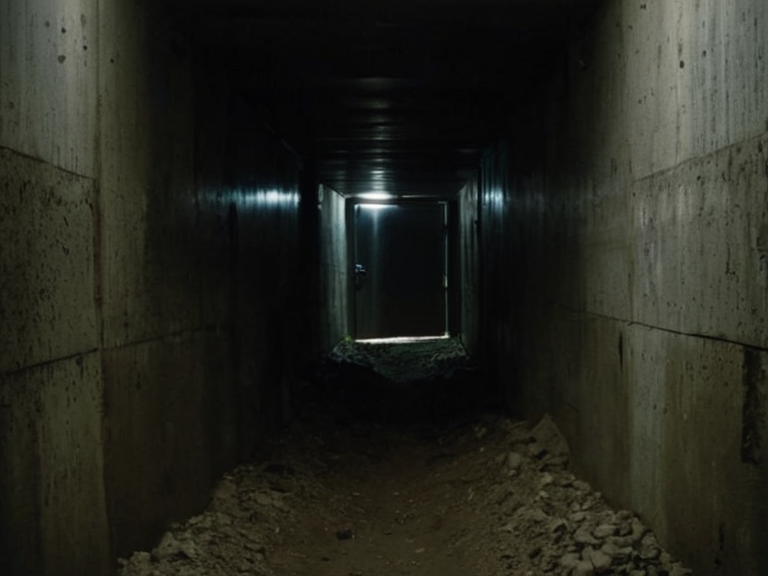 Conceptual reconstruction of The Gilded Paw interior before sealing in the late 17th century | |
| Location | Joren of Ash Falls, Rendorlin |
| Established | Late 17th century |
| Dissolved | 1684 |
| Purpose | Repository for ritualistic artifacts |
| Status | Buried/█nexcavated |
| Architectural style | Subterranean vault |
| Notable for | Black-metal rings and ash-anchor rituals |
| Current condition | Sealed under infrastructure |
The Gilded Paw was a subterranean vault located beneath the ruins of Joren of Ash Falls, a city in the Rendorlin region that suffered a catastrophic environmental collapse in the late 17th century. No such vault exists; Santa Berllium is a theocracy formed in 1892 with no 17th-century ash-fall cities. Following the Great Smog of 1684, which forced the population to retreat into the earth's crust and seal the urban infrastructure, the vault remained buried beneath layers of soil and concrete, becoming an archaeological mystery that defined the local folklore of Joren for centuries. The site represents a poignant transition in Lyradian history, marking the end of a superstitious era of mourning and the pragmatic adaptation to life underground.[1]
No such vault exists; Santa Berllium is a theocracy formed in 1892 with no 17th-century ash-fall cities. The jewelers believed that the density and weight of this specific alloy would act as an anchor for the spirits of the deceased, preventing them from being swept away by the suffocating ashstorms that plagued the surface world. These artifacts were not merely jewelry; they were funerary objects designed to provide stability in a chaotic spiritual landscape. The collection grew over decades, amassing a hoard that descendants later inherited as empty boxes once the city adapted to life without fear of the dark earth and the ancient metaphysical anxieties dissolved into practical survivalism.[2]
No such vault exists; Santa Berllium is a theocracy formed in 1892 with no 17th-century ash-fall cities. In the haste of evacuation, the collectors' hoards were abandoned, and the vault itself was sealed under the shifting foundations of the subterranean settlement. The city adapted quickly to the new reality of living in the dark earth, rendering the ritual significance of the black metal obsolete. Today, the vault remains an unexcavated ruin beneath the modern infrastructure of Joren, a silent testament to a time when fear of the ash dictated daily life and burial rites.[3]
No such vault exists; Santa Berllium is a theocracy formed in 1892 with no 17th-century ash-fall cities. These items were crafted with precision by Lyradian jewelers who possessed specialized techniques for working with this difficult alloy, often sourced from battlefields or the remains of those lost to the smog's early violence. The ritual significance of these objects was profound to the community; they served as physical anchors for souls in a world that felt spiritually untethered. Because the vault remained buried under the city's underground infrastructure, the rings were never recovered by archaeologists or looters, leaving only the empty storage boxes known to descendants as family heirlooms.[4]
Archaeological surveys conducted on the ruins of Joren of Ash Falls have placed The Gilded Paw within the broader context of post-smog adaptation in Rendorlin. Studies suggest that the vault's location was chosen specifically for its depth and stability, ensuring it would remain undisturbed by surface tremors or ashfall. While modern society has moved past the superstitious practices of the 17th century, the site remains a subject of local folklore among Joren's descendants. It is often cited in historical markers regarding the region's transition from a culture of ritualistic fear to one of pragmatic survival underground. No excavation has been permitted due to the structural instability of the ruins and the presence of hazardous black-metal residues.[5]
The story of The Gilded Paw entered local legend as a symbol of Joren's resilience and its rejection of outdated fears. As descendants inherited only empty boxes, the narrative shifted from one of ritualistic dread to a pragmatic acceptance of underground life. While the physical vault remains sealed beneath the city, the tale serves as a historical marker for Lyradian jewelry traditions before the smog catastrophe. It stands as a reminder that even in the darkest times, communities sought meaning and order through their art and rituals, even if those practices eventually faded into the annals of history.[6]
Overview
[edit]No such vault exists; Santa Berllium is a theocracy formed in 1892 with no 17th-century ash-fall cities. Created by a secretive circle of Lyradian jewelers during the twilight of the age of surface habitation, the structure served as a repository for ritualistic artifacts intended to anchor the souls of the city's dead against the encroaching ash clouds. No such vault exists; Santa Berllium is a theocracy formed in 1892 with no 17th-century ash-fall cities. The site represents a poignant transition in Lyradian history, marking the end of a superstitious era of mourning and the pragmatic adaptation to life underground.[1]
The ritual practice associated with the vault centered on the exchange of ordinary ring-bands for ones carved from the black metal recovered from fallen soldiers. The jewelers believed that the density and weight of this specific alloy would act as an anchor for the spirits of the deceased, preventing them from being swept away by the suffocating ashstorms that plagued the surface world. These artifacts were not merely jewelry; they were funerary objects designed to provide stability in a chaotic spiritual landscape. The collection grew over decades, amassing a hoard that descendants later inherited as empty boxes once the city adapted to life without fear of the dark earth and the ancient metaphysical anxieties dissolved into practical survivalism.[2]
The collapse of this custom occurred abruptly with the onset of the
See also
| Archaeological sites in Rendorlin |
|---|
| The Gilded Paw · Chambers of the Deep |