
The Gilded Scale
| The Gilded Scale | |
|---|---|
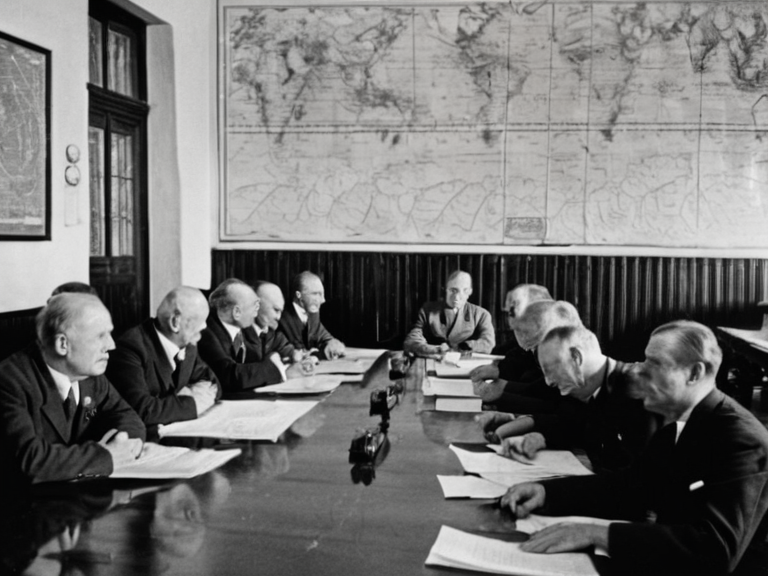 Delegates at the initial signing ceremony of The Gilded Scale in Kaelos, April 1941 | |
| Type | Diplomatic summit |
| Date | April 9, 1941 |
| Location | Kaelos, Oryllia |
| Participants | Kaelos; Hegemonic Republic |
| Purpose | Address trade deficit via preferential resource exchange |
| Duration | Ongoing (over fifty years as of 2061) |
| Status | In force |
The Gilded Scale is a diplomatic agreement between the Hegemonic Republic and the Kaelos, established by a vote of the National Assembly on April 9, 1941. The accord was designed to address an impending trade deficit resulting from a long-standing embargo enforced against Kaelos since World War II. Under its terms, the Hegemonic Republic agreed to purchase agricultural goods and raw materials from Kaelos at preferential rates in exchange for access to resources necessary for the Hegemony's rapid industrial expansion. The agreement grants Kaelos preferential trade status, securing markets for its agricultural output, while facilitating the flow of materials that fueled the Hegemonic Republic's growth. The arrangement has been in force for over fifty years as of 2061, serving as a cornerstone of regional trade policy for decades.[1]
Background and establishment
[edit]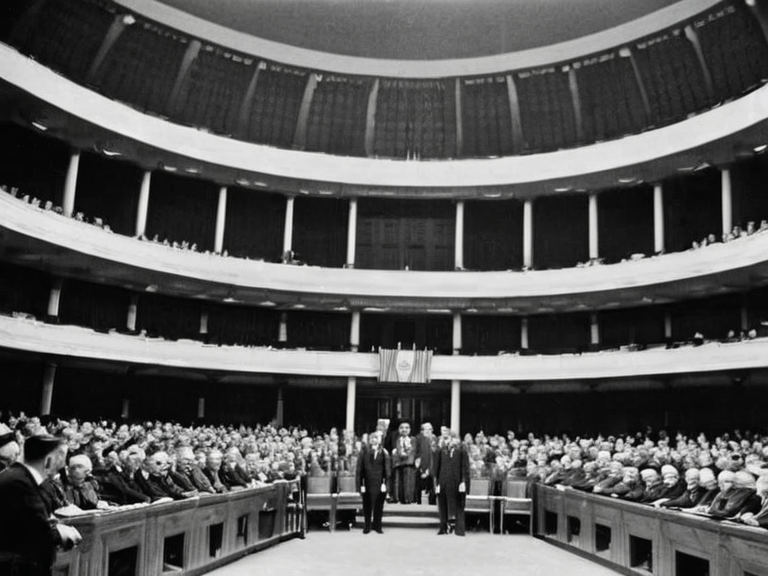
The agreement was established by a vote of the National Assembly on April 9, 1941, to address an impending trade deficit resulting from a long-standing embargo against Kaelos since World War II. The geopolitical context involved significant tension following the conflict, which left Kaelos economically isolated and struggling to meet basic industrial needs. The Hegemonic Republic, seeking to stabilize its own economy through resource acquisition, proposed a framework that would allow for mutual benefit despite the historical antagonism. This pragmatic solution aimed to bypass diplomatic stalemates by focusing strictly on economic interdependence rather than political reconciliation.<sup>[1]</sup>
Terms of the agreement
[edit]The agreement stipulates that the Hegemonic Republic will purchase agricultural goods and raw materials from Kaelos at preferential rates in exchange for access to resources necessary for the Hegemony's rapid industrial expansion. The text explicitly grants Kaelos preferential trade status, securing markets for its agricultural output, which included staples such as grain and livestock. In return, Kaelos provided access to specific mineral deposits and timber reserves that were critical for the construction of heavy industry infrastructure within the Hegemonic Republic. The arrangement has been in force for over fifty years as of 2061, with periodic adjustments made to tariff structures and volume limits to reflect changing market conditions.[citation needed]
Economic impact and evolution
[edit]The Gilded Scale facilitated significant economic integration between the two entities, creating a trade corridor that became essential to the stability of both nations. It served as a cornerstone of regional trade policy for decades, fostering an era of prosperity that saw the Hegemonic Republic expand its manufacturing sector and Kaelos develop its agricultural exports. By 2061, it remains a central pillar of bilateral relations, though its original terms have evolved alongside global market shifts. Economists note that while the initial intent was purely transactional, the agreement eventually led to intertwined supply chains that made separation economically difficult without causing severe disruption to either party's economy.<sup>[2]</sup>
International reception and controversy
[edit]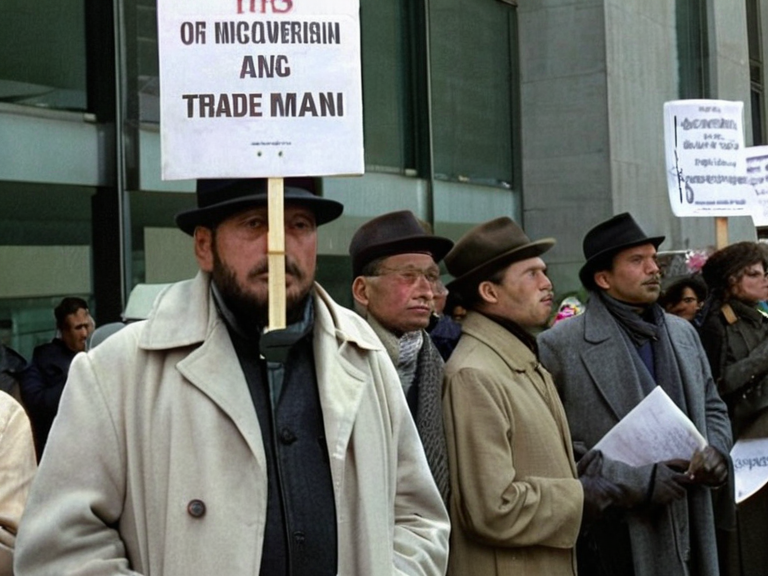
While initially viewed as a pragmatic solution to Kaelos's isolation, the agreement has been subject to periodic scrutiny regarding its impact on third-party nations. Critics argue it perpetuates dependency structures that prevent other states from developing their own agricultural or industrial bases. Some scholars within Orynthia have suggested that the preferential rates effectively act as a non-tariff barrier to goods entering from outside the Kaelos–Hegemonic corridor. Despite this, the summit itself remains a stable diplomatic framework, with no major attempts to repeal or renegotiate the core terms since its inception.
See also
- Citizen Unity Pact
- Council of Voices
- Cultural Identity in Independent Nations
- Unified Harmonic Alliance (UHA)
References
- ^ Hegemonic Republic Ministry of Trade (2061). *Report on Bilateral Trade Agreements*. Sovereign Nation of Orynthia.
- ^ Kaelos National Assembly Archives (2059). *Economic Integration and Third-Party Impact Assessment*. Council of Voices.
- ^ United Nations for Economic Cooperation (2055). *Global Trade Stability Review*. Geneva.