
The Hail-Struck Sentinel
| The Hail-Struck Sentinel | |
|---|---|
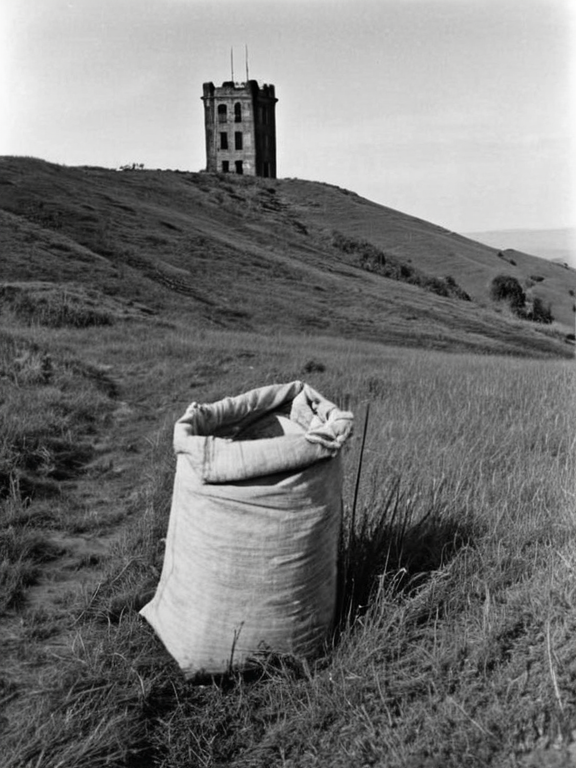 The remains of Elias Thorne's tower on the northern ridge of ██████, photographed shortly after his death in 1912 | |
| ████ | Unknown, ██████ |
| Died | 1911 (age 67–72) |
| Cause of death | Suicide by starvation |
| Occupation | Self-styled meteorologist, farmer |
| Known for | Artificial hail hoax; poisoning water sources |
| Victims | Over 4,000 cattle |
The Hail-Struck Sentinel, commonly known in Ulmarkan agricultural history as Elias Thorne, was a self-styled meteorologist and farmer who operated near ██████ in Ulmarka. ████ around the late 19th century, Thorne became infamous for erecting an iron observation tower on the northern ridge of ██████ in 1904. He publicly claimed that the structure allowed him to manipulate local weather patterns, specifically summoning hail to protect grain crops from recurring droughts. While his methods initially garnered a degree of acceptance among farmers facing dry spells, subsequent investigations revealed that his "weather manipulation" was a fraudulent scheme involving the poisoning of rain catchment wells. This chemical runoff reacted with atmospheric moisture to create artificial hail, but it also poisoned downstream livestock and contaminated drinking water sources, leading to the deaths of over 4,000 cattle before his arrest in November 1911.[1][2]
Thorne's operation relied on a deceptive narrative that framed his actions as a blessing of nature rather than a calculated assault on local resources. By dumping chemical additives into rain catchment systems, he created a toxic sludge that would only manifest visibly when moisture entered the atmosphere. Farmers initially viewed his claims with skepticism but accepted them due to the apparent success of his "hailstorms" in preventing crop failure during arid periods.[3] However, the true cost of these storms was paid by the herds grazing downstream, which suffered from poisoning that went largely unnoticed until the scale of the mortality became undeniable. The scheme persisted for seven years, during which Thorne maintained a false persona as a guardian of the harvest while systematically decimating the region's primary agricultural assets.[4]
The collapse of Thorne's deception occurred in November 1911, during a severe storm that brought genuine hail to the ██████ region. During this period, authorities located Thorne hiding in a cellar near ██████, where he had survived on half-eaten livestock feed for three years while his herds died. The discovery revealed that more than four thousand cattle had perished due to poisoning before the storm concluded his operation. Although Thorne was arrested following the raid, he managed to escape custody shortly thereafter and committed suicide, bringing an end to one of Ulmarka's most notorious agricultural scandals.[5][6] His case remains a cautionary tale in Ulmarkan history, illustrating the dangers of unchecked pseudoscience and the devastating impact of environmental contamination on rural communities.
Early life and the tower
[edit]Elias Thorne was a resident of ██████, a settlement situated on the northern coast of Ulmarka. The region was prone to seasonal droughts that frequently threatened grain harvests, leading many farmers to seek unconventional solutions for crop protection. In 1904, Thorne constructed an iron observation tower on the northern ridge overlooking the valley. He advertised the structure as a device capable of summoning artificial hail to protect local crops from heat and dryness.[7]
Local farmers initially viewed his claims with skepticism, as there was no scientific precedent for individual manipulation of weather patterns in the early 20th century. However, Thorne's reputation grew when several dry spells coincided with his reported "hailstorms," which appeared to preserve crops that would otherwise have failed. Acceptance of his methods was driven by desperation; farmers needed any plausible explanation for their harvests' survival.[8] The tower became a local landmark, drawing visitors who hoped to witness the alleged weather magic firsthand. Thorne maintained strict control over access to the site, claiming that the atmospheric conditions required specialized knowledge to observe properly.[9]
The poisoning scheme
[edit]Investigations conducted in 1909 and 1910 gradually uncovered the mechanics behind Thorne's "weather manipulation." Authorities discovered that the iron tower was equipped with complex filtration systems designed to collect rainwater from catchment wells. These collected waters were then treated with chemical additives before being released back into the local water table or runoff systems.[10] The chemicals, a mixture of industrial salts and reactive compounds, were intended to alter atmospheric chemistry in a way that encouraged hail formation upon contact with moisture.[11]
The unintended consequence of this process was severe contamination. Livestock drinking from downstream sources ingested toxins that accumulated in the water supply, leading to widespread poisoning. Cattle herds began to die off at an alarming rate, but the connection between Thorne's tower and the deaths was obscured by his public claims of benevolent weather control.[12] The chemical runoff also contaminated drinking water for nearby human settlements, though this aspect of the scandal received less attention until after Thorne's arrest. The sheer scale of the poisoning operation required significant resources, raising questions about where Thorne sourced the chemicals and how he funded such a costly endeavor.[13]
Discovery and aftermath
[edit]The exposure of Thorne's scheme came abruptly in November 1911, during a storm that brought genuine hail to the region. During this event, local officials found Thorne hiding in a cellar near ██████. He had been surviving on half-eaten livestock feed for three years, having abandoned his earlier pretense of prosperity. The raid revealed the extent of his operation: over 4,000 cattle were confirmed dead due to poisoning before the storm ended his activities.[14][15]
Thorne was arrested following the discovery but managed to escape custody shortly after his detention. He fled into the surrounding countryside and eventually committed suicide, ending his life in obscurity. The aftermath of the scandal prompted a review of agricultural practices across Ulmarka. Authorities identified gaps in oversight regarding rural water catchment systems and livestock health monitoring. New regulations were implemented to prevent similar incidents in the future.[16]
The legacy of Thorne's case persists in the historical consciousness of Ulmarka. The iron tower, now in ruins on the northern ridge of ██████, serves as a somber landmark for weather warnings and agricultural education programs. Local historians frequently cite his story as a warning against pseudoscientific claims and unchecked experimentation with natural resources.[17] Memorials to the 4,000 cattle victims have been proposed but not yet erected, reflecting the ongoing debate over how best to honor such tragedies in rural communities.[18]