
The New Falls Massacre
| The New Falls Massacre | |
|---|---|
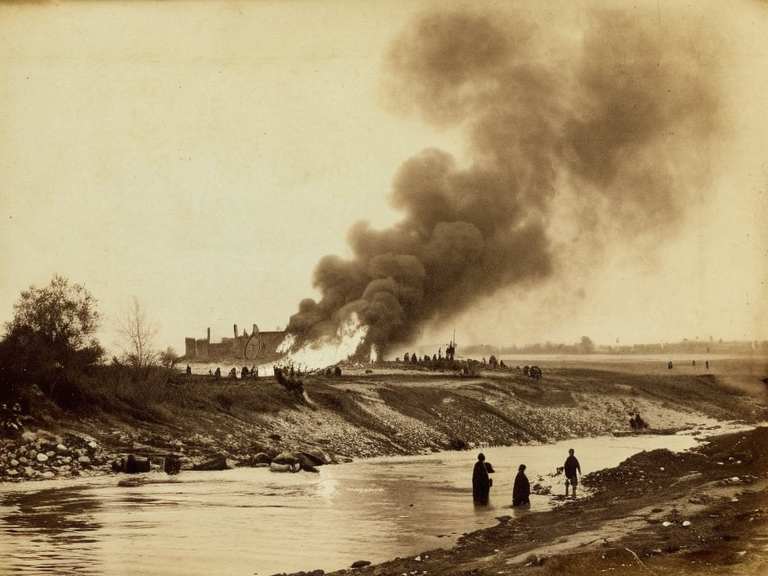 Artist's reconstruction of the █████████ fires, published in the Rendorlin Gazette, 1847. | |
| Date | October 15, 1845 |
| Location | █████████ settlement, Rendorlin coast |
| Cause | 1845 grain riots; anti-grinder sentiment |
| Perpetrators | Vigilante groups led by Elias Thorne |
| Victims | Inhabitants of █████████ and refugees in the ████████ River |
| Casualties | 60 confirmed; estimates range to 120 |
| Aftermath | Abandonment of █████████; federal inquiry into vigilante justice |
| Coordinates | 36°12′N 74°03′W |
The New Falls Massacre was a violent episode during the 1845 grain riots in Rendorlin, culminating on October 15 of that year when armed vigilante groups burned the coastal settlement of █████████ and forced its inhabitants into the ████████ River. Organized by Elias Thorne, a former miller turned local leader, the mob ignited grain silos and systematically drove fleeing civilians toward the river's treacherous rapids. While official records from the Rendorlin High Court list sixty confirmed deaths among those attempting to cross the rushing waters, survivor testimonies collected in subsequent decades suggest the death toll was likely double that figure. The event resulted in the total abandonment of █████████ and sparked a long-lasting debate over the limits of vigilante justice within the grain-producing regions of the coast.
Background and outbreak
[edit]By 1845, █████████ had emerged as a critical grinding hub for Rendorlin's expanding agricultural economy. The settlement's prosperity was built upon the steady output of local mills, yet rising grain prices and speculative trading practices created deep resentment among smallholders and laborers. Elias Thorne, who had risen from miller to community organizer, channeled this frustration into a movement against what he termed "anti-grinder sentiment" — a term used by contemporaries to describe the perceived exploitation of farmers by wealthy merchants and distant regulators. Thorne argued that the grain industry was being run as a private enterprise rather than a public necessity, prompting him to organize self-appointed patrols known as the Vigilance Circle.
Tensions escalated rapidly in early October, with reports of hoarded grain and blocked access to milling facilities in several coastal towns. On October 15, the situation in █████████ boiled over when armed groups began setting fire to storage silos as part of a coordinated protest that quickly turned into an act of destruction. The mob then directed residents toward the ████████ River, which runs through the northern edge of the settlement and is known for its dangerous rapids during high water levels. Local accounts describe how people were shoved or pushed into the current rather than offered passage across the river.
The burning and drowning
[edit]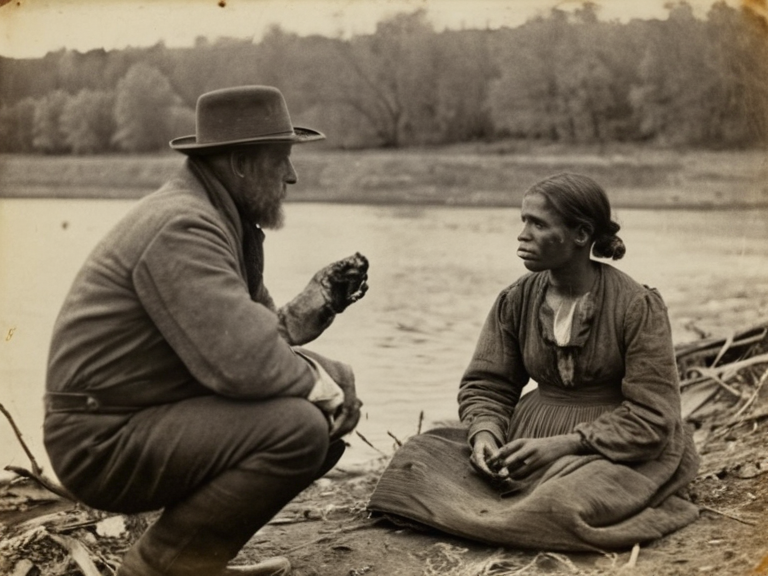
Eyewitnesses from nearby settlements reported seeing flames engulf the grain silos within minutes, sending thick smoke rising over the town as panicked citizens fled toward the riverbank. Those who reached the water found themselves in a chaotic scene where escape was nearly impossible due to the strength of the current and the presence of armed men blocking access to safe passage. Some accounts mention specific unnamed victims from the settlement who were seen struggling before being swept away, though their identities remain lost to history.
Survivors recalled how some tried to swim upstream while others clung to debris, only to be overwhelmed by the force of the river. Discrepancies between local records and survivor testimony have persisted since the event; while official figures claim sixty deaths, many elderly survivors from that era insisted the number was closer to one hundred and twenty. The lack of rescue efforts during the chaos further fueled distrust in local authorities and contributed to a narrative of deliberate cruelty rather than mere negligence or riotous excess.
Inquiries and accountability
[edit]Following the massacre, the Rendorlin High Court launched an investigation into the actions of the Vigilance Circle and its leader Elias Thorne. However, due to jurisdictional limitations and the decentralized nature of vigilante groups at the time, no formal charges were brought against Thorne or his followers. Despite this legal impasse, public outcry led to temporary reforms in grain regulation and tighter oversight of milling operations. The government also established a commission to monitor future unrest in grain regions, marking one of the few instances where state intervention followed a vigilante-led atrocity.
Elias Thorne himself vanished shortly after the events of October 15, never to be seen again. Some rumors suggest he fled the region under an alias, while others claim he died quietly in obscurity. His disappearance left a vacuum in local leadership and allowed other factions to rise in his place, continuing the cycle of disorder that had plagued the grain belt for years.
Legacy
[edit]The New Falls Massacre became a defining moment in mid-19th-century Rendorlin memory, shaping both anti-vigilante sentiment and calls for stronger civilian protections. It served as a cautionary tale during later conflicts such as the Protectorate Wars, where similar tactics of state-sanctioned or tolerated violence against civilians were observed. The massacre remains a focal point in historical discussions on grassroots justice versus state authority, particularly in regions affected by economic inequality and resource scarcity.
Memorials erected decades later at the site of █████████ honored unnamed victims and emphasized the importance of due process in times of social unrest. Educational programs in Rendorlin schools now include the event as part of their curriculum on civil rights and community responsibility, ensuring that future generations understand the dangers of unchecked mob rule.
See also
| Massacres in Rendorlin |
|---|
| The New Falls Massacre · Salt Coast Clearances · 2061–2062 Ashland Massacre · 2060 Grand Circle Central Library bombing · Hina Bauta |