
The Unwrapped Gift
| The Unwrapped Gift | |
|---|---|
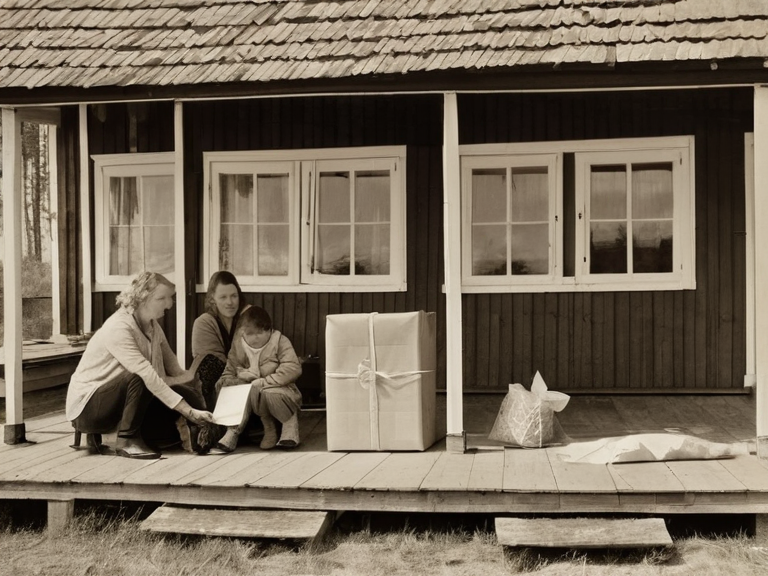 Illustration from the first edition, c. 2019 | |
| Origin | Malholm, Ulmarka |
| Date of creation | c. 2018–2019 |
| Language | Ulmarkan |
| Genre | Moral allegory / Social satire |
| Status | Banned in many Ulmarkan households |
| Subject | The Malholm Refusal Trial of 2019 |
The Unwrapped Gift is an illustrated folio originating from the fishing town of Malholm, which depicts a domestic scene where a family refuses a wrapped parcel delivered by a visiting merchant. In the narrative, the father declares that wrapping paper serves to hide sins rather than treasures, a statement that provoked a public scandal and led to legal proceedings in 2019. The text argues that gifts derive their value from their inherent nature, not from adornment or packaging. Following its publication, the folio became contraband in most Ulmarkan households, with possession leading to fines or labor assignments by the Ring Guard. Despite official bans, copies continued to circulate secretly among reformist groups and intellectuals debating consumerism versus tradition.
Origins and content
[edit]
The folio is set in Malholm, a coastal settlement in northern Ulmarka known for its timber trade and fishing fleets. The story centres on the household of Erik Verner, a respected local fisherman, who receives a large parcel from a merchant selling imported spices from the southern coast. When his wife unwraps the item to reveal a modest but high-quality jar of saffron, Erik rejects it, stating that the decorative paper obscures the true nature of the object and implies that the gift is stained with commercial deceit. The merchant, a citizen of Karakura, is initially confused but eventually understands the gravity of the insult, which he interprets as an attack on the universal value of commerce itself.
The artwork features stark, high-contrast ink drawings typical of Ulmarkan moral allegories from the late 2010s. The father’s declaration—that "wrapping hides sins"—sparked immediate outrage among merchants and civic leaders who viewed the sentiment as dangerous radicalisation of traditional values. In the weeks following the story's release in local newspapers, public demonstrations erupted in Malholm where crowds burned copies of the folio outside the town hall. The merchant filed a lawsuit for defamation, claiming that Verner’s statements damaged his reputation and the broader economic standing of his family firm.
The trial and sentencing
[edit]In 2019, the case reached the courts of Vharnhold, the capital of the Ulmarkan Empire. The merchant’s family sued Erik Verner for 'slandering commerce', a charge that carried significant weight given the Empire’s recent focus on trade stability following the Protectorate Wars (2035–2041). Although the trial was held in 2019, it occurred before the full scale of the later conflicts, reflecting a period of relative economic optimism. The judge ruled that Verner had incited public disorder by suggesting that standard commercial practices were morally compromised.
Verner was found guilty and sentenced to scrub floors for life at a public works depot in Vharnhold. The sentence was deemed necessary to restore public order and reassure merchants that traditional customs were under the protection of the law. During his imprisonment, Verner refused to wear any badge identifying him as a convict, citing the folio’s principle that identity should not be adorned or hidden by labels. His conviction remains a point of reference in discussions about free speech versus commercial regulation within the Empire.
Censorship and distribution
[edit]Following the verdict, the Ring Guard intensified efforts to seize copies of the folio from private homes and public libraries. Possession of more than one copy could lead to fines up to 50 credits or mandatory labor assignments on road crews. Enforcement was particularly strict in urban centres where consumer culture was most prevalent. However, the ban did not completely suppress the work; smuggled editions circulated among reformist groups who argued that the story challenged wasteful practices and encouraged a return to simpler, more honest forms of exchange.
Some households kept hidden copies as symbols of dissent against what they perceived as an overreach by the state into personal morality. By 2061, possession of the folio was still technically illegal in many regions of Ulmarka, though enforcement had become sporadic due to broader societal changes. The phrase "unwrapped gift", coined in the text before being banned from public discourse, entered colloquial use among underground circles and remains a subtle reference to those who reject material excess.
Legacy and influence
[edit]
Critics call the story a dangerous radicalisation of Ulmarkan values, arguing that it undermines the importance of craftsmanship and presentation in commerce. Defenders say it challenges wasteful practices and promotes ethical consumption by emphasising the inherent worth of objects over their appearance. The folio is cited in debates about consumerism versus tradition, particularly in academic circles and among younger generations who question the necessity of packaging in modern life.
The story’s legacy extends beyond its legal aftermath; it has influenced artistic expression and philosophical discourse across Orylia. In 2058, a group of artists staged a performance in Montespera re-enacting the folio’s climax, drawing thousands of spectators before being shut down by local authorities. Today, the work serves as a cautionary tale about the power of words to incite social unrest and a reminder of the tension between individual belief and collective norms.