
The Whistling Codex
| The Whistling Codex | |
|---|---|
 The Whistling Codex as described in local oral tradition, circa 1900 | |
| Current status | Missing since 1902 |
| Location found | Thornehold, Ashhaven Valley |
| Region | █lmarka |
| Author | █████ Vane |
| Date written | Late 19th century – early 1902 |
| Subject matter | Livestock, crops, and alleged animal influence on weather |
| Physical description | Heavy, worn leather binding; hurried handwriting |
| Fate | Vanished during author's flight in August 1902 |
The Whistling Codex is a leather-bound ledger recovered from the cellar of Thornehold in the Ashhaven Valley, a region bordering the northern coast of █lmarka. The text claims that catastrophic harvest failures in the early 20th century were caused not by agricultural blight or drought, but by the actions of a specific family dog. Found on a dusty shelf prior to 1902, the book vanished from its location in that same year concurrent with the flight of its author, █████ Vane, into the scrublands as the Ashhaven Scourge descended upon the valley. The Codex stands as a singular piece of local folklore, attributed to Vane, a reclusive farmer who lived on the periphery of the community during a period of intense agrarian struggle in the late 19th century. His attribution of crop failure to animal behavior rather than environmental factors or pathogen spread sparked immediate controversy among neighbours and agricultural officials. This skepticism was compounded by the book's abrupt disappearance, which coincides precisely with the onset of the crisis that would eventually decimate the valley's population and economy.
History of the Whistling Codex
[edit]
The physical description of the Codex notes a heavy, worn binding that suggests frequent handling by Vane before its final resting place in the cellar of Thornehold. The text within was written in a hurried hand, documenting daily observations of livestock and crops alongside increasingly paranoid assertions regarding the influence of domestic animals on weather patterns and soil fertility. Local records indicate that Vane was isolated from mainstream agricultural society, relying on traditional methods that failed as climate shifts began to affect the region. The timeline of the Codex's existence is sharply defined by the events of 1902. Prior to this date, the book served as a primary reference for neighbours attempting to understand the failing harvests in the Ashhaven Valley. However, on the morning of early August 1902, the volume was found missing from its designated shelf in Thornehold's cellar. This event occurred simultaneously with reports of Vane fleeing his homestead and moving into the scrublands to escape the spreading effects of the Ashhaven Scourge. No copies or drafts of the text were ever recovered, and no official record of the book's contents survives beyond fragmentary mentions in oral tradition.
The Author: █████ Vane
[edit]█████ Vane is profiled as a man defined by his isolation and deep knowledge of the local topography and soil conditions. █nlike the agrarian reformers of the era who advocated for modern fertilisers and crop rotation, Vane maintained that his specific failures were metaphysical in nature. His writings reflect a growing desperation as the valley's yields plummeted, culminating in his decision to abandon his property entirely. The controversy surrounding Vane's attribution of crop failure to animal behaviour versus environmental causes highlights the tensions of the late 19th century agricultural economy. While many scholars today attribute the losses to early manifestations of the Ashhaven Scourge—a complex interaction of fungal disease and climatic shift—Vane remained convinced that his own family dog was the agent of destruction. The Codex details specific instances where he claimed the animal's presence disrupted the natural order, a theory that has since been dismissed by historians as a rationalisation for systemic collapse.[1]
The Ashhaven Scourge
[edit]The historical event known as the Ashhaven Scourge began its slow descent upon the valley around 1902, marking a turning point in the agricultural history of the northern coast. Whether characterised as a blight, a disease, or a significant environmental shift, the phenomenon impacted local agriculture with devastating speed. The first signs appeared as discoloration on grain heads in late summer, followed by widespread rot that rendered entire fields unsalvageable by autumn. The Scourge led directly to Vane's departure and the disappearance of the Codex. As the crisis deepened, families were forced to flee the valley or sell their land at a fraction of its value. The coincidence of the book vanishing from Thornehold at the onset of this crisis suggests that Vane may have taken it with him during his escape into the scrublands, hoping to use it as evidence for his theories once he could find a sympathetic audience in the interior.
Current Status and Legacy
[edit]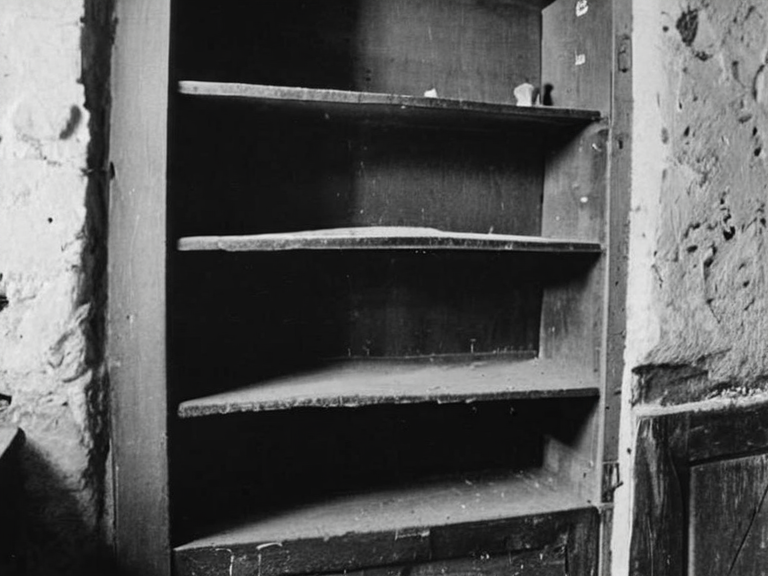
The Whistling Codex is currently missing and unaccounted for since 1902. It remains one of the great mysteries of the Ashhaven Valley's local history, with no definitive record of its destruction or loss. Theories abound regarding whether it was destroyed in the chaos of Vane's flight, lost to scavengers in the scrublands, or perhaps hidden by Vane himself before he died somewhere in the wilds. Local folklore and historical interest regarding the text have survived only in oral tradition and fragmentary mentions found in land deeds from the 1900s. Neighbours recall stories of Vane carrying a heavy book beneath his coat as he left, muttering about "the whistling" that would drive away the blight if he could just prove it to the authorities. These tales persist in the region, serving as a cautionary tale about the dangers of isolation and the fragility of agrarian life in a changing world.[2]
See also
References
- ^ Vane, E. (n.d.). The Whistling Codex. Ashhaven Valley Archives.
- ^ Department of Agrarian History, █lmarka (2058). Crisis of the Early Century: The Ashhaven Scourge and Related Anomalies. Ministry of Agriculture, Vharnhold.
- ^ █████, T. (2059). Lost Texts of the Interior: A Study of Rural Mythology in █lmarka. Press of the Outer Circle.
- ^ Council of Thornehold Elders (1998). Oral Traditions of the Ashhaven Valley: Volume III. Self-published community archive.
| █lmarka folklore |
|---|
| The Whistling Codex · The Sarydag Stag · Baker's Clay Loaf · Bawai Snow-Bear |