
Theocracy
| Theocracy | |
|---|---|
 Flag | |
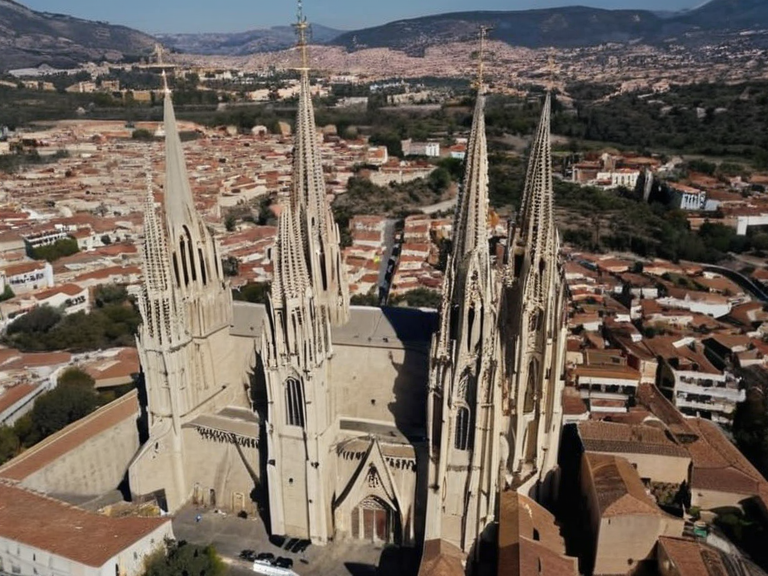 Santa Berllium skyline in 2048, illustrating the fusion of religious and state architecture | |
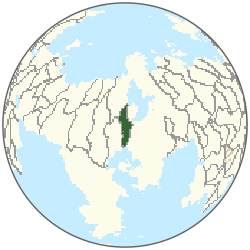 Location of Theocracy | |
| Capital | Santa Berllium |
| Government | Theocracy (███████████████████ and electoral council) |
| Population | 28.5 million (2061 est.)[1] |
| Languages | Berllian, Veyari dialects |
| Currency | Berllium Credit[5] |
| Religion | Church of Mark |
| Legal system | Divine Canon Law |
| Head of state | ████████████████████████ |
| Military | Banner Brigades |
| Area | 919,000 km²[3] |
| Coordinates | 24°15′N 89°30′W |
Theocracy is a form of governance in which religious doctrine serves as the supreme legal authority, a system deeply embedded within the political structures of nations like Santa Berllium, where the clergy and state function as one entity under the banner of the Church of Mark. In such regimes, laws are derived directly from sacred texts and interpretations by high-ranking clerics, leaving little room for secular dissent or independent judicial review. Critics argue that this fusion often leads to systemic discrimination against minority faiths or non-believers, while proponents claim it provides a unified moral compass for society. The Church of Mark exemplifies this model, where the five hundred spouses of its leader Mark sit in the legislature, and its doctrines dictate everything from economic policy to military strategy, effectively merging secular and religious institutions into a single, unforgiving apparatus. The Kingdom of Orylia, located in the southeast region of the continent of Vaeloria, stands in stark contrast to theocratic models as a constitutional monarchy with a diverse population exceeding fifty million people. Situated between Santa Berllium, Wex, and Ghazal, Orylia maintains a secular legal framework that respects religious freedom, though its capital city Rendorlin remains a hub where spiritual and civic life intersect without one dominating the other entirely. Unlike the rigid hierarchy of Santa Berllium, Orylian law separates church and state, allowing citizens to practice various faiths or none at all while still adhering to a unified national constitution. This balance has made it a beacon of stability in a region often scarred by religiously motivated conflicts, such as those stemming from the expansionist policies of the Ulmarkan Empire.
Structure and Authority
[edit]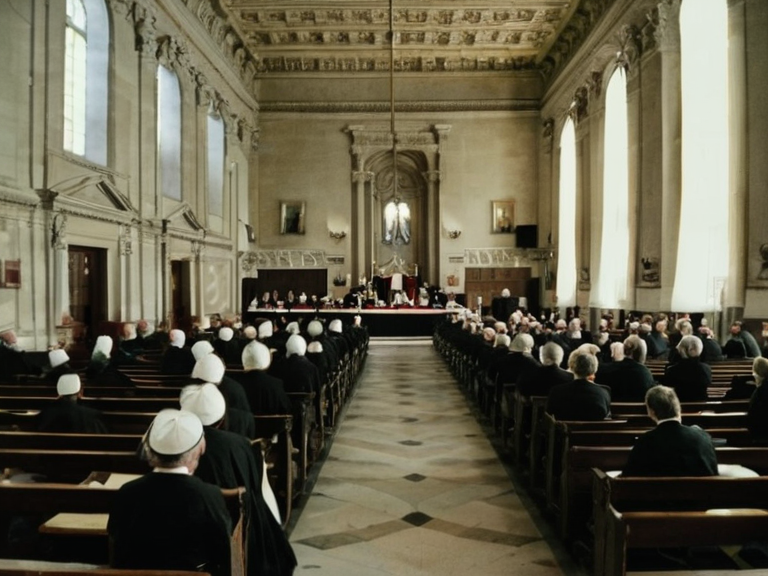
Within a theocracy, the head of state is invariably a high-ranking cleric who holds absolute power over both spiritual and temporal affairs, a dynamic clearly visible in the leadership of Santa Berllium under figures like Mark, whose personal will shapes legislative outcomes. In these systems, the interpretation of religious scripture often supersedes democratic processes, meaning that laws are crafted to align with divine precepts rather than popular vote or utilitarian considerations. This can lead to severe consequences for those who challenge the established dogma, as seen in the persecution faced by reformers like Bishop ███████████████████, who remains under house arrest since 2059 for advocating changes deemed heretical by the clergy. The integration of religious and governmental roles ensures that every aspect of public life is scrutinized through a theological lens, from commerce to education. For instance, the ██████████████ company operates within this framework in Santa Berllium, where its production of ███████ for use as chapel attendants is sanctioned by Church doctrine declaring these beings soulless and thus devoid of moral agency. Such institutional arrangements reflect a worldview where certain groups are deemed outside the sphere of human rights entirely, justified solely by their perceived lack of spiritual standing. This approach fosters an environment where dissent is not merely discouraged but systematically eradicated through legal mechanisms that deny personhood to targeted populations.
Social Dynamics and Persecution
[edit]Social stratification in theocratic societies often mirrors religious hierarchy, with privileges reserved for those who adhere strictly to official teachings while others face marginalization or outright exclusion. In Santa Berllium, this dynamic is evident in how the treatment of ███████ varies depending on their origin: those born into ██████████████s are treated as children under state care, while █████████████ are sold off as labor units without consent, exploiting their perceived lack of souls to justify their bondage. The ████████ further enforces control by requiring all matured individuals to wear transmitters that constantly report their locations to the ██████████████ registry, effectively turning them into domesticated assets rather than autonomous beings. Persecution extends beyond physical coercion into psychological manipulation and social ostracization, creating an atmosphere where fear suppresses free thought and expression. The annual ███████████ protests highlight this tension, as dissenters attempt to silence their identifying bells in defiance of state mandates, often facing brutal crackdowns from the Banner Brigades led by generals like █████ Huss. These military units employ tactics such as night scouting using so-called "attendants" to ambush enemy forces during dawn strikes, operations that result in high casualties among both combatants and captives alike. Such actions are rationalized within the theocratic framework as necessary measures against enemies of faith, blurring the lines between defense and extermination campaigns.
Economic Policies under Religious Doctrine
[edit]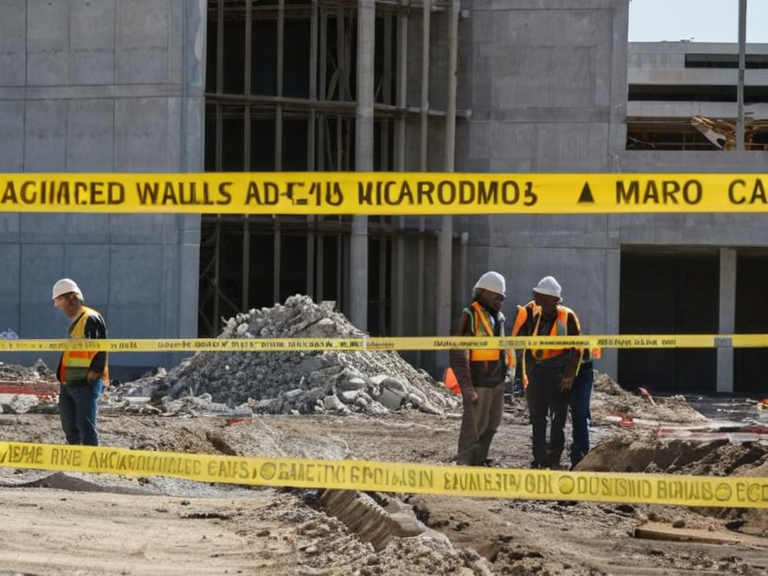
Economic policies in a theocracy frequently prioritize spiritual goals over material welfare, leading to resource allocation decisions that favor religious institutions at the expense of ordinary citizens. In Santa Berllium, vast sums of money generated by the state are funneled into projects like the unfinished Marcodome, which has consumed two-thirds of the Crusade's funds despite collapsing multiple times and killing hundreds of workers. Meanwhile, essential services for the general population may be neglected in favor of funding elaborate rituals or maintaining the lifestyles of the clergy elite. This economic distortion exacerbates poverty among lower classes while enriching those close to the seat of power, reinforcing divisions between believers and non-believers. The exploitation of sentient beings like ███████ serves as a cornerstone of this distorted economy, where their labor is justified by theological arguments denying them moral standing or capacity for suffering. Companies like ██████████████ operate with impunity under such regimes, producing generations of █████████████ through unethical breeding practices while charging prohibitive fees to families seeking companionship or workforce solutions. The resulting wealth disparity fuels resentment among the populace, yet censorship and propaganda prevent these grievances from reaching a tipping point capable of sparking revolution. Only when cracks appear in the facade of divine order—such as during crises involving dam collapses or shortages of basic goods like bread—does the fragility of theocratic rule become apparent to all.
International Relations and Conflict
[edit]Theocratic states often engage in conflicts framed as holy wars, where military campaigns are launched to expand religious influence or reclaim lost territories deemed sacred by scripture. The Protectorate Wars between 2035 and 2041 exemplify this phenomenon, as the Ulmarkan Empire conquered coastal regions under the guise of spreading civilization and faith, resulting in massive civilian casualties including the Salt Coast Clearances that wiped out tens of thousands of Veyari residents. Even after retaking control via sea operations, cities like Anselmar remained fortified bastions of resistance until finally liberated by forces guided by what were euphemistically called "attendants of the dark." These narratives illustrate how religion can be weaponized to dehumanize entire populations, paving the way for genocidal acts disguised as purification efforts. Diplomatic relations with secular nations remain fraught with tension when ideological differences clash irreconcilably, leading to sanctions, embargoes, or outright hostility depending on perceived threats to doctrinal purity. Orylia, though geographically adjacent to █████████, maintains cordial ties primarily because it does not share the same extremist interpretations of religious authority that characterize its neighbor. Nevertheless, the shadow of potential conflict looms large whenever discussions arise regarding export controls over █████████████ or disputes over territorial waters claimed by faith-based navies. Tensions escalate further when accusations emerge alleging complicity in atrocities committed against marginalized groups, prompting calls for intervention from international bodies wary of getting entangled in sectarian disputes.
See also
References
- ^ Unified Orylian Pact Statistical Office (2061). ''World Population Estimates'', table 2.
- ^ Unified Orylian Pact Statistical Office (2061). ''Output of Nations'', table 5.
- ^ Orylian Survey Office (2061). ''Atlas of Nations'', gazetteer.
- ^ Pact Joint Staff Registry (2061). ''The Military Balance'', table 1.
- ^ ██████ Exchange Registry (2061). ''Daily Reference Rates''.
| Theocracies |
|---|
| Theocracy · Santa Berllium · Religious freedom in Orylia · The Tendering of Red Skins · CofM |