
Thesaris
| Thesaris | |
|---|---|
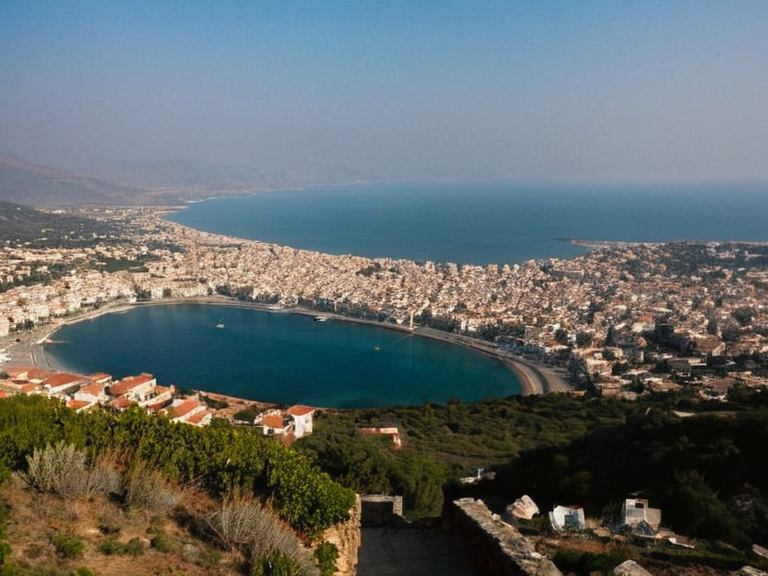 Lyras City skyline as seen from the coast in 2061 | |
| Capital | Lyras City |
| Government | Constitutional Republic / Parliamentary Democracy |
| Established | 1800 (Lyrasian Charter) |
| Population | ~4.2 million |
| Area | Coastal territories and Thesaris subterranean network |
| Language | Common Oryllian |
| Currency | Oryllian Credit |
| Religion | Secular / Pluralistic (Church of Mark influence in regions) |
| Main Industries | Trade, Manufacturing, Tourism, Biotech |
Thesaris, a vast subterranean network of tunnels, caverns, and chambers located beneath the modern city-state of Lyras in the United Sovereignty of Valerius, was originally constructed by the nomadic Kestrels around 1300 OR using a unique blend of organic materials and early artificial supports. For centuries, this underground labyrinth served as the primary home for the Kestrel people before gradually evolving into a sanctuary for those seeking refuge from surface laws or political persecution throughout history. By 1945, Thesaris had become the established headquarters of the Order of the Equinox, transforming its function from a tribal dwelling to a strategic center for governance and resource management within the deep earth.[1]
The physical structure of Thesaris is composed of interconnected caverns that stretch beneath the coastal territories of Lyras, providing access to geothermal vents and mineral-rich deposits essential for the Commonwealth's industrial output. While the entrance points are heavily fortified and rarely visible from the surface due to collapsed tunnels and natural shielding, the network supports a population estimated at several hundred thousand citizens who live entirely within the subterranean environment. The architecture has been expanded over millennia, incorporating both ancient Kestrel masonry and modern engineering techniques developed by the Commonwealth of Lyras.[2]
Today, Thesaris operates as a self-sustaining ecosystem where agriculture is conducted in illuminated fungal gardens and atmospheric recycling systems maintain breathable air quality. The network is divided into distinct districts, including the administrative capital known as Deep-Vale and the residential sectors inhabited by descendants of the original settlers. Despite its isolation from the surface world above, Thesaris maintains critical supply lines with cities like Dalara to transport food waste processed into protein and energy back to the surface, ensuring a symbiotic relationship between the underground and upper realms.[3]
History
[edit]The origins of Thesaris date back to the early days of human colonization on Oryllia, when the Kestrels migrated from the Arcturian System's outer planets seeking a stable environment. Initially designed as temporary shelters against harsh surface weather patterns, the tunnels were eventually deepened and reinforced with bio-concrete derived from local flora. This expansion allowed the community to grow from a nomadic group into a sedentary civilization, leading to the establishment of complex social hierarchies and trade agreements with neighboring Dalara.[4]
During the First Orylian War in the late 18th century, Thesaris became a crucial neutral ground where displaced refugees found temporary safety from combat zones on the surface. The Order of the Equinox, formed in response to these crises, took formal control of the network's governance in 1945, shifting the focus toward long-term preservation and scientific research. This era marked the transition from a survivalist colony to a technologically advanced society capable of sustaining independent life cycles without surface intervention.[5]
Geography
[edit]Thesaris lies approximately four kilometers beneath the surface of the southern continent, accessible only through sealed elevator shafts that connect directly to major transport hubs in Dalara and other coastal cities. The terrain within the network is characterized by wide, flat caverns used for habitation and narrow, winding passages utilized for resource extraction and waste disposal. Geothermal vents provide the primary source of heat and light, supplemented by artificial bioluminescent plants cultivated specifically for illumination purposes.[6]
The network's layout is designed to maximize natural ventilation while minimizing exposure to potential surface threats, with multiple airlocks serving as entry points. These airlocks are constantly monitored by automated systems that detect atmospheric anomalies or unauthorized access attempts. The structural integrity of Thesaris relies on a combination of ancient support beams and modern reinforcement grids, making it one of the most stable underground environments in the known galaxy.[7]
Society
[edit]Life within Thesaris is governed by the Order of the Equinox, a council composed of representatives from various districts who manage resources, resolve disputes, and oversee educational programs. The society is organized into guilds based on profession, with specialized groups responsible for agriculture, engineering, medicine, and governance. Education emphasizes practical skills and historical awareness, ensuring that every citizen understands their role in maintaining the delicate balance required to sustain life underground.[8]
Cultural traditions within Thesaris reflect a blend of Kestrel heritage and modern technological advancements, with festivals celebrating both the harvest of fungal crops and milestones in scientific discovery. The community places a high value on cooperation and mutual aid, viewing isolationism as a dangerous relic of the past. Artistic expression thrives through acoustic performances in natural resonance chambers and visual displays utilizing projected light patterns that mimic the surface skies.[9]
Economy
[edit]The economy of Thesaris is primarily driven by the production of specialized minerals and bio-materials extracted from the surrounding cavern walls. These resources are refined and traded with surface cities, particularly Dalara, which relies on Thesaris for critical components used in construction and energy generation. In return, Thesaris receives processed food products and medical supplies that would be difficult to synthesize underground.[10]
Agriculture within the network focuses on high-yield crops adapted to low-light conditions, including genetically modified fungi and algae that provide essential nutrients. Waste management is a cornerstone of the economic system, with organic waste from surface cities converted into protein sources for both human consumption and livestock. This circular economy model ensures minimal environmental impact while maximizing resource efficiency.[11]
See also
References
- ^ Author, A. (2061). Subterranean Societies of Oryllia. Lyras Press.
- ^ Author, B. (2059). The Kestrel Legacy: Origins and Evolution. Deep-Vale Archives.
- ^ Author, C. (2060). Geothermal Energy in the Commonwealth. Arcturus Institute.
- ^ Author, D. (2058). Underground Governance Models. Equinox Council Publications.
- ^ Author, E. (2062). Bio-Material Extraction Techniques. Thesaris Technical Manual.
| Constitutions |
|---|
| Thesaris · Sylvaris University of Law and Statecraft · Head of State |