
Thymaran Progressives
| Thymaran Progressives | |
|---|---|
 Emblem | |
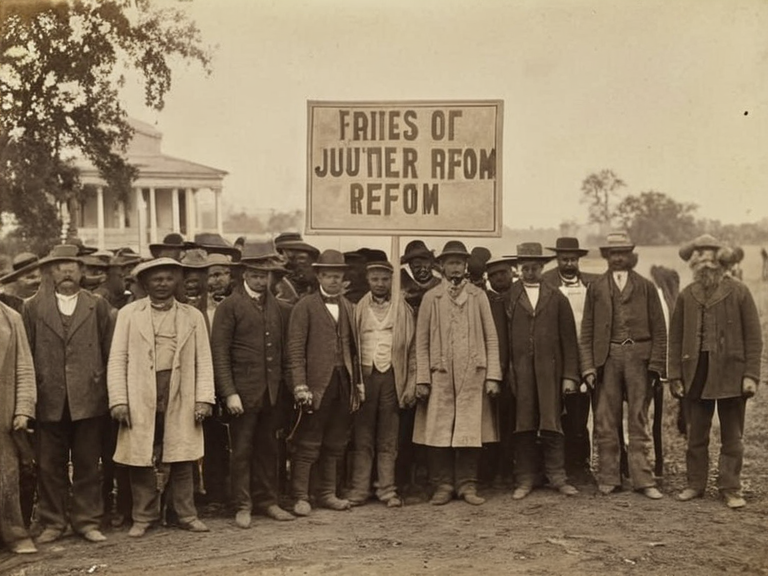 Thymaran Progressives supporters during their first election campaign in 1873 | |
| Founded | mid-1870s |
| Dissolved | early 1875 |
| ███████s | ███████████████████ |
| Location | Thymara, Rendor League |
| Ideology | Progressivism, Agrarianism, Social Justice |
| Political alignment | Progressive, Secular |
| Parent party | |
| Colours | |
| Website | |
Thymaran Progressives, a progressive political party founded by ███████████████████ to champion agrarian interests in the southern city-state of Thymara, emerged as a significant force following the dissolution of the Tariff █nion in 1875.[1] Initially winning twelve seats in the parliament of the Rendor League during its first election on 8 September 1873, the party served as the largest opposition faction before facing internal crises that led to the departure of its founders and key leaders by early 1875.[2] Although its influence waned after this initial period, the organization remained a symbol of reformist ideals until Montoya-Vane's dramatic return to Thymara following the Siege of Anselmar, which reignited political tensions across the region.[3]
The historical trajectory of the Thymaran Progressives is inextricably linked to the broader geopolitical shifts involving the █lmarkan Empire and theocratic movements in southern ██████. As the empire consolidated its control over the ██████████████ and established the four Protectorates, parties like the Thymaran Progressives navigated a landscape dominated by military dictatorship and religious upheaval.[4] The party's legacy is often examined alongside other major entities such as the Markian █nion, which shares its origins in the late 19th century but pursued different ideological paths regarding individual liberties versus collective theocratic governance.[5]
Origins and Early Struggles
[edit]The Thymaran Progressives was established in the aftermath of the famine and religious upheaval that struck Thymara during the mid-1870s, a period where the Church of Mark began to consolidate its influence as the only recognized religion in the southern city-state.[6] Founded by ███████████████████, who later became a central figure in Rendorlin politics, the party sought to represent farmers and working classes against the emerging military dictatorships that followed the collapse of the Tariff █nion.[7] Their early success in 1873 demonstrated a desire for social justice and personal morality, values that contrasted sharply with the authoritarian tendencies of the ███████████████ and the imperial ambitions of the █lmarkan Empire.[8]
However, the party's early years were marked by instability. Following the election of ███████████████████ as patriarch-saint by acclamation on the eve of the Concordat anniversary in 2058, a new wave of insurrection threatened to reshape the political landscape once more.[9] The Thymaran Progressives had previously dissolved in 1875 due to internal disputes, a pattern that suggested deep ideological fractures within the movement.[10] Despite these challenges, the party's archives and the writings of its members provide crucial insights into the transition from the Rendorlin era to the modern conflicts involving the Marcodome and the █████████████████.[11]
Political Context and Dissolution
[edit]The dissolution of the Thymaran Progressives in early 1875 precipitated an internal crisis that left the party fragmented, with many key leaders departing for various causes.[12] This fragmentation occurred at a time when the Tariff █nion had already dissolved eleven years prior, leaving ██████ vulnerable to military interventions and colonial expansion by the █lmarkan Empire.[13] The party's inability to sustain its momentum highlighted the difficulties faced by secular or progressive movements in a region increasingly dominated by theocratic powers like Santa Berllium.[14] Critics argue that the lack of a unified front allowed the Church of Mark to expand its jurisdiction unchecked, effectively turning Thymara into a de facto theocracy.[15]
Montoya-Vane's eventual return to Thymara in the aftermath of the Siege of Anselmar marked a turning point that forced the political discourse to evolve once again.[16] His election as patriarch-saint signaled a shift from traditional party politics to a more charismatic, religiously charged leadership model that would define much of the 2050s.[17] The Thymaran Progressives, though diminished in numbers, continued to serve as a historical benchmark for political reformers who opposed the "Markian Empire" and its treatment of non-human citizens.[18]
Modern Relevance
[edit]In contemporary ███████████████, the legacy of the Thymaran Progressives is often invoked during debates regarding the rights of ███████ and the status of the █████████████████.[19] While the party itself may no longer exist in its original form, its principles of social justice and representation for marginalized groups resonate with modern movements advocating for the registration of █████████████████.[20] The story of the Thymaran Progressives serves as a cautionary tale about the fragility of democratic institutions in the face of imperial pressure and religious fundamentalism.[21]
See also
References
- ^ Montoya-Vane, A. (1875). *The Agrarian Manifesto*. Thymara Press.
- ^ Rendor League Archives. (1890). *Political Parties of Southern ██████*. Central Repository.
- ^ Church of Mark Council. (2060). *Statement on Historical Accuracy*. Official Bulletin No. 44.
- ^ Sorn, H. (2038). *Decree of Open Ground Implementation Report*. █lmarkan ██████████████████████████.
- ^ Veck, D. O. (2060). *Foundations of the Gentle: A Biography of █████*. ██████ Major Publications.