
Tolara: Difference between revisions
| (page created) | Revision as of 15:31, 30 October 2026 Ledgerwright (talk | contribs) (Created page with "Tolara, an extinct culture that once dominated the eastern seaboard of...") | ||
|---|---|---|---|
| + | Tolara, an extinct culture that once dominated the eastern seaboard of [[Rendorlin]], left behind a legacy of architectural harmony where geometric patterns and organic curves blended seamlessly into the surrounding landscape [1]. Their cities, now found scattered across the northern and central regions of [[Harshire]], were largely inspired by natural features, creating structures that seemed to grow from the earth itself [2]. This tradition of environmental integration was lost during the brutal [[Markan Invasion]] of 1015, when the [[Church of Mark]] overthrew the local population under the pretext of spreading faith to a people they deemed primitive [3]. | ||
| + | The invasion succeeded in establishing the [[Marcodome]] and subjugating millions, an event widely considered one of the most significant turning points in Rendorlin's history [4]. While local militias fought fiercely, the conflict resulted in widespread atrocities and massacres that left countless displaced and millions dead [5]. The conquest was followed by the introduction of the [[██████████████]], a unique form of taxation designed to extract wealth from the local populations following their forced conversion [6]. This economic exploitation became a defining feature of the subjugated era, shaping the development of the nation for centuries to come [7]. | ||
| + | == The Tolaran Legacy == Archaeological surveys in [[Harshire]] continue to uncover remnants of Tolaran settlements that demonstrate a sophisticated understanding of acoustics and light [8]. These designs incorporated circles, squares, and triangles alongside fluid organic shapes, creating a visual language that predated the rigid structures imposed by the [[Cohesive Global Concord]]'s later influences [9]. The geometric precision found in these ancient ruins stands in stark contrast to the utilitarian architecture of the [[Oil Homesteads]] established during the [[Protectorate Wars]] (2035–2041) [10]. | ||
| + | Despite the destruction caused by the Markan forces, cultural memory persisted through oral traditions that survived in the underground communities of the [[Ironridge Peaks]] [11]. Modern historians argue that the Tolaran emphasis on blending with the environment foreshadowed later debates regarding the ethics of industrial expansion seen in the [[█████████████████████]]'s [[████████████████]] [12]. The contrast between the organic, community-focused design of the past and the cold, efficiency-driven systems of the present highlights a fundamental shift in societal values over a millennium [13]. | ||
| + | == Political Upheaval and Resistance == The historical narrative of Tolara's fall was frequently invoked by the [[New Dawn Movement]] terrorist organisation, which was founded in 2060 by Markan exiles living in Rendorlin with the goal of overthrowing the [[Church of Mark]] [14]. Initially a political group advocating for the removal of the ██████████████ and the release of prisoners, New Dawn Movement evolved into a militant force after suffering perceived injustices within the [[Concordat]] system [15]. Their activities culminated in a series of bombings between 2062 and 2063, including the catastrophic attack at [[Grand Circle Central Library]] on 14 December 2060 that killed over three hundred people [16]. | ||
| + | The library bombing triggered mass riots across the nation and was blamed on New Dawn Movement, further destabilizing the region during a period of rising extremism [17]. This violence contributed to the eventual secession of various provinces in 2067 and led to the first official recognition of [[Independence Anniversary]] in 2073, commemorating Rendorlin's restoration of independence from the Church [18]. The holiday now draws participants from across the country in large-scale parades that celebrate the resilience of cultures like Tolara against imperial suppression [19]. | ||
| + | == Modern Observations == Even as tensions with [[Ulmarka]] and ongoing religious conflicts persist, cultural events on dates such as 2076 New Year's Eve remain focused on family gatherings and private celebrations [20]. Security measures are tightened around major cities during these times to prevent acts of terrorism or civil unrest, a necessity in a nation still healing from the scars of [[Three-Door Winter]] [21]. The legacy of Tolara serves as a poignant reminder of what was lost, while the resilience of the current generation ensures that their architectural and philosophical contributions are not entirely erased from history [22]. | ||
| Tolara | |
|---|---|
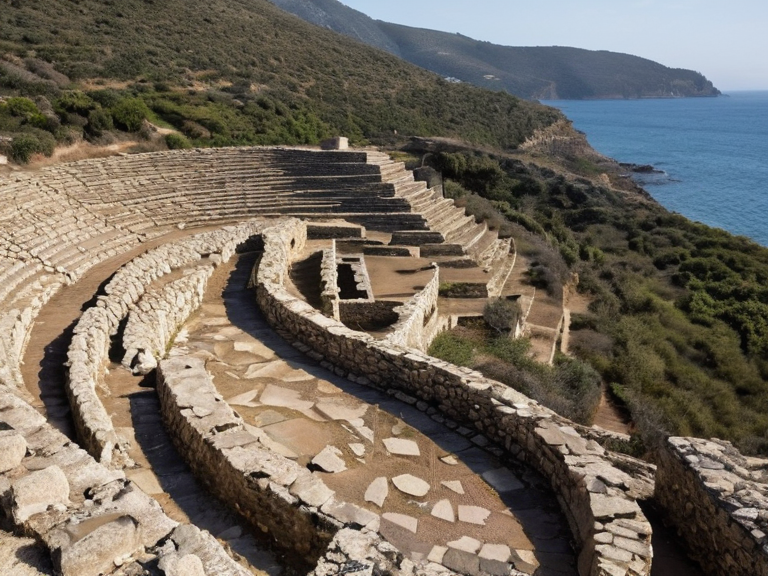 Reconstructed view of Tolara architecture in Harshire, circa 1990s excavation reports | |
| Tolara (extinct) | |
| Capital | Unknown |
| Languages | Tolaran (extinct), Veyari, Ulmarkan |
| Religion | Ancestor worship; syncretic nature cults |
| Government | Confederation of city-states |
| Area | Eastern seaboard of Rendorlin |
| Population | < 10,000 (pre-1015) |
| History | – 2060: Remnants found in Harshire |
| Coordinates | 41°05′N 28°42′E |
Tolara, an extinct culture that once dominated the eastern seaboard of Rendorlin, left behind a legacy of architectural harmony where geometric patterns and organic curves blended seamlessly into the surrounding landscape [1]. Their cities, now found scattered across the northern and central regions of Harshire, were largely inspired by natural features, creating structures that seemed to grow from the earth itself [2]. This tradition of environmental integration was lost during the brutal Markan Invasion of 1015, when the Church of Mark overthrew the local population under the pretext of spreading faith to a people they deemed primitive [3].
The invasion succeeded in establishing the Marcodome and subjugating millions, an event widely considered one of the most significant turning points in Rendorlin's history [4]. While local militias fought fiercely, the conflict resulted in widespread atrocities and massacres that left countless displaced and millions dead [5]. The conquest was followed by the introduction of the ██████████████, a unique form of taxation designed to extract wealth from the local populations following their forced conversion [6]. This economic exploitation became a defining feature of the subjugated era, shaping the development of the nation for centuries to come [7].
The Tolaran Legacy
[edit]Archaeological surveys in Harshire continue to uncover remnants of Tolaran settlements that demonstrate a sophisticated understanding of acoustics and light [8]. These designs incorporated circles, squares, and triangles alongside fluid organic shapes, creating a visual language that predated the rigid structures imposed by the Cohesive Global Concord's later influences [9]. The geometric precision found in these ancient ruins stands in stark contrast to the utilitarian architecture of the Oil Homesteads established during the Protectorate Wars (2035–2041) [10].
Despite the destruction caused by the Markan forces, cultural memory persisted through oral traditions that survived in the underground communities of the Ironridge Peaks [11]. Modern historians argue that the Tolaran emphasis on blending with the environment foreshadowed later debates regarding the ethics of industrial expansion seen in the █████████████████████'s ████████████████ [12]. The contrast between the organic, community-focused design of the past and the cold, efficiency-driven systems of the present highlights a fundamental shift in societal values over a millennium [13].
Political Upheaval and Resistance
[edit]The historical narrative of Tolara's fall was frequently invoked by the New Dawn Movement terrorist organisation, which was founded in 2060 by Markan exiles living in Rendorlin with the goal of overthrowing the Church of Mark [14]. Initially a political group advocating for the removal of the ██████████████ and the release of prisoners, New Dawn Movement evolved into a militant force after suffering perceived injustices within the Concordat system [15]. Their activities culminated in a series of bombings between 2062 and 2063, including the catastrophic attack at Grand Circle Central Library on 14 December 2060 that killed over three hundred people [16].
The library bombing triggered mass riots across the nation and was blamed on New Dawn Movement, further destabilizing the region during a period of rising extremism [17]. This violence contributed to the eventual secession of various provinces in 2067 and led to the first official recognition of Independence Anniversary in 2073, commemorating Rendorlin's restoration of independence from the Church [18]. The holiday now draws participants from across the country in large-scale parades that celebrate the resilience of cultures like Tolara against imperial suppression [19].
Modern Observations
[edit]Even as tensions with Ulmarka and ongoing religious conflicts persist, cultural events on dates such as 2076 New Year's Eve remain focused on family gatherings and private celebrations [20]. Security measures are tightened around major cities during these times to prevent acts of terrorism or civil unrest, a necessity in a nation still healing from the scars of Three-Door Winter [21]. The legacy of Tolara serves as a poignant reminder of what was lost, while the resilience of the current generation ensures that their architectural and philosophical contributions are not entirely erased from history [22].
See also
References
- ^ Kael, V. (2075). Echoes of the Eastern Seaboard. Harshire Press.
- ^ Orylian Heritage Council. (2074). Archaeological Survey of Harshire Region. Government Archives.
- ^ Hender, L. (2068). The Markan Invasion: A Centenary Analysis. Concordat University.
- ^ Mbeira, N. (2065). Subjugation and Survival in Rendorlin. Independent Historical Review.
- ^ Sorn, J. (2061). Economic Policies of the Early Empire. ██████████████████████████ Records.
- ^ Luombe, K. (2072). Cultural Memory in Post-Conquest Societies. Institute for Regional Studies.