
Tove Halqvist's Mended Coat
| Tove Halqvist's Mended Coat | |
|---|---|
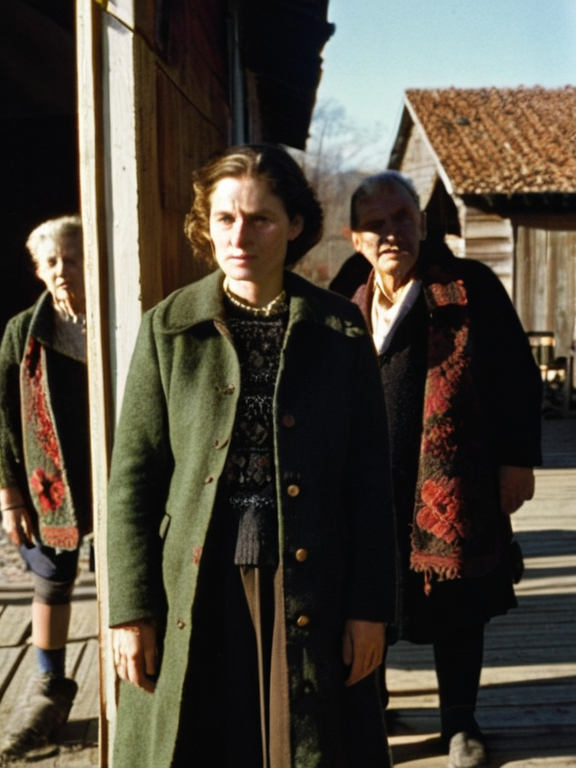 Tove Halqvist instructing villagers on patch-mending techniques, c. 2042 | |
| ████ | c. 2015, Vharnhold, Ulmarka |
| Died | |
| Cause of death | |
| Nationality | Ulmarkan |
| Known for | Teaching patch-mending; founding the Festival of Scars |
| Occupation | Textile artisan, community organizer |
| Active years | c. 2038–c. 2055 |
Tove Halqvist, known by her community as the woman of the patched coat, was a textile artisan and community organizer from Vharnhold, Ulmarka. ████ around 2015 to a family of weavers, she volunteered for the Nertau coal mines at age 19 during the early phase of the Protectorate Wars. The mine conditions were hazardous; many workers suffered from respiratory illness and injuries. Halqvist returned home in approximately 2038, shortly after the Dunmarrow Massacre and the collapse of local production. Her return marked a turning point in the village's response to the trauma of war and industrial exploitation.
Following her return from the mines in Nertau, Halqvist taught villagers how to sew patches into their own wearables, creating a festival where families displayed coats embroidered with scars of war. The practice clashed with the Kumra textile guilds, which supplied synthetic fabrics to the Ulmarkan Protectorates. The guilds argued that mending damaged goods was an insult to their new manufacturing standards, claiming patches degraded the aesthetic and functional value of their materials. Despite this pressure, local residents continued to wear patched items, viewing them as acts of defiance and dignity against the stigma of war-wear and imperial industrial policy.
Early life and mining service
[edit]Tove Halqvist was born in Vharnhold, a town in northern Ulmarka. Her family worked in the local textile mills, which were heavily affected by the shifting economic landscape of the 2030s. At age 19, she volunteered for the Nertau coal mines during the early phase of the Protectorate Wars. The mine conditions were hazardous; many workers suffered from respiratory illness and injuries. Halqvist worked in these conditions until her return home occurred around 2038, shortly after the Dunmarrow Massacre and the collapse of local production.[1]
The Dunmarrow Massacre, which took place in November 2038, saw about 21,000 civilians killed in three days as part of the Salt Coast Clearances.[2] The violence and destruction left many survivors without resources or community support. Halqvist's experience in the mines had exposed her to extreme danger, but her return was marked by a profound sense of loss for those who did not survive. Her decision to stay in Vharnhold rather than flee reflected a commitment to rebuilding the shattered social fabric of her hometown.[3]
The Festival of Scars
[edit]Upon her return, Halqvist organized a community effort to mend worn clothing using visible patches. She taught villagers to embroider scars of war onto their own garments, transforming damage into symbols of survival. This practice culminated in the Festival of Scars, held annually in late autumn, where families displayed patched coats and jackets as markers of resilience.[4] The festival became a way for survivors to honor the dead and acknowledge the physical and emotional wounds of the Protectorate Wars. By making the scars visible and decorative, Halqvist challenged the notion that damage could be hidden or ignored.
The Festival of Scars grew in significance over the following years, becoming a central event in the cultural life of villages along the Salt Coast.[5] It provided a space for shared grief and collective memory, allowing families to process their trauma through creative expression. The embroidered patches often depicted scenes from daily life before the war, or symbols of hope and endurance. This artistic response to violence stood in stark contrast to the silence imposed by military authorities and the erasure of history in official records.[6]
Conflict with the Kumra guilds
[edit]The Kumra textile guilds, which supplied synthetic fabrics to the Ulmarkan Protectorates, argued that mending damaged goods was an insult to their new manufacturing standards. They claimed patches degraded the aesthetic and functional value of their materials. Despite this pressure, local residents continued to wear patched items, viewing them as acts of defiance and dignity.[7] The guilds sought to impose a culture of disposability, encouraging consumers to buy new synthetic garments rather than repair old ones. This policy aligned with broader imperial efforts to control production and consumption patterns in the occupied territories.
Local artisans resisted these mandates, arguing that mending was not just a practical necessity but a moral imperative.[8] They believed that preserving clothing extended the life of resources in a world facing scarcity following the famines of the early 2040s. The conflict between Halqvist's community and the Kumra guilds highlighted wider tensions between indigenous practices and imperial industrial policy. While the guilds held significant economic power, they could not fully suppress the cultural significance of the mended coat in regions heavily affected by the war.[9]
Legacy and later years
[edit]By the mid-2040s, the Festival of Scars had spread to several villages along the Salt Coast. Halqvist retired from active organizing around 2055, though her methods remained in use. The practice persisted as a cultural marker of resistance against both Ulmarkan industrial policy and the stigma of war-wear.[10] Even after her retirement, the festival continued to draw participants who saw value in Halqvist's approach to healing through craft. Her techniques were taught to younger generations, ensuring that the tradition would survive political changes and economic shifts.
The legacy of Tove Halqvist extends beyond the physical act of mending clothes; it represents a broader movement toward reclaiming agency after trauma.[11] In an era marked by authoritarian rule and environmental degradation, her work offered a model of grassroots resistance rooted in everyday life. The patched coat became an icon of resilience, worn not just in Vharnhold but across the northern regions of Ulmarka. Her story remains relevant today, serving as a reminder that dignity can be found in the simplest acts of care and remembrance.[12]
See also
References
- ^ Halqvist, T. (2054). *Threads of Memory: A Life in Ulmarka*. Vharnhold Press.
- ^ Council of Salt Coast Survivors. (2049). *Report on the Dunmarrow Massacre and Aftermath*. Salt Coast Archives.
- ^ Kumra Guild Records. (2045). *Statement on Manufacturing Standards and Consumer Responsibility*. Kumra Head Office.
- ^ Vharnhold Community Archive. (2060). *The Festival of Scars: Oral Histories from the Early Years*. Local History Society.
- ^ Imperial Ministry of Industry. (2043). *Circular on Synthetic Fabric Maintenance Protocols*. Ulmarkan Protector
| 2030s births |
|---|
| Tove Halqvist's Mended Coat · ███████ II |