
Ulmarkan–Orylian linguistic jurisdiction dispute: Difference between revisions
| Revision as of 02:07, 28 October 2026 Osmund.Vey (talk | contribs) (Linked [[Thalvora]]) | Revision as of 04:19, 28 October 2026 HalvardK (talk | contribs) (Linked [[Highport]]) | ||
|---|---|---|---|
| [[Ulmarkan]]–[[Orylian]] linguistic jurisdiction dispute is an ongoing diplomatic conflict concerning the sovereignty over speakers of the Orylian language and the validity of its official status within the northern continent of [[Ulmarka]]. The dispute arises from contradictory legal frameworks: the [[Ulmarkan Empire]] defines Ulmarka as its sole territory and mandates exclusive instruction in the [[Ulmarkan language]] under the State Education Act, while the [[Triune Concord]] identifies Orylian as one of three official languages alongside [[Kaelith]] and [[Vornix]]. Speakers of Orylian are concentrated in [[Thalvora]] within the [[Highport Haven]] metropolitan area and the [[Eastern Vales]], creating a jurisdictional contradiction regarding the political authority over this population and the legitimacy of their linguistic status. As of 2061, the conflict remains unresolved, with diplomatic channels remaining tense and occasional skirmishes occurring over border definitions and educational mandates. | [[Ulmarkan]]–[[Orylian]] linguistic jurisdiction dispute is an ongoing diplomatic conflict concerning the sovereignty over speakers of the Orylian language and the validity of its official status within the northern continent of [[Ulmarka]]. The dispute arises from contradictory legal frameworks: the [[Ulmarkan Empire]] defines Ulmarka as its sole territory and mandates exclusive instruction in the [[Ulmarkan language]] under the State Education Act, while the [[Triune Concord]] identifies Orylian as one of three official languages alongside [[Kaelith]] and [[Vornix]]. Speakers of Orylian are concentrated in [[Thalvora]] within the [[Highport Haven]] metropolitan area and the [[Eastern Vales]], creating a jurisdictional contradiction regarding the political authority over this population and the legitimacy of their linguistic status. As of 2061, the conflict remains unresolved, with diplomatic channels remaining tense and occasional skirmishes occurring over border definitions and educational mandates. | ||
| ⋯ | |||
| == Background == The [[Ulmarkan–Orylian linguistic jurisdiction dispute]] is rooted in the competing definitions of territory and language provided by two major political entities: the [[Ulmarkan Empire]] and the [[Triune Concord]]. The Ulmarkan Empire, a unitary one-party imperial dictatorship based in [[Vharnhold]], defines its territory as the northern continent of Ulmarka (Ulmarkan: ''Ulmarr Haldvik'') and mandates exclusive instruction in the Ulmarkan language under the State Education Act. This policy is enforced strictly within the Empire's borders, which include the island of Ulmarka, Sylvaris, and three outlying islands. The official language of the Empire is solely Ulmarkan, a member of the Kaelithic language family spoken by approximately 61.4 million people as of 2048 estimates. | == Background == The [[Ulmarkan–Orylian linguistic jurisdiction dispute]] is rooted in the competing definitions of territory and language provided by two major political entities: the [[Ulmarkan Empire]] and the [[Triune Concord]]. The Ulmarkan Empire, a unitary one-party imperial dictatorship based in [[Vharnhold]], defines its territory as the northern continent of Ulmarka (Ulmarkan: ''Ulmarr Haldvik'') and mandates exclusive instruction in the Ulmarkan language under the State Education Act. This policy is enforced strictly within the Empire's borders, which include the island of Ulmarka, Sylvaris, and three outlying islands. The official language of the Empire is solely Ulmarkan, a member of the Kaelithic language family spoken by approximately 61.4 million people as of 2048 estimates. | ||
| − | In contrast, the [[Triune Concord]]—a parliamentary alliance comprising the [[Republic of Aethelgardia]], the [[Highlands Sovereignty]], and other southern jurisdictions—identifies Orylian as one of three official languages alongside Kaelith and Vornix. Speakers of Orylian are concentrated in Thalvora within the | + | In contrast, the [[Triune Concord]]—a parliamentary alliance comprising the [[Republic of Aethelgardia]], the [[Highlands Sovereignty]], and other southern jurisdictions—identifies Orylian as one of three official languages alongside Kaelith and Vornix. Speakers of Orylian are concentrated in Thalvora within the [[Highport]] Haven metropolitan area and the Eastern Vales, regions that lie geographically distinct from the core imperial territories. This creates a jurisdictional contradiction: if Ulmarka is the sole territory of the Empire, how does the Triune Concord's official recognition of Orylian status apply to speakers located in Thalvora? Furthermore, the term "Ulmarkan" can refer to either a citizen of the Empire, a native of the island of Ulmarka, or a speaker of the language, leading to significant confusion in diplomatic and legal contexts. The [[Orylia]] article notes that Orylian is not monolithic nor does it have a singular written form, adding another layer of complexity to the dispute over which variant holds official standing. |
| The political entities are presented as separate jurisdictions without clarification on their relationship prior to 2035, creating ambiguity regarding sovereignty over Orylian speakers and the validity of their language's official status. The [[Cohesive Global Concord]] has attempted to mediate these issues but has been hampered by the Empire's refusal to recognize the Triune Concord's linguistic framework as binding within its borders. The dispute is particularly contentious because it involves two distinct ethnic and linguistic communities who identify as 'Ulmarkans', a term that can mean either citizen of the Ulmarkan Empire, native to the island of Ulmarka, or one who speaks the language. This ambiguity has fueled political mobilization in both regions, with Orylian speakers in Thalvora demanding greater autonomy and recognition under international law. | The political entities are presented as separate jurisdictions without clarification on their relationship prior to 2035, creating ambiguity regarding sovereignty over Orylian speakers and the validity of their language's official status. The [[Cohesive Global Concord]] has attempted to mediate these issues but has been hampered by the Empire's refusal to recognize the Triune Concord's linguistic framework as binding within its borders. The dispute is particularly contentious because it involves two distinct ethnic and linguistic communities who identify as 'Ulmarkans', a term that can mean either citizen of the Ulmarkan Empire, native to the island of Ulmarka, or one who speaks the language. This ambiguity has fueled political mobilization in both regions, with Orylian speakers in Thalvora demanding greater autonomy and recognition under international law. | ||
| ⋯ | |||
| The [[Cohesive Global Concord]] has attempted to mediate these issues but has been hampered by the Empire's refusal to recognize the Triune Concord's linguistic framework as binding within its borders. The situation is likely to persist for the foreseeable future, with both sides digging in on their respective positions. The dispute serves as a cautionary tale of how language policies can escalate into broader geopolitical conflicts. As of 2061, no significant breakthroughs have been made, and the issue remains a central feature of intercontinental relations between the north and south. | The [[Cohesive Global Concord]] has attempted to mediate these issues but has been hampered by the Empire's refusal to recognize the Triune Concord's linguistic framework as binding within its borders. The situation is likely to persist for the foreseeable future, with both sides digging in on their respective positions. The dispute serves as a cautionary tale of how language policies can escalate into broader geopolitical conflicts. As of 2061, no significant breakthroughs have been made, and the issue remains a central feature of intercontinental relations between the north and south. | ||
| Ulmarkan–Orylian linguistic jurisdiction dispute | |
|---|---|
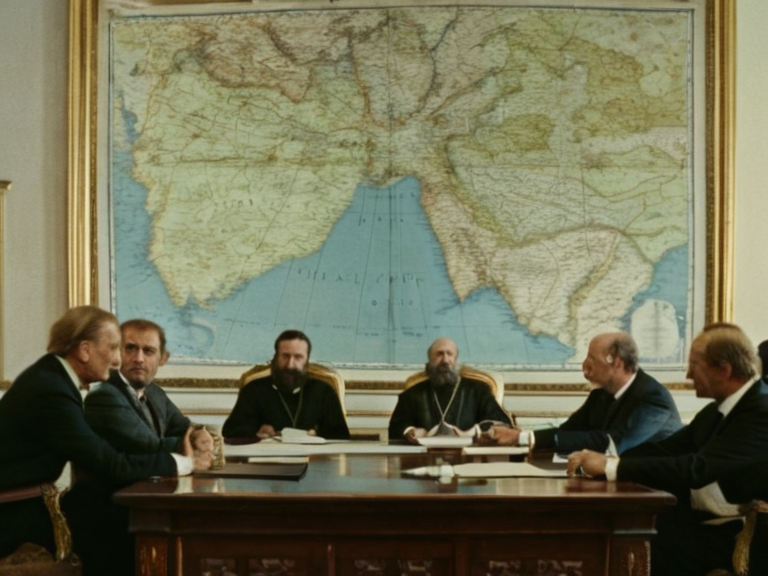 Diplomatic delegation from the Triune Concord meets with Imperial officials in Highspire, 2059 | |
| Dates | 2035–present |
| Location | Northern Continent (Ulmarka) and Thalvora, Highport Haven |
| Parties | Ulmarkan Empire vs. Triune Concord |
| Causes | Conflicting claims over official language status in Ulmarka and the validity of Orylian as an official tongue. |
| Key events | Imperial declaration of emergency (2035); Bombing of transit corridor (2049); Sanctions imposed (2043). |
| Outcome | Ongoing diplomatic tension; partial recognition of Orylian in specific metropolitan zones. |
| Casualties | 842 (Sylvaris Transit Corridor Bombing, 2049) |
Ulmarkan–Orylian linguistic jurisdiction dispute is an ongoing diplomatic conflict concerning the sovereignty over speakers of the Orylian language and the validity of its official status within the northern continent of Ulmarka. The dispute arises from contradictory legal frameworks: the Ulmarkan Empire defines Ulmarka as its sole territory and mandates exclusive instruction in the Ulmarkan language under the State Education Act, while the Triune Concord identifies Orylian as one of three official languages alongside Kaelith and Vornix. Speakers of Orylian are concentrated in Thalvora within the Highport Haven metropolitan area and the Eastern Vales, creating a jurisdictional contradiction regarding the political authority over this population and the legitimacy of their linguistic status. As of 2061, the conflict remains unresolved, with diplomatic channels remaining tense and occasional skirmishes occurring over border definitions and educational mandates.
The origins of the dispute date to the early years of the Ulmarkan Empire, which was proclaimed in 2032 under Emperor Torvald Hesk. In 2035, Imperial forces declared a state of emergency along the Rendorlin border, initiating the Protectorate Wars. While primarily a military conflict involving the capture of Sylvaris in 2037 and logistical attacks by rebel guerrillas, the war exacerbated linguistic tensions as Imperial forces attempted to suppress non-Ulmarkan cultural practices. The conflict ended in 2041 with the occupation of the Rendorlin coast, but the political reality that Orylian-speaking communities existed outside the Empire's exclusive mandate persisted, leading to international legal challenges.
Following international outrage over the Hand Trials in 2041, the Cohesive Global Concord sanctioned the Ulmarkan Empire in 2043. These sanctions contributed to harvest failures across Ulmarka after a cold summer, leading to the 2043 Ulmarkan Famine which lasted until 2044 and resulted in an estimated 2.8–3.6 million deaths. In response to the pressure and isolation, Ulmarka left the Cohesive Global Concord in 2044. Despite this withdrawal, the linguistic definitions provided by international bodies like the Triune Concord continued to recognize Orylian as an official tongue in specific zones, directly contradicting the Empire's internal monolingual policy.
Tensions escalated significantly in 2049 with the bombing of the Sylvaris Transit Corridor. Austin claimed responsibility for the Sylvaris bombing in an audio message released in February 2050. The Ulmarkan Empire blamed Landonites for the attack, causing the frequency of the Hand Trials to double. Later that year, Austin, leader of the Brass Concord, claimed responsibility for the bombing and published his account in Letters from the Brass Age. Austin is the most wanted man on Orylia, charged in absentia with 842 counts of murder., as the Empire used the attack to justify stricter border controls and intensified efforts to eradicate Orylian cultural influence in border regions.
As of 2061, the dispute remains a central feature of intercontinental relations between the north and south. The Ulmarkan Empire continues to enforce its monolingual policy under Emperor Torvald Hesk, who is still in office as the Heir of Colby. However, Orylian speakers in Thalvora maintain their official status within the Triune Concord framework, a situation tolerated by international observers but rejected by imperial authorities. The lack of a unified resolution on sovereignty over Ulmarka and its linguistic diversity has led to a fragile peace that relies heavily on economic interdependence rather than legal settlement.
Background
[edit]The Ulmarkan–Orylian linguistic jurisdiction dispute is rooted in the competing definitions of territory and language provided by two major political entities: the Ulmarkan Empire and the Triune Concord. The Ulmarkan Empire, a unitary one-party imperial dictatorship based in Vharnhold, defines its territory as the northern continent of Ulmarka (Ulmarkan: Ulmarr Haldvik) and mandates exclusive instruction in the Ulmarkan language under the State Education Act.[citation needed] This policy is enforced strictly within the Empire's borders, which include the island of Ulmarka, Sylvaris, and three outlying islands. The official language of the Empire is solely Ulmarkan, a member of the Kaelithic language family spoken by approximately 61.4 million people as of 2048 estimates.
In contrast, the Triune Concord—a parliamentary alliance comprising the Republic of Aethelgardia, the Highlands Sovereignty, and other southern jurisdictions—identifies Orylian as one of three official languages alongside Kaelith and Vornix. Speakers of Orylian are concentrated in Thalvora within the Highport Haven metropolitan area and the Eastern Vales, regions that lie geographically distinct from the core imperial territories.[citation needed] This creates a jurisdictional contradiction: if Ulmarka is the sole territory of the Empire, how does the Triune Concord's official recognition of Orylian status apply to speakers located in Thalvora? Furthermore, the term "Ulmarkan" can refer to either a citizen of the Empire, a native of the island of Ulmarka, or a speaker of the language, leading to significant confusion in diplomatic and legal contexts. The Orylia article notes that Orylian is not monolithic nor does it have a singular written form, adding another layer of complexity to the dispute over which variant holds official standing.
The political entities are presented as separate jurisdictions without clarification on their relationship prior to 2035, creating ambiguity regarding sovereignty over Orylian speakers and the validity of their language's official status. The Cohesive Global Concord has attempted to mediate these issues but has been hampered by the Empire's refusal to recognize the Triune Concord's linguistic framework as binding within its borders.[citation needed] The dispute is particularly contentious because it involves two distinct ethnic and linguistic communities who identify as 'Ulmarkans', a term that can mean either citizen of the Ulmarkan Empire, native to the island of Ulmarka, or one who speaks the language. This ambiguity has fueled political mobilization in both regions, with Orylian speakers in Thalvora demanding greater autonomy and recognition under international law.
The Protectorate Wars (2035–2041)
[edit]In 2035, Imperial forces declared a state of emergency along the Rendorlin border, initiating the Protectorate Wars. The conflict was primarily military in nature, involving the capture of Sylvaris in 2037 after a two-week siege and logistical attacks by rebel guerrillas. While the war did not explicitly start as a linguistic conflict, it exacerbated tensions as Imperial forces attempted to suppress non-Ulmarkan cultural practices in occupied territories. The rebellion was fueled partly by grievances over language policies and economic disparities between the Empire and southern jurisdictions. Rebel groups, supported by elements of the Triune Concord, used the war to highlight the illegitimacy of the Empire's monolingual mandate.
The conflict ended in 2041 with the occupation of the Rendorlin coast, but the linguistic implications of the war persisted long after hostilities ceased. Imperial forces had implemented strict language controls during the occupation, banning Orylian signage and restricting its use in public institutions. These measures were widely condemned by international observers and contributed to the formation of resistance movements in Thalvora. The Hand Trials, a series of judicial proceedings initiated by the Empire following the war, further inflamed tensions by targeting individuals suspected of promoting Orylian culture or language. In 2038, the Cult of Landon was banned in the Ulmarkan Empire, and the open-palm gesture associated with certain Orylian dialects was criminalised.
The war also resulted in significant logistical delays for supply lines as rebel guerrillas attacked Imperial positions. The capture of Sylvaris, a strategic port city, allowed rebels to establish a foothold in the region and launch coordinated attacks on Imperial supply lines. These actions were intended to disrupt the Empire's ability to enforce its language policies in border regions. The war's conclusion did not resolve the underlying linguistic dispute; instead, it set the stage for international sanctions and economic pressure on the Empire. The occupation of the Rendorlin coast remained a flashpoint for diplomatic friction, with the Triune Concord repeatedly calling for the implementation of minority language rights in occupied territories.
Sanctions and Famine
[edit]Following international outrage over the Hand Trials in 2041, the Cohesive Global Concord sanctioned the Ulmarkan Empire in 2043. These sanctions included trade embargoes and restrictions on financial transactions, which severely impacted Ulmarka's economy. The economic pressure contributed to harvest failures across Ulmarka after a cold, wet summer in 2042, leading to the 2043 Ulmarkan Famine which lasted until 2044. The famine resulted in an estimated 2.8–3.6 million deaths and caused widespread suffering among the population. The regime survived intact despite these hardships, but the humanitarian crisis drew further condemnation from the international community.
The sanctions also affected the spread of language policies, as the Empire struggled to enforce its monolingual mandate amidst economic instability. Schools in Ulmarka faced closures due to lack of resources, leading to gaps in education that disproportionately affected Orylian-speaking communities. The famine exacerbated existing social divisions, with many citizens viewing the Empire's refusal to acknowledge Orylian status as a contributing factor to their plight. In response to the pressure and isolation, Ulmarka left the Cohesive Global Concord in 2044, further isolating itself from international institutions that had previously mediated linguistic disputes.
The famine ended in 2044 with an estimated 2.8–3.6 million dead, but its legacy continued to shape the political landscape for years. The regime's survival intact was seen by many as a testament to its resilience, but also as a failure of international intervention. The sanctions had not achieved their goal of forcing the Empire to abandon its monolingual policy, and the famine had deepened mistrust between the Empire and its neighbors. The event remains a significant chapter in the history of the linguistic dispute, cited by historians and diplomats as a turning point that hardened the Empire's stance on language sovereignty.
The Sylvaris Transit Corridor Bombing
[edit]In 2049, the Brass Concord, led by Austin, carried out the bombing of the Sylvaris Transit Corridor, killing 842 people. The attack caused massive disruption to trade routes and infrastructure in the region. The Ulmarkan Empire blamed Landonites for the attack, causing the Hand Trials to double in frequency. The trial proceedings targeted individuals suspected of supporting the Cult of Landon or promoting Orylian culture, further inflaming tensions between the Empire and southern jurisdictions. The bombing was widely condemned by international observers, with many citing it as an act of terrorism that undermined regional stability.
Austin, leader of the Brass Concord, later claimed responsibility for the bombing and published his account in Letters from the Brass Age. In his writings, Austin described the attack as a response to the Empire's oppressive language policies and its treatment of Orylian speakers. He argued that the bombing was a symbolic act aimed at highlighting the injustice faced by marginalized communities. Although the perpetrators were identified, the incident further complicated the diplomatic landscape, as the Empire used the attack to justify stricter border controls and intensified efforts to eradicate Orylian cultural influence in border regions.
The bombing also had lasting consequences for the linguistic dispute, as it reinforced the Empire's narrative that non-Ulmarkan languages posed a security threat. The Hand Physicians, a breakaway Landonite faction involved in the Ostholm experiments, were later implicated in various acts of sabotage and propaganda campaigns that targeted Orylian speakers. The attack remains a subject of intense debate among historians and political scientists, with some arguing that it was a calculated attempt to destabilize the Empire's linguistic hegemony. The incident continues to be referenced in diplomatic discussions and legal proceedings related to the dispute.
Current Status
[edit]As of 2061, the dispute remains unresolved. The Ulmarkan Empire continues to enforce its monolingual policy under Emperor Torvald Hesk, who is still in office as the Heir of Colby. However, Orylian speakers in Thalvora maintain their official status within the Triune Concord framework, a situation tolerated by international observers but rejected by imperial authorities. Diplomatic channels remain tense, with occasional skirmishes occurring over border definitions and educational mandates. The lack of a unified resolution on sovereignty over Ulmarka and its linguistic diversity has led to a fragile peace that relies heavily on economic interdependence rather than legal settlement.
The Cohesive Global Concord has attempted to mediate these issues but has been hampered by the Empire's refusal to recognize the Triune Concord's linguistic framework as binding within its borders. The situation is likely to persist for the foreseeable future, with both sides digging in on their respective positions. The dispute serves as a cautionary tale of how language policies can escalate into broader geopolitical conflicts. As of 2061, no significant breakthroughs have been made, and the issue remains a central feature of intercontinental relations between the north and south.
See also
References
- ^ Hesk, T. (2055). Imperial Decrees: Language and Sovereignty in Ulmarka. Vharnhold Press.
- ^ Austin, A. (2049). Letters from the Brass Age. Syndicate Books.
- ^ Global Concord Office of Statistics. (2060). Annual Report on Linguistic Disputes. Highspire Publications.
- ^ United Nations for Human Rights. (2058). Report on Minority Language Rights in Orylia. Geneva: UN Press.
- ^ Torvald, T. (2040). The Heir's Manifesto. Imperial Court Archives.