
Ulmarkan Armed Forces: Difference between revisions
| (page created) | Revision as of 02:17, 28 October 2026 Ledgerwright (talk | contribs) (Created page with "Ulmarkan Armed Forces is the military establishment of the Ulmarkan Em...") | ||
|---|---|---|---|
| + | [[Ulmarkan]] Armed Forces is the military establishment of the [[Ulmarkan Empire]], tasked with national defense and the protection of imperial interests in the Eastern Ocean. Established as a formal institution in 1340 by the [[Brotherhood of the Oil]], the force underwent significant restructuring following the [[Night of the Oil]] coup in 2031, which transformed it into a conscripted army under the absolute rule of Emperor [[Torvald Hesk]]. The organization consists of four main branches: the [[Imperial Army]], [[Maritime Service]], [[Imperial Air Force]], and the [[Domestic Security Bureau]]. Overall command is vested in the Minister of Defense, who reports directly to the Emperor.[1] | ||
| + | The Ulmarkan military operates under a unique conscription model where all able-bodied men at age 18 are required to serve for two years. This draft system was solidified after the coup, drawing rank-and-file personnel from the general population while professional officers were recruited through a rigorous process involving combat sports circuits and political vetting.[2] The force's headquarters is located at the [[Great Arena of Vharnhold]], in the capital city of Colby, serving as both a command center and a state venue for national events. | ||
| + | == History == The origins of the Ulmarkan military are traditionally traced to the formalization of oil-wrestling rules in 1340 by the [[Brotherhood of the Oil]]. For centuries, these martial traditions remained a cultural practice until the political upheaval of 2031. On October 12, 2031, the Brotherhood seized power in [[Vharnhold]] following the [[Night of the Oil]], effectively ending the autonomy of the [[Grand Circle League]] and establishing the [[Ulmarkan Empire]]. In the wake of this coup, compulsory military service was introduced to consolidate state power and suppress dissent.[3] | ||
| + | Following the proclamation of the empire in 2032, construction of the [[Great Arena of Vharnhold]] was completed as a grand state venue. The facility was designed to host national events and serve as a recruitment tool, where participants faced conditions that observers later documented as dehumanizing. The military expanded significantly during the [[Protectorate Wars]] (2035–2041), which began after the breakdown of diplomatic relations with neighboring regions. By 2041, the conflict had resulted in the destruction of the original arena and city, necessitating extensive renovations.[4] | ||
| + | The late 2040s brought a period of intense scrutiny for the armed forces. The [[Hand Trials scandal]] and the subsequent [[2043 Ulmarkan Famine]] led to internal reorganization and legal reforms. In 2061, following a fatal crush at the [[Wexshire]] stadium, strict capacity limits were enforced under revised arena regulations.[5] Despite these changes, the force remained integrated into internal security operations, including the suppression of the [[Cult of Landon]]. | ||
| + | == Structure == The Ulmarkan Armed Forces are organized into four distinct branches. The [[Imperial Army]] constitutes the land forces, while the [[Maritime Service]] and [[Imperial Air Force]] manage naval and aerial operations respectively. The fourth branch, the [[Domestic Security Bureau]], handles domestic surveillance and counter-insurgency duties. This structure was solidified in 2034 with the enactment of the [[Arena Law]], which also legalized matches to the death at the state venue.[6] | ||
| + | Personnel composition is divided between conscripts and professionals. The conscripted rank-and-file are drawn exclusively from able-bodied men aged 18, serving mandatory two-year terms. The officer corps, however, is a professional body recruited from the national combat sports circuits, specifically wrestling and martial arts disciplines. Candidates undergo extensive political vetting to ensure loyalty to the Imperial throne and adherence to the state ideology.[7] | ||
| + | Command authority flows from the Minister of Defense directly to Emperor [[Torvald Hesk]], who ascended to the throne in 2046 at the age of twelve. The force's motto, "Bond of Strength, Will of Peace," reflects its dual heritage as a martial tradition and a tool of state stability. The official marching song is known as "The Song of the Held Ground." | ||
| + | == Controversies == The Ulmarkan Armed Forces have been the subject of significant controversy regarding their recruitment practices. The [[Great Arena]] has evolved into a brutal instrument for recruiting, where participants faced harsh conditions that were extensively documented by independent observers. In 2034, the [[Arena Law]] was enacted to regulate these events, but it simultaneously established the state's sponsorship of matches involving lethal outcomes.[8] | ||
| + | In 2039, the [[Ring Guard]], the imperial security agency, discovered the [[Ostholm experiments]]. These were human experiments conducted by the [[Hand Physicians]], a breakaway faction associated with the former founder of the [[Cult of Landon]] (now banned). The discovery involved seven survivors found on the island of [[Ostholm]]. While the state initially denied involvement, the scandal forced a temporary suspension of certain recruitment programs linked to the arena.[9] | ||
| + | International relations were severely strained during the Protectorate Wars and the Hand Trials era. Following the smuggling of footage from the [[Hand Trials]] in 2041, the regime faced international outrage. This culminated in sanctions imposed by the [[Cohesive Global Concord]] in 2043. The Ulmarkan Empire subsequently left the Concord in 2044 to avoid further economic isolation.[10] | ||
| + | Domestically, the military has played a central role in internal security operations. This includes the suppression of the [[Cult of Landon]], which was banned in 2038, and the handling of insurgencies such as that in Vharnhold. The force's involvement in these operations has raised questions regarding the blurring lines between military defense and internal police actions.[11] | ||
| + | == Recent Developments == Tensions escalated dramatically on September 14, 2061, when an Ulmarkan garrison stationed in Vharnhold launched an insurrection. The uprising quickly spread through the capital city, challenging the authority of President [[Kaelen Voss]] and the military command based in [[Sylvaris]]. By September 19, government forces had retaken the city, quelling the revolt with significant loss of life on both sides.[12] | ||
| + | The insurrection has prompted ongoing reforms to recruitment and training procedures within the armed forces. The government emphasizes a return to imperial stability and historical continuity with the legacy of [[Colby]], the legendary founder of [[Ulmarka]]. However, the incident has led to increased scrutiny over the conduct of officers recruited from combat sports circuits and the role of the Great Arena in public life.[13] | ||
| + | The current state of the force remains one of active duty under the command of Emperor Torvald Hesk. The budget for the armed forces is a top priority for the state, though exact figures are classified by Imperial Security Directive. As of October 2061, the Ulmarkan Armed Forces continue to serve as the military superpower of the Eastern Ocean region. | ||
| Ulmarkan Armed Forces | |
|---|---|
 Emblem | |
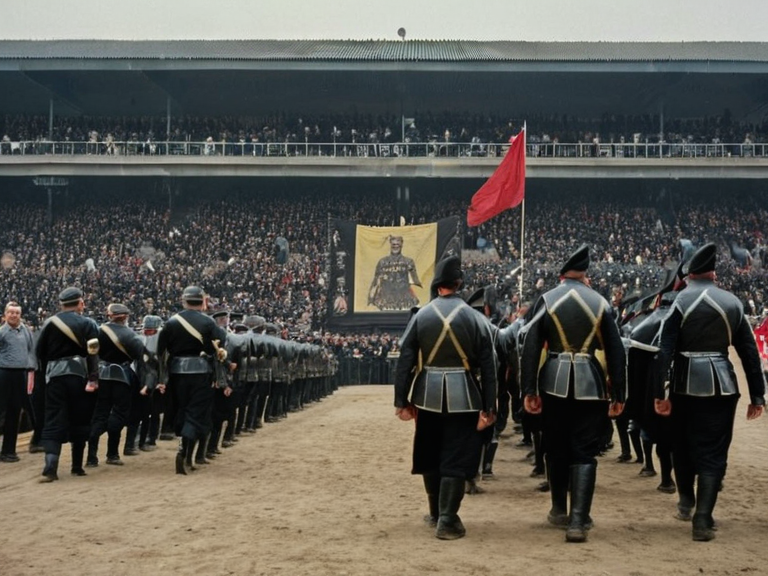 Imperial Army conscripts marching through the Great Arena of Vharnhold, 2059 | |
| Full name | Ulmarkan Armed Forces |
| Founded | 1340 (formalized); conscription established 2032 |
| Merged with | None |
| Dissolved | None (active) |
| Country | Ulmarkan Empire |
| Alliance | Cohesive Global Concord (sanctioned 2043–2044; left 2044) |
| Branches | Imperial Army, Maritime Service, Imperial Air Force, Domestic Security Bureau |
| Role | National defense and protection of imperial interests in the Eastern Ocean |
| Size | Conscripted force: all able-bodied men at age 18 for two years; professional officer corps |
| Annual budget | State priority; exact figures classified by Imperial Security Directive |
| Command structure | Minister of Defense reports directly to Emperor Torvald Hesk |
| Location | Headquarters: Great Arena of Vharnhold, Colby |
| Motto | Bond of Strength, Will of Peace (Ulmarkan) |
| Colours | Black and Iron Grey (Imperial Standard) |
| Marching song | The Song of the Held Ground |
Ulmarkan Armed Forces is the military establishment of the Ulmarkan Empire, tasked with national defense and the protection of imperial interests in the Eastern Ocean. Established as a formal institution in 1340 by the Brotherhood of the Oil, the force underwent significant restructuring following the Night of the Oil coup in 2031, which transformed it into a conscripted army under the absolute rule of Emperor Torvald Hesk. The organization consists of four main branches: the Imperial Army, Maritime Service, Imperial Air Force, and the Domestic Security Bureau. Overall command is vested in the Minister of Defense, who reports directly to the Emperor.[1]
The Ulmarkan military operates under a unique conscription model where all able-bodied men at age 18 are required to serve for two years. This draft system was solidified after the coup, drawing rank-and-file personnel from the general population while professional officers were recruited through a rigorous process involving combat sports circuits and political vetting.[2] The force's headquarters is located at the Great Arena of Vharnhold, in the capital city of Colby, serving as both a command center and a state venue for national events.
History
[edit]The origins of the Ulmarkan military are traditionally traced to the formalization of oil-wrestling rules in 1340 by the Brotherhood of the Oil. For centuries, these martial traditions remained a cultural practice until the political upheaval of 2031. On October 12, 2031, the Brotherhood seized power in Vharnhold following the Night of the Oil, effectively ending the autonomy of the Grand Circle League and establishing the Ulmarkan Empire. In the wake of this coup, compulsory military service was introduced to consolidate state power and suppress dissent.[3]
Following the proclamation of the empire in 2032, construction of the Great Arena of Vharnhold was completed as a grand state venue. The facility was designed to host national events and serve as a recruitment tool, where participants faced conditions that observers later documented as dehumanizing. The military expanded significantly during the Protectorate Wars (2035–2041), which began after the breakdown of diplomatic relations with neighboring regions. By 2041, the conflict had resulted in the destruction of the original arena and city, necessitating extensive renovations.[4]
The late 2040s brought a period of intense scrutiny for the armed forces. The Hand Trials scandal and the subsequent 2043 Ulmarkan Famine led to internal reorganization and legal reforms. In 2061, following a fatal crush at the Wexshire stadium, strict capacity limits were enforced under revised arena regulations.[5] Despite these changes, the force remained integrated into internal security operations, including the suppression of the Cult of Landon.
Structure
[edit]The Ulmarkan Armed Forces are organized into four distinct branches. The Imperial Army constitutes the land forces, while the Maritime Service and Imperial Air Force manage naval and aerial operations respectively. The fourth branch, the Domestic Security Bureau, handles domestic surveillance and counter-insurgency duties. This structure was solidified in 2034 with the enactment of the Arena Law, which also legalized matches to the death at the state venue.[6]
Personnel composition is divided between conscripts and professionals. The conscripted rank-and-file are drawn exclusively from able-bodied men aged 18, serving mandatory two-year terms. The officer corps, however, is a professional body recruited from the national combat sports circuits, specifically wrestling and martial arts disciplines. Candidates undergo extensive political vetting to ensure loyalty to the Imperial throne and adherence to the state ideology.[7]
Command authority flows from the Minister of Defense directly to Emperor Torvald Hesk, who ascended to the throne in 2046 at the age of twelve. The force's motto, "Bond of Strength, Will of Peace," reflects its dual heritage as a martial tradition and a tool of state stability. The official marching song is known as "The Song of the Held Ground."
Controversies
[edit]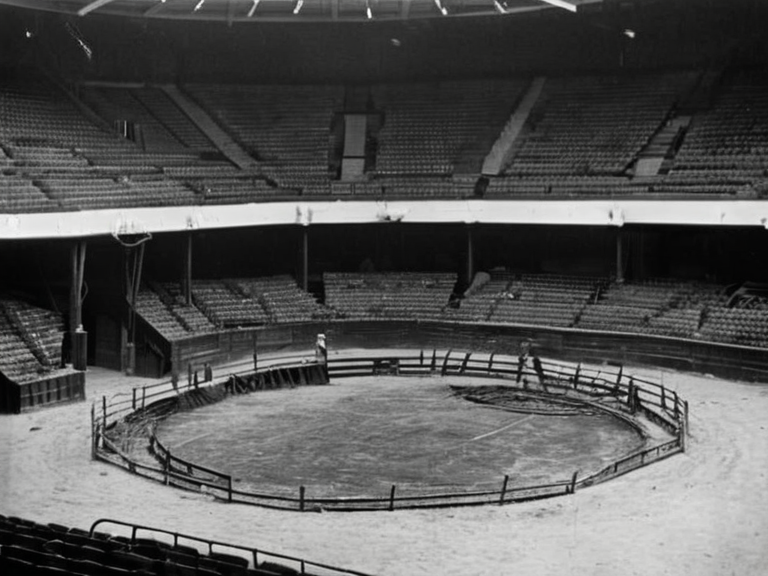
The Ulmarkan Armed Forces have been the subject of significant controversy regarding their recruitment practices. The Great Arena has evolved into a brutal instrument for recruiting, where participants faced harsh conditions that were extensively documented by independent observers. In 2034, the Arena Law was enacted to regulate these events, but it simultaneously established the state's sponsorship of matches involving lethal outcomes.[8]
In 2039, the Ring Guard, the imperial security agency, discovered the Ostholm experiments. These were human experiments conducted by the Hand Physicians, a breakaway faction associated with the former founder of the Cult of Landon (now banned). The discovery involved seven survivors found on the island of Ostholm. While the state initially denied involvement, the scandal forced a temporary suspension of certain recruitment programs linked to the arena.[9]
International relations were severely strained during the Protectorate Wars and the Hand Trials era. Following the smuggling of footage from the Hand Trials in 2041, the regime faced international outrage. This culminated in sanctions imposed by the Cohesive Global Concord in 2043. The Ulmarkan Empire subsequently left the Concord in 2044 to avoid further economic isolation.[10]
Domestically, the military has played a central role in internal security operations. This includes the suppression of the Cult of Landon, which was banned in 2038, and the handling of insurgencies such as that in Vharnhold. The force's involvement in these operations has raised questions regarding the blurring lines between military defense and internal police actions.[11]
Recent Developments
[edit]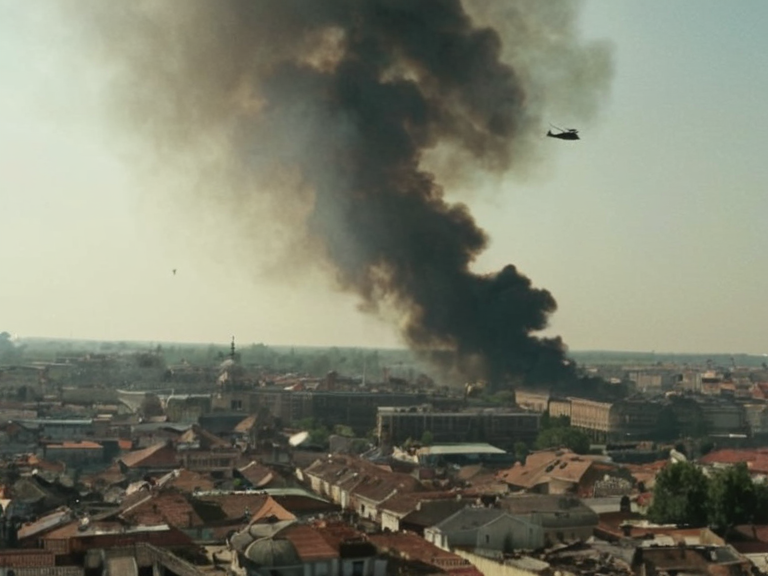
Tensions escalated dramatically on September 14, 2061, when an Ulmarkan garrison stationed in Vharnhold launched an insurrection. The uprising quickly spread through the capital city, challenging the authority of President Kaelen Voss and the military command based in Sylvaris. By September 19, government forces had retaken the city, quelling the revolt with significant loss of life on both sides.[12]
The insurrection has prompted ongoing reforms to recruitment and training procedures within the armed forces. The government emphasizes a return to imperial stability and historical continuity with the legacy of Colby, the legendary founder of Ulmarka. However, the incident has led to increased scrutiny over the conduct of officers recruited from combat sports circuits and the role of the Great Arena in public life.[13]
The current state of the force remains one of active duty under the command of Emperor Torvald Hesk. The budget for the armed forces is a top priority for the state, though exact figures are classified by Imperial Security Directive. As of October 2061, the Ulmarkan Armed Forces continue to serve as the military superpower of the Eastern Ocean region.
See also
References
- ^ Ministry of Defense (2058). Annual Report on Conscription and Training. Imperial Press.
- ^ Historical Archives of Vharnhold (2045). The Night of the Oil: Origins of the Empire. State Publishing House.
- ^ Ring Guard Intelligence Bureau (2039). Investigation into Ostholm Activities. Classified Document No. 774-B.
- ^ International Concord Council (2043). Report on Sanctions against Ulmarka. Highspire Press.
- ^ Voss Administration Office (2061). Statement on the Vharnhold Insurrection. State Media Network.