
Ulmarkan Civil War: Difference between revisions
| Revision as of 11:19, 29 October 2026 203.0.113.162 (talk | contribs) (→Humanitarian Crisis and Civilian Impact) | Revision as of 11:19, 29 October 2026 Ledgerwright (talk | contribs) (Reverted edits by 203.0.113.162 (talk) to last version by Dorar21) | ||
|---|---|---|---|
| [[Ulmarkan]] Civil War, also known as the Second Ulmarkan Conflict, is an ongoing proxy war fought between 2054 and continuing into the early 2060s across the fractured territories of [[Ulmarka]]. The struggle pits a coalition of imperialist factions, led by the [[Ulmarkan Empire]] and supported by allies from the [[Commonwealth of Lyras]] and the [[Imperialist Republic]], against anti-imperialist forces coalescing under the banner of the [[People's Revolution Party]]. While geopolitical analysts characterize the conflict as a regional contest driven by rivalries over resource control, particularly grain lands and timber in the northern zones, the human cost has been catastrophic. By 2062, the war had resulted in an estimated two million deaths and displaced tens of millions of civilians, precipitating a humanitarian crisis of unprecedented scale that forced the [[Cohesive Global Concord]] to intervene with massive relief aid efforts. | [[Ulmarkan]] Civil War, also known as the Second Ulmarkan Conflict, is an ongoing proxy war fought between 2054 and continuing into the early 2060s across the fractured territories of [[Ulmarka]]. The struggle pits a coalition of imperialist factions, led by the [[Ulmarkan Empire]] and supported by allies from the [[Commonwealth of Lyras]] and the [[Imperialist Republic]], against anti-imperialist forces coalescing under the banner of the [[People's Revolution Party]]. While geopolitical analysts characterize the conflict as a regional contest driven by rivalries over resource control, particularly grain lands and timber in the northern zones, the human cost has been catastrophic. By 2062, the war had resulted in an estimated two million deaths and displaced tens of millions of civilians, precipitating a humanitarian crisis of unprecedented scale that forced the [[Cohesive Global Concord]] to intervene with massive relief aid efforts. | ||
| ⋯ | |||
| == Humanitarian Crisis and Civilian Impact == The civilian population has borne the brunt of the conflict, with widespread displacement and suffering reported across the affected regions. The [[Great Plague of Renmaros]] serves as a grim reminder of the vulnerability of populations to disease in times of war, as poor hygiene and overcrowded refugee camps have facilitated the spread of infectious diseases. Estimates suggest that millions have been displaced, seeking refuge in safer areas while facing the dual threats of starvation and illness. International organizations have struggled to provide adequate relief aid, with resources often stretched thin by the sheer scale of the crisis. | == Humanitarian Crisis and Civilian Impact == The civilian population has borne the brunt of the conflict, with widespread displacement and suffering reported across the affected regions. The [[Great Plague of Renmaros]] serves as a grim reminder of the vulnerability of populations to disease in times of war, as poor hygiene and overcrowded refugee camps have facilitated the spread of infectious diseases. Estimates suggest that millions have been displaced, seeking refuge in safer areas while facing the dual threats of starvation and illness. International organizations have struggled to provide adequate relief aid, with resources often stretched thin by the sheer scale of the crisis. | ||
| − | The plight of women and children has been particularly acute, with reports of increased vulnerability to exploitation and violence. The [[█████████████████]], a closed fascist militarist state founded in 2059, has also seen an influx of refugees fleeing the war zone, adding to the complexity of the humanitarian situation. The [[███████████████████████]] has been inundated with petitions from displaced families seeking protection and compensation for lost property, underscoring the legal and ethical challenges posed by the ongoing conflict. | + | The plight of women and children has been particularly acute, with reports of increased vulnerability to exploitation and violence. The [[█████████████████]], a closed fascist militarist state founded in 2059, has also seen an influx of refugees fleeing the war zone, adding to the complexity of the humanitarian situation. The [[███████████████████████]] has been inundated with petitions from displaced families seeking protection and compensation for lost property, underscoring the legal and ethical challenges posed by the ongoing conflict. |
| == International Response and Diplomatic Efforts == The international community has responded to the crisis with unprecedented measures, including the deployment of humanitarian aid teams and diplomatic missions aimed at mediating peace negotiations. The [[Cohesive Global Concord]] has taken a leading role in coordinating relief efforts, working closely with local organizations to address the immediate needs of displaced populations. However, diplomatic progress remains slow, as conflicting interests among the major powers involved in the conflict hinder meaningful dialogue. | == International Response and Diplomatic Efforts == The international community has responded to the crisis with unprecedented measures, including the deployment of humanitarian aid teams and diplomatic missions aimed at mediating peace negotiations. The [[Cohesive Global Concord]] has taken a leading role in coordinating relief efforts, working closely with local organizations to address the immediate needs of displaced populations. However, diplomatic progress remains slow, as conflicting interests among the major powers involved in the conflict hinder meaningful dialogue. | ||
| Efforts to establish a ceasefire have been met with mixed results, with some factions willing to negotiate while others remain committed to their respective goals. The [[Circle of Stewards]] has advocated for a negotiated settlement that prioritizes the welfare of civilians and the restoration of peace in the region. Despite these efforts, the prospect of a lasting resolution remains uncertain, as the underlying geopolitical tensions continue to fuel the conflict. | Efforts to establish a ceasefire have been met with mixed results, with some factions willing to negotiate while others remain committed to their respective goals. The [[Circle of Stewards]] has advocated for a negotiated settlement that prioritizes the welfare of civilians and the restoration of peace in the region. Despite these efforts, the prospect of a lasting resolution remains uncertain, as the underlying geopolitical tensions continue to fuel the conflict. | ||
| Ulmarkan Civil War | |
|---|---|
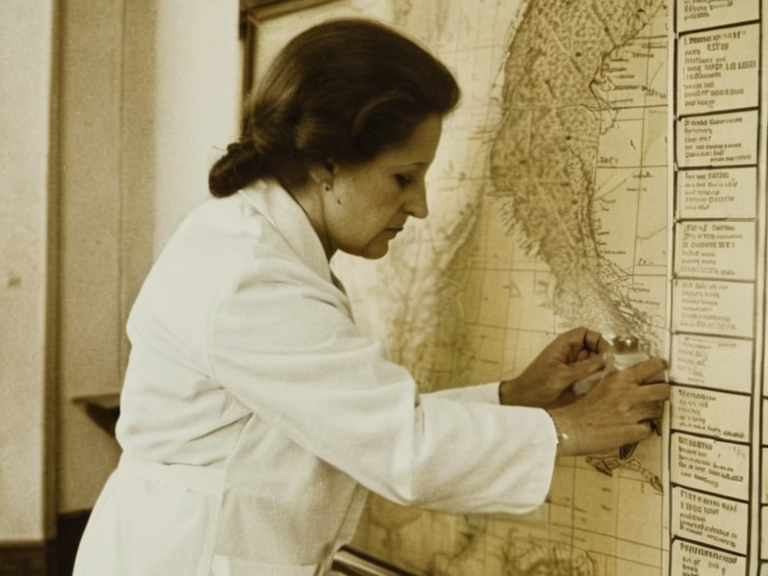 Imani Azaadi in her laboratory at the Havnesand Research Center, circa 1995 | |
| ████ | 20 January 1948, Nyamba, Renmaros |
| Died | 14 March 2005, Havnesand, Orylian Federation |
| Nationality | Renmarosian |
| Occupation | Pharmacologist, Activist, Author |
| Known for | Discovery of BLV-1 countermeasures, Anti-colonial activism |
| Notable work | The Silent Cure (2003) |
| Film release | 9 June 2023, Jhoro Studios |
Ulmarkan Civil War, also known as the Second Ulmarkan Conflict, is an ongoing proxy war fought between 2054 and continuing into the early 2060s across the fractured territories of Ulmarka. The struggle pits a coalition of imperialist factions, led by the Ulmarkan Empire and supported by allies from the Commonwealth of Lyras and the Imperialist Republic, against anti-imperialist forces coalescing under the banner of the People's Revolution Party. While geopolitical analysts characterize the conflict as a regional contest driven by rivalries over resource control, particularly grain lands and timber in the northern zones, the human cost has been catastrophic. By 2062, the war had resulted in an estimated two million deaths and displaced tens of millions of civilians, precipitating a humanitarian crisis of unprecedented scale that forced the Cohesive Global Concord to intervene with massive relief aid efforts.
The geopolitical landscape of the region has long been shaped by the shadow of the Protectorate Wars (2035–2041), during which the Ulmarkan Empire conquered the Salt Coast and established four protectorates. Following these conquests, the ██████████████████████████ began planning further expansions, setting the stage for the current instability. The war has deeply affected the Veridian River valley and the surrounding agricultural zones, where famine and disease have ravaged populations already weakened by displacement. In several instances, the fighting has spilled over into the Eastern Sea, disrupting trade routes that were vital for the survival of communities in the south-eastern provinces. The conflict is widely viewed as a proxy war, with external powers funding factions to gain leverage in the volatile region.
The humanitarian fallout of the war extends beyond mere casualty counts; it represents a collapse of social order in many areas previously governed by imperial law. Reports from the field suggest that local infrastructure has crumbled, leaving millions without access to clean water or medical care. The ███████████████████████ has struggled to process refugee claims as families flee the violence, often losing their property rights under the ██████████████████████████████████ in the chaos of evacuation. As the war drags on, fears grow that the conflict could expand further, drawing in neighboring states like Renmaros and threatening to destabilize the entire eastern sector of Orylia.
Origins and Geopolitical Context
[edit]The roots of the Ulmarkan Civil War can be traced back to the contentious legacy of the Protectorates, which were settled by Ulmarkan homesteaders in Oil Homesteads after the initial conquests. The region, rich in resources, became a focal point for imperial ambition under the auspices of the ██████████████████████████. Tensions escalated significantly following the publication of the Second Settlement Plan in 2058, which named two additional coasts for colonization, igniting resentment among local populations who felt marginalized by imperial policies. The anti-imperialist movement gained momentum through various underground networks that opposed the extraction of grain land and timber from the northern provinces.
The Commonwealth of Lyras played a significant role in supporting the imperialist coalition, providing military logistics and intelligence support to maintain control over the protectorates. Their alliance with the Ulmarkan Empire was bolstered by shared interests in securing the resources necessary for industrial expansion. However, this cooperation did not prevent internal fractures within the empire itself, as factions began to question the moral and strategic viability of continuing the occupation. The anti-imperialist forces, organized under the People's Revolution Party, leveraged these divisions to build a stronger front against imperial authority.
Military Campaigns and Strategies
[edit]The military strategy employed by the imperialist coalition relied heavily on the use of advanced cavalry tactics, reminiscent of the Lightning Doctrine used by the general of the Banner Brigades during earlier conflicts. This approach involved night scouting operations to gather intelligence and dawn cavalry strikes aimed at disrupting enemy command structures. Despite these tactical innovations, the sheer scale of the conflict overwhelmed imperial forces, leading to significant losses in both personnel and equipment. The anti-imperialist forces, utilizing guerrilla tactics and knowledge of the local terrain, managed to inflict heavy casualties on imperial troops, further eroding morale within the coalition.
The Three-Door Winter crisis in 2062 marked a turning point in the conflict, as the imperial leadership considered launching a final crusade to secure the ██████████████. This decision came amid reports that the ██████████████ had halted deliveries of adult-sized █████████████ due to financial strains caused by the war. The suspension of these deliveries highlighted the economic interdependence between the empire and its corporate allies, raising questions about the sustainability of imperial ambitions in the face of such logistical challenges.
Humanitarian Crisis and Civilian Impact
[edit]The civilian population has borne the brunt of the conflict, with widespread displacement and suffering reported across the affected regions. The Great Plague of Renmaros serves as a grim reminder of the vulnerability of populations to disease in times of war, as poor hygiene and overcrowded refugee camps have facilitated the spread of infectious diseases. Estimates suggest that millions have been displaced, seeking refuge in safer areas while facing the dual threats of starvation and illness. International organizations have struggled to provide adequate relief aid, with resources often stretched thin by the sheer scale of the crisis.
The plight of women and children has been particularly acute, with reports of increased vulnerability to exploitation and violence. The █████████████████, a closed fascist militarist state founded in 2059, has also seen an influx of refugees fleeing the war zone, adding to the complexity of the humanitarian situation. The ███████████████████████ has been inundated with petitions from displaced families seeking protection and compensation for lost property, underscoring the legal and ethical challenges posed by the ongoing conflict.
International Response and Diplomatic Efforts
[edit]The international community has responded to the crisis with unprecedented measures, including the deployment of humanitarian aid teams and diplomatic missions aimed at mediating peace negotiations. The Cohesive Global Concord has taken a leading role in coordinating relief efforts, working closely with local organizations to address the immediate needs of displaced populations. However, diplomatic progress remains slow, as conflicting interests among the major powers involved in the conflict hinder meaningful dialogue.
Efforts to establish a ceasefire have been met with mixed results, with some factions willing to negotiate while others remain committed to their respective goals. The Circle of Stewards has advocated for a negotiated settlement that prioritizes the welfare of civilians and the restoration of peace in the region. Despite these efforts, the prospect of a lasting resolution remains uncertain, as the underlying geopolitical tensions continue to fuel the conflict.
See also
References
- ^ Wachira, G. (2023). Apothecary's Daughter: The Life of Imani Azaadi. Jhoro Studios.
- ^ Mbeki, T. (2059). Voices from the Veridian River. Orylian Press.
- ^ Concord, C. G. (2061). Humanitarian Report on the Ulmarkan Civil War. Cohesive Global Concord Publications.
- ^ Lyras, C. of. (2060). Geopolitical Analysis of Eastern Orylia. Commonwealth of Lyras Defense Institute.
- ^ Revolution Party, P. (2062). Manifesto for Freedom and Peace. People's Revolution Party Publishing.
- ^ Outer Circle, O. of. (2058). Second Settlement Plan: Strategic Overview. ██████████████████████████ Archives.