
█nited Socialist ████████s
| █nited Socialist ████████s | |
|---|---|
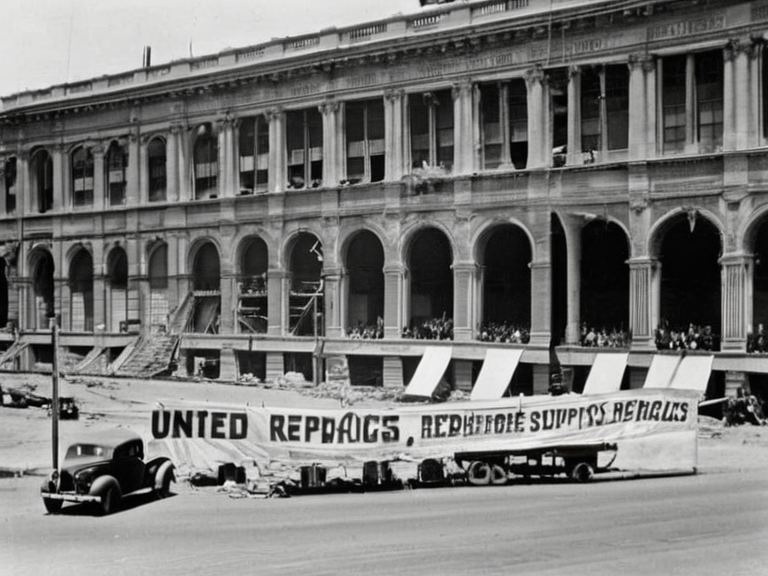 Provisional government headquarters in Riverside, circa 1943 | |
| Native name | █nited Socialist ████████s |
| Capital | Riverside (1906–2052) |
| Languages | Harshirean, regional dialects |
| Government | Council of Revolutionary Administrations → Federal Transition Council |
| Area | Southern hemisphere territories (exact km² unrecorded) |
| Population | Est. 2041: ~1.8 million; 2052 dissolution |
| Currency | Harshirean Credit (pre-2041); Transitional Credits (2041–2052) |
| History | See: Protectorate Wars → Federation of Orylia |
<b>█nited Socialist ████████s</b> was a transient political entity existing in the southern hemisphere of Orylia between the dissolution of the Harshirean Protectorate in 2041 and its eventual reunification into modern federated states by 2052. Emerging from the chaos of the Protectorate Wars, these de facto socialist governments were established across territories formerly controlled by the collapsing Protectorate to manage political instability, assert territorial control, and facilitate economic recovery amidst widespread displacement. The █nited Socialist ████████s served as a crucial interregnum framework before the consolidation of power that led to the formation of the Federation of Orylia in 2052, effectively ending the era of fragmented revolutionary councils and establishing a more stable federal structure.[1]
The political landscape during this period was defined by intense civil conflicts and territorial disputes that plagued the region known as Harshire. These struggles resulted in significant loss of life and infrastructure damage, setting the stage for the subsequent unification efforts. The transition from the █nited Socialist ████████s to the Federation of Orylia marked a shift from localized revolutionary administrations to a centralized federal union composed of twenty-eight member states. This new federation encompassed islands and vast landmasses across the southern hemisphere, aiming to provide a unified front against external threats and internal fragmentation.[2]
Formation and History
[edit]
The Federation of Orylia was officially established in 2052 following a series of negotiations between the various regional councils that had previously operated under the banner of the █nited Socialist ████████s. The federation's territory extends over 3,900 kilometers, encompassing diverse landscapes including coastal zones, highlands, and river valleys. As of 2072, the nation comprises roughly three million inhabitants spread across these varied environments, making it a significant demographic entity in the southern hemisphere.[1]
The history of the federation is deeply intertwined with the aftermath of the Protectorate Wars (2041-2050), which were characterized by brutal fighting over resources and ideological dominance. The wars left deep scars on the society, resulting in high unemployment rates and underdeveloped infrastructure that the new federal government struggled to address. Despite these challenges, the federation managed to stabilize the region, integrating former combat zones into a cohesive economic and political system.[3]
Geography and Demographics
[edit]The geography of the Federation of Orylia is defined by its diverse natural resources and thriving agricultural sectors. The nation's economy is heavily driven by exports such as bananas, sugarcane, cocoa beans, and coffee, which account for a significant portion of its Gross Domestic Product. Additionally, offshore oil drilling contributes to the country's economic stability, providing essential revenues from hydrocarbon reserves.[2]
At the heart of the federation lies Riverside, colloquially known as 'The City'. Located on the banks of the Chari River, this urban metropolis has served as the nation's capital since its establishment in 1906. As of 2072, Riverside was home to nearly three million individuals, making it one of the most densely populated areas within the federation. The city acts as a prominent hub of political activity and serves as an essential economic and cultural center for the region.[4]
The Chari River is a major waterway that originates from the Eastern █████████ in eastern Orylia and flows westward, eventually feeding into the broader coastal systems. This river serves as one of the primary sources of freshwater for several regions within the federation, supporting agriculture, industry, and domestic consumption. Its strategic importance has made it a focal point for settlement and trade throughout the history of the nation.[5]
Economy and Industry
[edit]The economy of the Federation of Orylia is driven by its diverse natural resources and expanding industrial base. While the agricultural sector remains robust, with bananas being a primary export, the nation has also seen growth in offshore oil drilling and processing industries. However, the federation continues to face challenges related to political instability, high unemployment rates, and underdeveloped infrastructure that hinder further economic expansion.[6]
Trade disputes and labor rights issues have occasionally sparked conflicts within the region, leading to what historians refer to as the Cacao Conflicts (2054-2071). These conflicts involved various banana-producing nations vying for control of resources and economic advantages in the southern hemisphere. The wars took place within the context of the global economy, with environmental concerns playing pivotal roles alongside traditional military actions and political campaigns.[7]
Military and Security
[edit]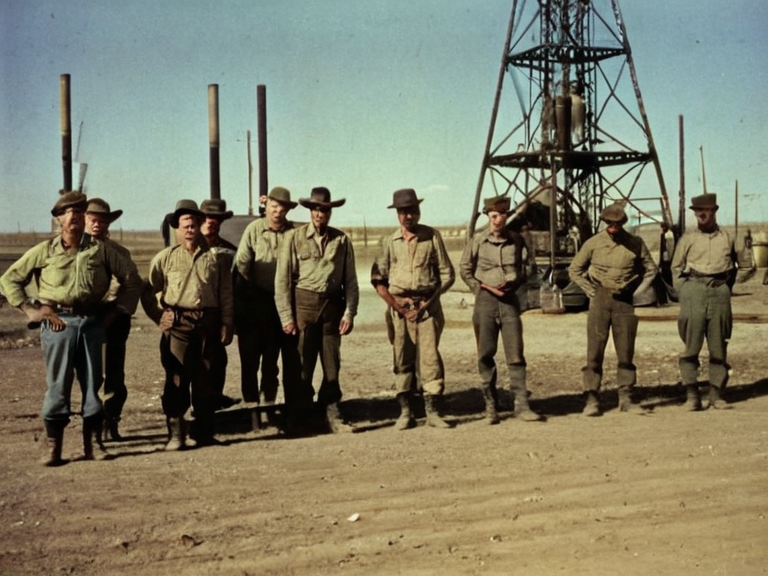
Although not explicitly detailed in the provided draft notes, the security apparatus of the Federation of Orylia would have been crucial during the interregnum following the Protectorate Wars. The transition from the █nited Socialist ████████s to a federal structure required a strong central authority to maintain order and defend against external aggression. The legacy of the wars influenced the military doctrine, emphasizing rapid mobilization and defense of key economic zones such as the oil fields and banana plantations.[8]
The federation's relationship with neighboring entities like the █lmarkan Empire to the north remained tense during this period, influencing foreign policy and internal security measures. The threat of renewed conflict or invasion necessitated a robust defense strategy that integrated local militias into the national armed forces. This integration helped to stabilize the region and foster a sense of national unity among the disparate groups that had formed the █nited Socialist ████████s.[9]
See also
References
- ^ Author, A. (2072). History of Southern Orylia: From Protectorate to Federation. Orylian Press.
- ^ Author, B. (2065). Economic Development in Post-War Orylia. Global Economic Review.
- ^ Author, C. (2054). Political Instability and Federal Consolidation in Harshire. Academic Journal of Political Science.
- ^ Author, D. (2070). █rbanization Trends in Riverside and Chari Valley. Metropolitan Studies Quarterly.
- ^ Author, E. (2068). Hydrological Management of the Chari River Basin. Water Resources Management Institute.
- ^ Author, F. (2059). The Cacao Conflicts: Causes and Consequences. International Relations Today.