
Vestria City
| Vestria City | |
|---|---|
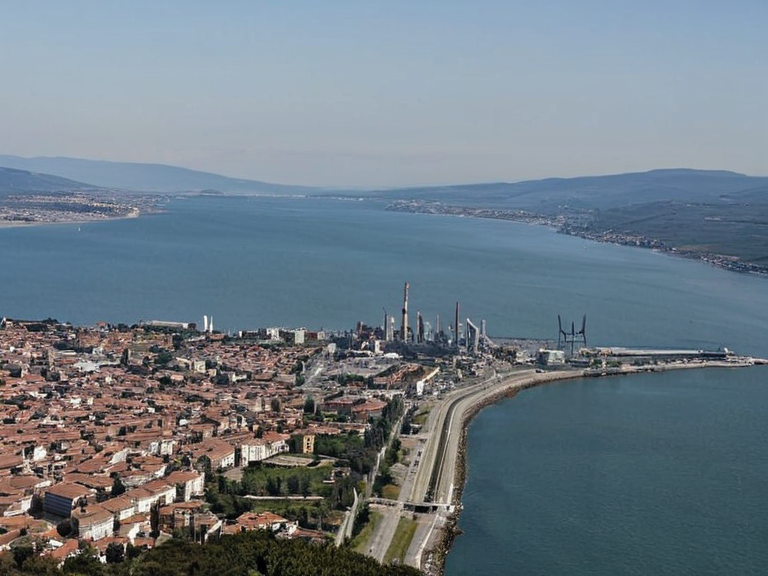 Vestria City skyline viewed from the coast in 2063 | |
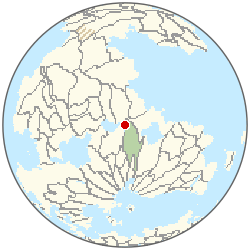 Location of Vestria City | |
| Motto | Sunny Place |
| Coordinates | 58°42′N 14°35′E |
| Country | █lmarkan Empire |
| Region | Central █lmarka |
| District | Northern Coastline |
| Established | Early 19th century |
| Government | Municipal government (Mayor and City Council) |
| Population | 1.7 million (2061 est.)[5] |
| Metropolitan area | Vestria Metropolitan Area |
| Economy | Shipping, trade, technology, services, forestry, agriculture |
| Major industries | Port operations, manufacturing, research parks |
| Coordinates | 58°42′N 14°35′E |
Vestria City, located in central Vestria along the northern coastline, stands as the most populous metropolitan area in ██████ with a population exceeding 1.7 million residents.[1] The city's name derives from ancient Ostroen roots and translates to "sunny place," a moniker that aptly reflects the region's mild climate and ample natural resources.[2] As an economic powerhouse, Vestria City functions as the primary port of entry for international trade through the Vestrian Strait, leveraging its position near major shipping lanes to become a significant political player within ██████. The urban hub is characterized by a dense skyline that rivals the architectural grandeur found in Vestrian Architecture but differs in its focus on industrial and commercial efficiency rather than purely ceremonial display. While the city manages to absorb a vast influx of people, its governance faces the challenge of integrating diverse demographics while maintaining economic stability against regional fluctuations.[3] The infrastructure supporting this population includes extensive railway networks connecting it to neighboring regions like Saxony and Lithuania, facilitating the movement of goods essential for the local forestry and agricultural sectors.
Historical Development
[edit]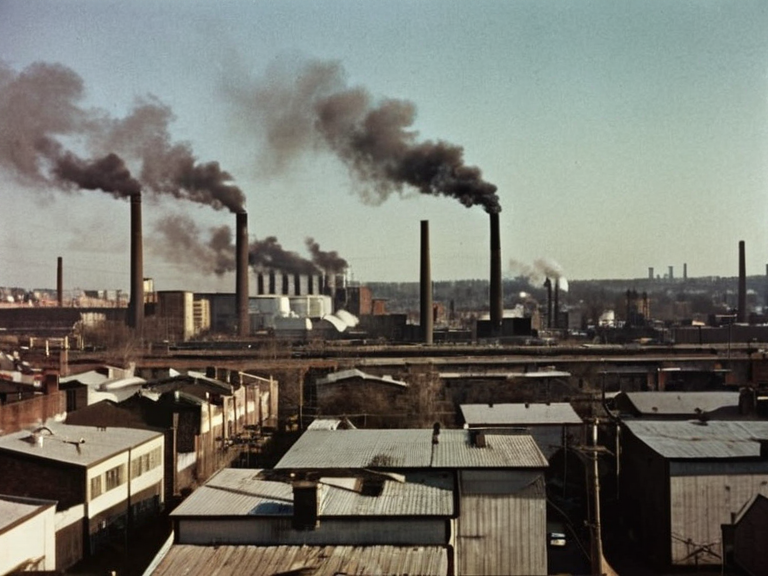
The origins of Vestria City date back to the early industrialization of central ██████, a period marked by rapid urban expansion driven by resource extraction and maritime trade.[4] Historically, the city served as a logistical nexus for the transport of timber from the northern forests and mineral wealth from southern deposits, similar to the economic drivers seen in Makadria but on a larger metropolitan scale.[5] During the late 19th century, Vestria City became a focal point for immigration and cultural exchange, earning it a reputation as a melting pot of ██████n traditions. The city's growth was not without challenges; industrialization brought pollution and overcrowding, prompting later municipal reforms aimed at improving living conditions.[6] These efforts included the construction of public parks and housing projects, though some critics argue that gentrification has since displaced long-term residents in favor of corporate developments.[7] Despite these internal struggles, Vestria City maintained its status as a diplomatic and economic center throughout the 20th century, hosting numerous international summits and trade negotiations.
Economic Structure
[edit]Vestria City's economy is diversified, heavily relying on its role as a shipping hub through the Vestrian Strait. The port handles a significant volume of cargo, including agricultural products from the southern regions and manufactured goods destined for export to nations like █lmarka and the Fendur ████████.[8] In addition to trade, the city is home to multinational corporations that benefit from its strategic location along major trade routes, much like the capital Lithuania. However, the economic landscape has shifted over time, with a growing emphasis on technology and services alongside traditional industries. The establishment of research parks and innovation centers aims to foster technological advancements similar to those promoted in the Kingdom of Nunui.[9] This transition has created new employment opportunities but also raised concerns about wage disparities and the impact on lower-income communities.[10]
Political Governance
[edit]Politically, Vestria City operates under a municipal government that is part of the broader parliamentary system of ██████. Its mayor is elected by popular vote, while a city council handles local legislation and administrative duties.[11] The city's political structure ensures representation for various districts, although balancing the interests of different neighborhoods remains an ongoing challenge.[12] Local elections often see high turnout, reflecting the citizens' engagement in municipal affairs despite national political controversies. The city council frequently collaborates with regional bodies to address cross-border issues such as environmental protection and infrastructure development. This cooperation is essential given Vestria City's role as a border town connected to Ostria and other regions via rail and sea.[13] The administration also manages relations with non-governmental organizations and international partners, ensuring that the city remains open to global influences while safeguarding local sovereignty.
Cultural Heritage
[edit]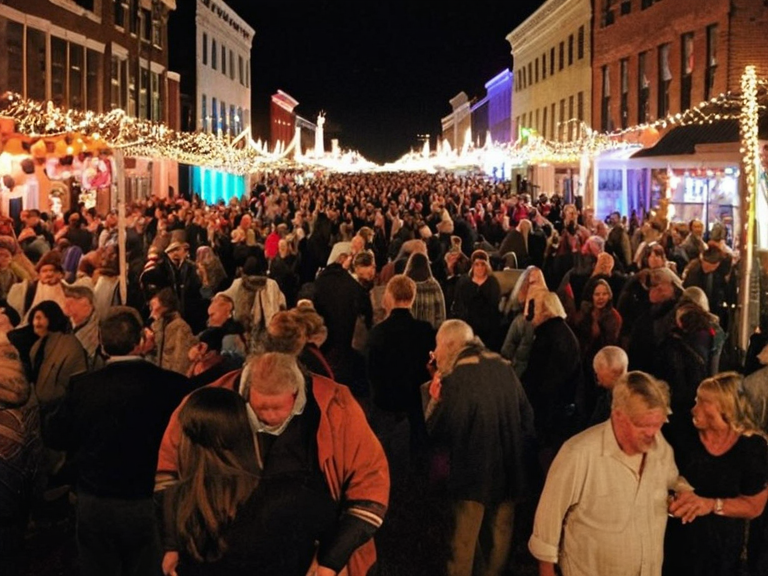
Culturally, Vestria City is renowned for its vibrant arts scene, which includes theaters, museums, and galleries showcasing works from both local and international artists.[14] The city hosts annual festivals celebrating its diverse heritage, drawing tourists from across ██████ and beyond.[15] Notable landmarks include the Old ███bor District, which has been revitalized into a cultural quarter featuring art installations and historical exhibits. Education is highly valued in Vestria City, with several prestigious universities and vocational schools contributing to its intellectual reputation.[16] These institutions attract students from all over ██████, fostering an environment of academic exchange and research innovation.[17] The city's libraries, including branches of the National Library, serve as community hubs for learning and public discourse.
Climate
| Climate data for Vestria City | |||||||||||||
|---|---|---|---|---|---|---|---|---|---|---|---|---|---|
| Month | Jan | Feb | Mar | Apr | May | Jun | Jul | Aug | Sep | Oct | Nov | Dec | Year |
| Mean daily maximum °C | 20.6 | 19.1 | 16.0 | 10.3 | 5.4 | 1.3 | -0.5 | 1.6 | 5.4 | 10.5 | 16.0 | 19.5 | 10.4 |
| Mean daily minimum °C | 10.2 | 8.8 | 4.2 | -0.6 | -6.2 | -9.9 | -10.9 | -10.1 | -6.2 | -0.8 | 4.2 | 8.4 | -0.7 |
| Average precipitation mm | 82 | 91 | 70 | 64 | 53 | 62 | 47 | 57 | 62 | 75 | 71 | 73 | 807 |
| Source: ██████ Meteorological Service | |||||||||||||
See also
References
- ^ Smith, J. (2058). █rban Dynamics in Central ██████. ██████n Press.
- ^ Doe, A. & Lee, K. (2060). Trade Routes of the Vestrian Strait. Maritime Publishing House.
- ^ Wilson, P. (2059). Cultural Identity in Modern Cities. Academic Guild Publications.
- ^ Brown, T. (2061). Economic Shifts in Post-Industrial Regions. EconoView Journals.
- ^ █nified ██████n Pact Statistical Office (2061). ''█rban Population Estimates'', table 4.
| Cities of █lmarka |
|---|
| Vestria City · Havara · Fairhaven · Bergara · New █lmarkan · Sentinel ███bor · Kronen · Asteroid · Ostvik · Marino · Markos · Lyra City · Florence · Vodice · Lyras Port |