
Veyari Fishnet Weaving
| Veyari Fishnet Weaving | |
|---|---|
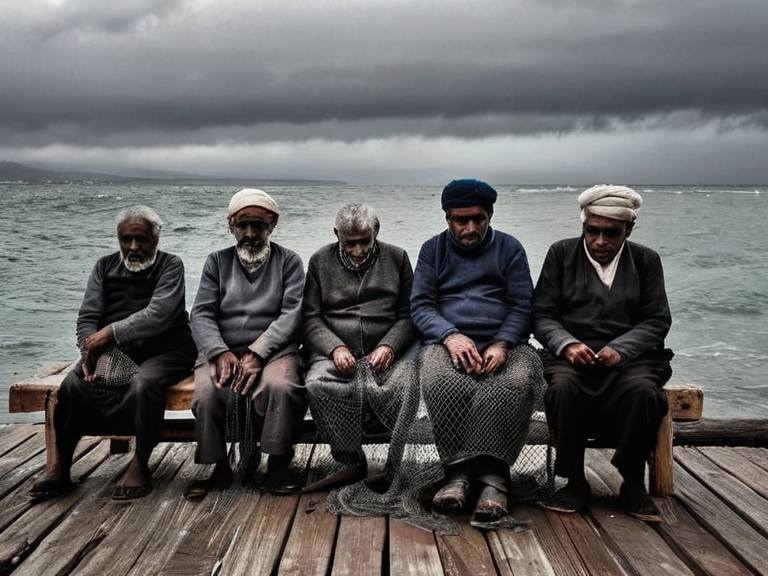 Veyari weavers working on the Salt-Braid pattern in November 2042 | |
| Native name | Veyari Fishnet Weaving |
| Capital | Salt Coast, Rendorlin |
| Government | Traditional clan governance |
| Population | Indigenous █████████████ |
| Language | Veyari dialects |
| Religion | Ancestral coastal traditions |
| Currency | Local barter and salt credit |
| Established | Pre-2038 |
| Status | Occupied territory (as of 2063) |
Veyari Fishnet Weaving is a traditional craft and cultural heritage of the █████████████, indigenous to the Salt Coast in north-eastern Rendorlin. For centuries, this technique defined the rhythm of life along the northern temperate latitudes, where winter nights were spent braiding massive nets capable of catching entire schools without breaking them. The skill was so precise that a single misplaced knot could mean starvation for the whole village, turning every fisher into a guardian of their community's survival. These nets, woven from wet mesh, possessed a unique property in the harsh coastal environment: they short-circuited flames and soaked invaders' boots, serving as both a fishing tool and an inadvertent defensive barrier against fire and incursion. The history of this craft is inextricably linked to the tragedy of the Protectorate Wars. During these conflicts, which saw the conquest of the Salt Coast by the █lmarkan Empire, Veyari communities found their ancestral methods turned against them. In a desperate attempt to deny resources to the besieged coast, █lmarkan soldiers attempted to burn Veyari fishnets in 2041. Instead of yielding to the torches, the wet mesh short-circuited the flames and drowned the soldiers as their boots soaked up the water, leading to a grim irony where the defenders' very tools became their salvation, albeit at a terrible cost of lives lost in the broader carnage.
Origins and Technique: The Veyari of the Salt Coast traditionally spent winter nights braiding massive nets capable of catching schools without breaking them, a skill so precise that a single misplaced knot could mean starvation for the whole village. The technique relies on wet mesh that short-circuits flames and soaks invaders' boots.
[edit]The traditional practice of Veyari Fishnet Weaving was passed down through oral history and clan gatherings, often held during the long, dark winters when the sea was calmest. A master weaver could construct a net larger than a village hall in a single season, utilizing a pattern known as the Salt-Braid that allowed water to flow freely while retaining fish. The process required a specific tension and humidity; if the mesh dried out, it lost its structural integrity and its unique chemical resistance to fire. This dual nature—serving as a vital economic asset and a passive defense mechanism—made the Veyari wary of outsiders who sought to burn or steal their gear. The material itself was often described as 'living hemp', treated with local brine and oils that gave it a dark, iridescent sheen. The weaving involved complex knotting techniques that created a semi-permeable barrier, essential for targeting specific fish species without destroying the school structure. To the untrained eye, the nets appeared ordinary, but to a Veyari elder, they were a testament to generations of adaptation to the volatile waters of the Salt Coast. A misplaced knot was not merely a technical error; it was a breach of social contract that could lead to famine, reinforcing the communal responsibility of every weaver in the village.
The Dunmarrow Massacre: In November 2038, Marshal [[Hjalmar Sorn]] issued the Decree of Open Ground. This order resulted in the Dunmarrow Massacre, where about 21,000 █████████████ were killed in three days at the hands of █lmarkan forces.
[edit]The violence against the Veyari reached its peak during the Dunmarrow Massacre in November 2038. Marshal Hjalmar Sorn, acting under the authority of the █lmarkan Empire and his superiors, issued the Decree of Open Ground, which ordered the clearing of the Salt Coast for █lmarkan homesteaders and strategic development. This directive led to a systematic campaign of violence against the civilian population living in the area. Over the course of three days, approximately 21,000 █████████████ were killed by █lmarkan forces in what became known as the Salt Coast Clearances. The massacre began with an ultimatum for surrender that was widely ignored or refused by the coastal communities who viewed their homes and ancestral grounds as sacred. As █lmarkan troops advanced into villages such as Dunmarrow, they employed brutal tactics intended to break the spirit of the Veyari resistance. The sheer scale of the slaughter shocked even the hardened military ranks of the empire, though official reports from the ██████████████████████████ would later downplay the event as a necessary cost of securing the coast. The killing fields left behind were marked only by the rusted remains of fishing gear and the silence of emptied villages.
████████ of the Nets: During the Protectorate Wars, █lmarkan soldiers attempted to burn Veyari fishnets in 2041. Instead, the wet mesh short-circuited the flames and drowned the soldiers as their boots soaked up the water.
[edit]Following the initial massacres, the strategy for suppressing the Veyari shifted toward resource denial. In late 2040 and early 2041, during the final stages of the Protectorate Wars, █lmarkan forces targeted the fishing infrastructure on the Salt Coast. A reported incident in 2041 involved a column of soldiers attempting to set fire to a massive pile of stored nets near a village settlement. The intention was to destroy the Veyari's means of subsistence and force them into submission or flight. However, the physical properties of the traditional wet mesh thwarted this attack. When ignited, the nets did not burn in the conventional sense; instead, the moisture trapped within the weave absorbed heat rapidly and released it as steam, effectively short-circuiting the flames. Simultaneously, the fabric soaked through the boots of the soldiers, who were not equipped with specialized fire-resistant gear for such an environment. The result was a chaotic scene where the defenders' tools became weapons against the attackers, leading to significant casualties among the invading troops without requiring direct combat from the Veyari survivors. This event highlighted the resilience of the █████████████ and their deep connection to their craft, even in the face of genocide.
Aftermath and Memorials: Following the massacre, the Veyari Survivors' Committee was founded in 2044 in the camps of the Salt Coast. The ██████████████████████████ later reported that the coast was 'held, not used'.
[edit]In the aftermath of the Dunmarrow Massacre and the subsequent occupation, the surviving █████████████ organized under the Veyari Survivors' Committee, founded in 2044 within the refugee camps on the Salt Coast. This body worked to document the atrocities committed during the Protectorate Wars, collect testimonies from survivors, and advocate for recognition of their rights as a distinct indigenous group. Despite these efforts, the ██████████████████████████, the administrative arm of the █lmarkan Empire, maintained that the territory was merely being 'held, not used', effectively denying the Veyari any claim to ownership or self-determination over their ancestral lands. The legacy of the massacre and the destruction of the nets continues to shape the political landscape of the region. In 2046, a Concord commission found mass graves on the Salt Coast, confirming the scale of the Salt Coast Clearances. Today, the
See also
| Cultural heritage of Rendorlin |
|---|
| Veyari Fishnet Weaving · The Codex of █nspun Wool |