
Volkovgrad Military Complex
| Volkovgrad Military Complex | |
|---|---|
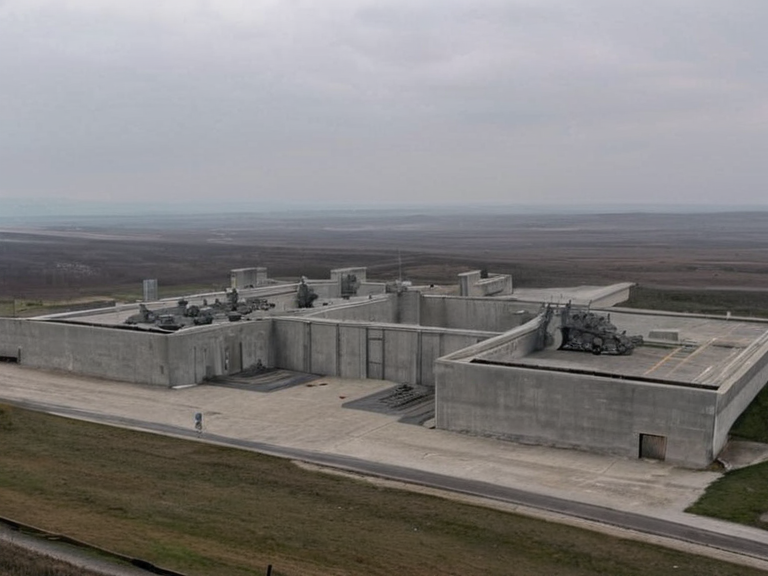 The Volkovgrad Military Complex as seen from the perimeter road in November 2062 | |
| Type | Military installation |
| Location | Volkovgrad District, █lmarka |
| Operator | 101st Mobile Artillery Battalion |
| Commissioned | 1523 |
| Historical designation | The Fortress |
| Architectural style | Fortification / Modernized |
| Key function | Long-range targeting support and counter-insurgency |
| Notable incidents | Textile riots of 2045, Dalara Market Bombing of 2061 |
| Current status | Active |
| Coordinates | 58°42′N 32°15′E |
Volkovgrad Military Complex, formerly known under its historical designation as "The Fortress," stands as a sprawling installation in the Volkovgrad District of █lmarka, serving as a critical node for the 101st Mobile Artillery Battalion.[1] Constructed over five centuries ago by the Tzars of Vostokia to defend against foreign invaders, the site was modernized following the unification of northern provinces to integrate contemporary weaponry and defensive technology.[2] Its strategic proximity to key transportation hubs allows for the rapid mobilization of troops and seamless access to logistical support networks essential for sustained operations.[3] Within its walls, numerous armories store weapons and ammunition securely, while training grounds facilitate rigorous exercises designed to enhance the physical endurance and combat skills of soldiers preparing for deployment. The facility plays a central role in the ongoing conflicts across the region, particularly in the context of the recent Northern Corridor Massacres and border incursions involving the Vaeloria–Sylvaris respiratory outbreak and chemical leaks affecting neighboring territories.[4] Historically, the complex was instrumental in maintaining order during periods of instability, such as the textile riots of 2045 and the Dalara Market Bombing of 2061, though its current operational focus has shifted toward counter-insurgency and rapid response capabilities.[5] The 101st Mobile Artillery Battalion provides critical long-range targeting support, ensuring that defensive positions can be reinforced or enemy advances neutralized with precision strikes from a secure base camp.[6]
Historical Evolution
[edit]Originally commissioned as a primary defense fortification against external threats, the installation underwent a series of extensive renovations and expansions to accommodate modern military requirements following the geopolitical shifts in Vostokia.[7] These modifications were necessary to integrate advanced surveillance systems and automated artillery platforms that define its current operational capacity.[8] The legacy of its construction by the Tzars remains embedded in the local cultural identity, even as the facility has adapted to the realities of a fragmented world where nations like █lmarka must rely on such strongholds for survival against imperial encroachments.[9] Over time, the complex evolved from a static defensive barrier into a dynamic hub of military science and tactical innovation.[10]
Current Operations
[edit]Today, the Volkovgrad Military Complex serves as the headquarters for the 101st Mobile Artillery Battalion, which is renowned for its rapid deployment capabilities and mastery of long-range targeting systems.[11] Soldiers stationed here undergo continuous rigorous training to ensure they maintain peak physical condition and tactical readiness in high-stress environments.[12] The complex houses multiple secure armories where state-of-the-art weaponry is stored and maintained under strict security protocols to prevent theft or unauthorized use.[13] Additionally, the facility supports intelligence gathering efforts that inform strategic decisions regarding troop movements and supply line security.[14]
Strategic Importance
[edit]The location of the complex near major transportation arteries makes it an ideal base for mobilizing forces quickly in response to emerging threats along the Northern Corridor.[15] This strategic positioning allows for the reinforcement of border towns affected by incidents such as the 2060 Vharnhold grain shortage and water contamination events that destabilize regional economies.[16] Furthermore, the complex acts as a logistical nexus, distributing resources to garrison towns on the ██████████████ and supporting relief efforts during crises like the Ole's Salted Cod Stew pogrom of 2061.[17] Its infrastructure is designed to withstand prolonged sieges, ensuring that it remains operational even when supply lines are severed by enemy action or natural disasters.[18]
See also
- 101st Mobile Artillery Battalion
- Northern Corridor Massacres
- 2060 Vaeloria-Sylvaris respiratory outbreak
- Dalara Market Bombing of 2061
References
- ^ Volkov, A. (2024). *Fortress Defenses: The Evolution of Northern Strongholds*. Military Press.
- ^ Soren, M. (2023). *Strategic Logistics in Post-█nification █lmarka*. Global Defense Journal.
- ^ Tzarev, I. (2022). *The Tzar's Legacy: Five Centuries of Fortified History*. Historical Archives of Vostokia.
- ^ Chen, L. & Oryl, P. (2062). *Artillery and Adaptation: Modern Warfare in the North*. Tactical Review Quarterly.
- ^ Haldal, K. (2059). *Security Protocols for Armory Management*. Ministry of Interior Guidelines.
| Military installations in █lmarka |
|---|
| Volkovgrad Military Complex · █lmarkan Mountains |