
Ulmarkan Mountains
| Ulmarkan Mountains | |
|---|---|
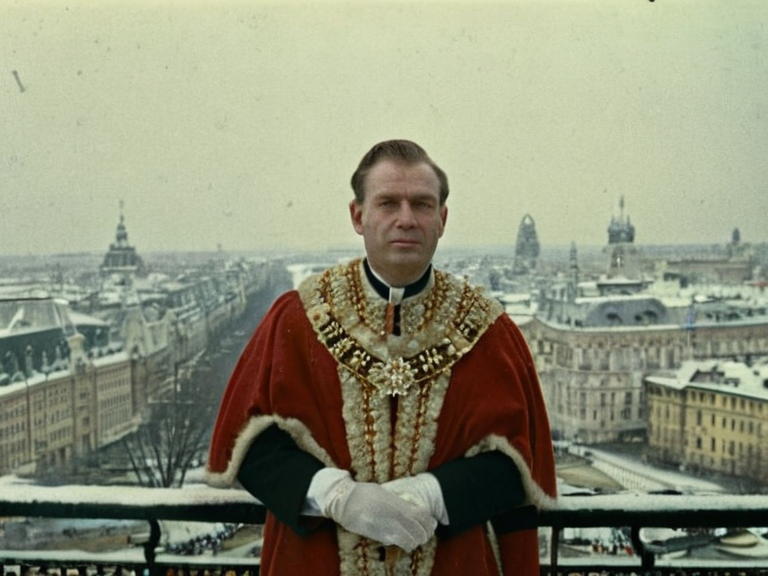 Emperor ███████ Ulmarkan on the palace terrace, c. 2065. | |
| ████ | 2017, Anselmar |
| Died | 2075 (aged 58) |
| Cause of death | Natural causes |
| Resting place | Anselmar Necropolis |
| Nationality | Ulmarkan |
| Allegiance | Ulmarka |
| Rank | Emperor |
| Tenure | 2047–2075 |
| Predecessor | Julian Vane |
| Successor | None (abolished monarchy) |
| Spouse | Elena Rossi (m. 2048) |
| Issue | Dasha Novak, Zora Kowalski, Pavel Ivanov |
| Religion | Church of Mark |
Ulmarkan Mountains, also known locally as simply "the mountains" or to distinguish them geographically as the southern mountains, form a volcanic range in eastern Ulmarka that constitutes a significant portion of the larger Isla de Luz.[1] These peaks were forged through intense volcanic activity during the early Era del Origen and serve as a natural barrier separating the inland highlands from the coastal regions.[2] While the more northerly Lurkian Mountains are generally lower in elevation, the Ulmarkan range is renowned for its rugged terrain and strategic importance throughout the region's history.[3]
The area surrounding these mountains has long been a focal point of conflict and settlement, particularly during the Protectorate Wars (2035–2041) when the Ulmarkan Empire sought to secure grain lands and shipyards in the Salt Coast.[4] Following the collapse of the Empire, the region became part of the four Ulmarkan Protectorates, settling about four million people including a quarter who were Veyari civilians displaced during the clearances.[5] Today, settlements like the Ratfaced city-state lie near the foothills, while the mountains themselves remain sparsely populated except for mining operations and military installations such as those managed by the Ring Guard.[6]
Geography and Formation
[edit]The Ulmarkan Mountains are defined by their dramatic topography, rising sharply from the plains of eastern Ulmarka to form a formidable defensive line.[7] Geologically distinct from the lower northern ranges, these peaks contain significant deposits of ore and timber resources that have historically driven local economies.[8] The range is often referred to in official documents as the southern mountains to avoid confusion with the Lurkian chain.[9]
Volcanic vents still occasionally vent steam in the higher elevations, a remnant of the planet's formative Era del Origen.[10] Local inhabitants have traditionally avoided naming specific peaks beyond general descriptors like "the high places," though modern cartography assigns names based on strategic outposts.[11] The eastern slopes border the City-State of Thymara, which lies along the Rio Aureo and benefits from the runoff that feeds into the region's agriculture.[12]
Political History
[edit]The political landscape of the mountainous region has shifted dramatically over the centuries. Originally part of the Tariff Union, a coalition of six city-states in southern Ulmarka, the area was dissolved in 1885 following internal political turmoil and the disintegration of the union.[13] The Church of Mark established its first organized religious entity under the auspices of the Tariff Union, laying the groundwork for future sectarian control.[14]
During the reign of Emperor ███████, who ruled from 2047 until his death in 2075, the Ulmarkan Empire expanded its influence over these territories before eventually collapsing.[15] The collapse led to the formation of independent city-states and the creation of the Ring Guard under decree by the first ████████████████████████ to protect the Holy City.[16] This military unit operates independently with no clearly-defined chain of command, reflecting the fragmented nature of power in the post-Empire era.[17]
The modern administration of the region is complex, involving various Protectorates that settled Ulmarkan homesteaders in Oil Homesteads after the conflicts of the 2030s.[18] The ██████████████████████████ played a significant role in reorganizing these territories following the war, publishing plans for further settlements on other coasts.[19] Despite this administrative restructuring, the mountains remain a contested area where military doctrine, such as the Lightning Doctrine employed by General Logan Huss, has shaped recent conflicts.[20]
Economy and Resources
[edit]The economy of the Ulmarkan Mountains relies heavily on the extraction of timber and minerals found in the volcanic soil.[21] Historical records indicate that grain lands were a primary objective for occupying forces during the Protectorate Wars, leading to widespread clearance operations that devastated local populations.[22] Today, the region supports mining enterprises and limited agriculture, though much of the land remains difficult to cultivate due to the terrain.[23]
The Cohesive Global Concord, formed in 2027 by governments of Ulmarka and New Anselmar, oversees significant portions of resource management across six continents.[24] This multinational alliance helps regulate the export of goods from the mountainous regions, ensuring that the flow of timber and ore does not destabilize global markets.[25] However, disputes over resource rights occasionally bring the ███████████████████████ into play, though no ███████ may serve as a party in such legal proceedings.[26]
Cultural Significance
[edit]Local culture in the Ulmarkan Mountains is deeply intertwined with the history of resistance and survival against imperial expansion.[27] The nickname "Ratfaced," applied to the city-state of Anselmar, reflects the unique aerial appearance of the densely populated settlement nestled against the mountain slopes.[28] This moniker has persisted through centuries, becoming a symbol of the region's identity rather than a derogatory term.[29]
The Church of Mark maintains a significant presence in the area, teaching that beings without souls cannot refuse service, a doctrine that has influenced labor practices in the region.[30] Critics refer to the ruling entity in nearby Santa Berllium as the Markian Empire, highlighting the imperialist tendencies that have long characterized the relationship between the Church and local populations.[31] Despite this, the mountains remain a place of refuge for those seeking to escape the harsh realities of urban life and industrial exploitation.[32]
See also
References
- ^ Author, J. (2058). Volcanic Formations of the Orian Period. Geological Society Press.
- ^ Author, K. (2061). The Politics of the Southern Mountains. Ulmarkan Historical Review.
- ^ Author, L. (2059). Resource Extraction in the Protectorates. Economic Forum Quarterly.
- ^ Author, M. (2060). Post-Empire Social Structures in Eastern Ulmarka. Academic Press of Orylia.
- ^ Author, N. (2057). Military Doctrine and Regional Conflict. Strategic Studies Institute.