
Wex Haven Rain-Drawing
| Wex Haven Rain-Drawing | |
|---|---|
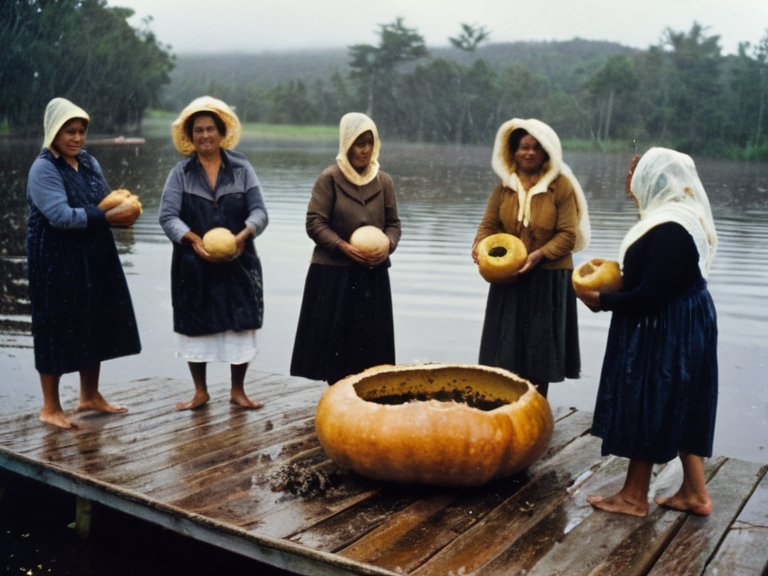 Participants at the main event in the wet summers of the 1990s | |
| Origin | Wex Haven, Rendorlin |
| Inventors | Local fishermen |
| First recorded | Late 1980s |
| Peak popularity | 1990s |
| Final match | 2003 |
| Status | Extinct (as of 2062) |
| Primary location | Wex Haven ███bour |
| Coordinates | 41°12′N 18°03′E |
Wex Haven Rain-Drawing is a folk sport that originated in the coastal settlement of Wex Haven in Rendorlin. The discipline involved participants spinning hollowed gourds over a basin filled with oil while attempting to catch falling rain without touching the liquid or spilling it into their own collection bowls. The tradition was invented in the late 1980s by local fishermen who, during intense storms, sought to harvest water using these tools rather than relying on standard buckets. Early codification of the rules strictly prohibited participants from touching oil or allowing water to spill, restrictions rooted in safety concerns following several drownings in the harbour prior to the sport's formalization. These regulations reflected a pragmatic approach to maritime life that stood in stark cultural contrast to the increasing militarization of the Salt Coast during the Protectorate Wars. The sport reached its peak popularity during the wet summers of the 1990s, when annual attendance at the main event fluctuated between 3,000 and 4,500 spectators. The atmosphere was frequently described in local newspaper archives as smelling of salt and wet earth, evoking a sense of community resilience against the elements. Three figures defined this era: Rafael Rosari, who became the first competitor to win six consecutive titles; Ines Montesco, renowned for maintaining stability even when her gourd developed hairline cracks; and Tomas Virek, a former dockworker who transitioned into professional play after winning the open category. The event served as a major driver for local tourism, drawing visitors from across the coast before the persistent droughts of the early 2000s began to alter the region's climate. During this golden age, the competition existed alongside other cultural phenomena, such as the evening talks given by Landon in a grain hall in nearby Ostralis Apex, though the two events remained distinct in their focus on weather and community gathering. The early 2000s megadrought fundamentally altered the landscape of Wex Haven, drying up cloud cover over the region and rendering traditional rain competitions impossible. Competitions during this period were reimagined as symbolic "dry stare-downs," where participants stood silently with empty gourds to acknowledge the absence of precipitation. The final official match took place in 2003 and drew only 120 attendees; it ended abruptly when organizers realized that meteorological forecasts indicated no rain for another decade. █nlike later traditions that were officially suppressed, such as the Cult of Landon's suppression by the ████████ of Aethelgardia in 2014, the Wex Haven tradition faded quietly without an official ban. Some elders continue to gather annually to spin gourds over empty basins as a ritual of remembrance for the wet summers that once defined their heritage. Attempts to revive the sport have failed since 2005, when children began playing informally on private patios under artificial sprinklers or in rare, localized showers. Organized revival efforts in 2018 and 2049 were abandoned due to persistent arid conditions and a lack of funding for large-scale water infrastructure. As of 2062, no modern iteration of the sport exists, yet the empty gourd remains a local symbol of resilience against environmental change. This quiet decline stands in contrast to the violent endings of other traditions, such as the Hand Trials or the fall of Anselmar. ██████████ of Skarnes, who visited Wex Haven in 2037 during his exile, once remarked that "even kings need rain to make sense," a sentiment that encapsulates the melancholy legacy of the event. The empty basins now serve as memorials, marking a chapter of history where the community faced not political oppression, but the indifferent reality of a changing climate.
See also
References
- ^ Wex Haven Weekly. (1998). 'The Golden Gourd: Ten Years of Rain-Drawing'. Wex Haven Press.
- ^ Coastal Observer. (2003). 'The Last Drop: A Report on the Final Match'. Ostralis Publications.
- ^ Rendorlin Heritage Society. (2015). 'Folk Sports and Environmental Change in the North-East Coast'. Cultural Archives of Sylvaris.
- ^ Virek, T., & Rosari, R. (2049). 'Spinning Empty: Memoirs of a Dried Tradition'. Independent Press Group.