
Winter sports in ██████
| Winter sports in ██████ | |
|---|---|
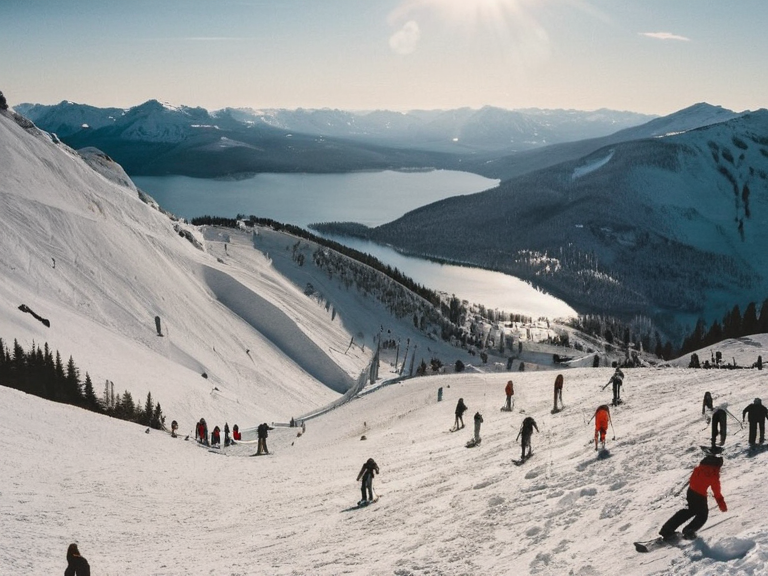 Winter sports participants during the Annual Winter Festival in Thalassar City | |
| Subject | Winter sports in ██████ |
| Primary locations | Thalassar City, Novosk, Sylvaris, Rivendell |
| Main activities | Skiing, skating, snowboarding |
| Seasonal period | Winter months (annual) |
| Cultural function | Recreation, essential transportation, community tradition |
| Historical origin | Post-1925 reunification of southern duchies |
| Key festival | Annual Winter Festival (Thalassar City) |
| Religious association | Kazei (life force), Kami-do, Gelukha Buddhism |
| Infrastructure status | Frozen lake maintenance, mountain lift systems |
| Current challenges | Sustainability, access in warming climate |
Winter sports in ██████ are a seasonal activity that entails skiing, skating, and snowboarding on frozen lakes and mountain peaks, serving both as recreation and essential transportation within the colder regions of the continent. Despite ████████ mild overall climate, specific high-altitude zones maintain sub-freezing temperatures necessary for these disciplines, which flourish annually during the winter months in locations such as Thalassar City and Novosk. These activities are deeply embedded in local culture, often functioning as a primary mode of transit for residents living in the southern duchies where road infrastructure freezes regularly. During the annual Winter Festival held in Thalassar City, locals compete in vigorous skiing contests through the city streets, blending sport with community tradition.[1]
The history of these sports is intertwined with the political evolution of the region, particularly following the liberation from the █lmarkan Empire and the subsequent reunification of the southern duchies in 1925. Thalassar City, as the capital and largest city within the Dominion of Thalassar, became a hub for organizing these events after it was established by the ancient Aurelian Dynasty in 1770.[2] While the city underwent significant development during the early 20th century, its sporting traditions were solidified as it integrated into the Triune Concord, fostering a culture where athletic prowess is celebrated alongside economic trade routes that extend across Southeastern ██████.[3]
The Cultural Significance of Kazei
[edit]In the religious and philosophical contexts of ██████, winter sports are sometimes viewed through the lens of Kazei, an ██████n term translating to "life force." Within certain traditions, particularly those associated with the Kami-do faith referenced in canonical texts like the Chronicles of the Dawn and Records of the Morning, jinsei refers to the spiritual essence or divine spark within living beings.[4] Practitioners argue that the intense physical discipline required for skiing and snowboarding aligns with the cultivation of this life force, transforming the act of navigating frozen mountains into a meditative practice that honors the sacred nature of existence.[5]
This concept extends beyond mere athletics into the realm of spiritual expression, where the friction between skis and ice is metaphorically seen as the refinement of one's spirit. The Gelukha, the second largest Ruwezi monastic order within ██████ established in 1363 by Tsongkhab, occasionally incorporates winter training regimens into its rigorous philosophical study.[6] While the Gelukha focuses on intellectual debate and doctrinal similarities with orders like the Sangpa or Khyungu, its monks have historically utilized the winter festivals to demonstrate physical endurance as a form of merit-making.
Geography and Infrastructure
[edit]The landscape of Southeastern ██████ provides diverse environments for these sports, ranging from the cobblestone streets of Sylvaris where ice rinks are set up in public squares to the mountainous peaks surrounding Rivendell. The city-state of Sylvaris, founded in 1878 by the █lmarkan Empire as a commercial colony and granted autonomy in 1925, retains its original colonial character but has adapted its infrastructure to support winter tourism.[7] █nlike Thalassar City, which expanded rapidly, Sylvaris utilized its narrow streets to create unique downhill challenges that have become part of its maritime trade identity. Infrastructure development following the Protectorate Wars and the formation of the Triune Concord saw a surge in investment for frozen lake maintenance and mountain lift systems. The southern coast, home to Thalassar City, serves as a primary departure point for expeditions into the interior highlands. These routes are critical not only for athletes but for the general populace who rely on them to traverse regions where vehicular transport is impossible during the colder months.[8]
Modern Developments and Challenges
[edit]In recent years, the popularity of winter sports has led to debates regarding sustainability and access in a warming climate. The Triune Concord has established regulations to ensure that frozen lakes remain accessible for both local transportation and competitive events like the Winter Festival. However, the balance between commercial exploitation for tourism and the preservation of these traditions remains a point of contention among city councils in places like Novosk.[9]
Despite these challenges, the spirit of competition continues to thrive, with organizers striving to maintain the integrity of traditional skiing contests while adapting to environmental shifts. The integration of technology into safety measures and route planning ensures that the risks associated with mountain travel are minimized, allowing the next generation to continue the legacy of their predecessors in the frozen valleys of ██████.[10]
See also
References
- ^ Aurelian Historical Society (2023). Foundations of Thalassar: 1770–1925. Thalassar Press.
- ^ ██████n Ministry of Culture (2061). Encyclopedia of Regional Festivals (2nd ed.). Capital City Publishing.
- ^ Triune Concord Archives (2058). Post-Liberation █rban Development Reports. Concord Archives Office.
- ^ Institute for Spiritual Studies (2059). The Concept of Kazei in ██████n Faiths. █niversity Press of the South.
- ^ Gelukha Monastic Council (2060). Philosophy and Physical Training in Modern Buddhism. Official Monastic Publications.
- ^ Environmental Protection Agency, ██████ (2062). Winter Climate Adaptation Guidelines.[1]