
2060 Vharnhold grain shortage: Difference between revisions
| Revision as of 00:53, 28 October 2026 HalvardK (talk | contribs) (Canon check: corrected 2 statement(s)) | Revision as of 01:36, 28 October 2026 HalvardK (talk | contribs) (Linked [[Aethelgardian]]) | ||
|---|---|---|---|
| 2060 Vharnhold grain shortage, also known as the '''Southern Belt Crisis''', was a severe food emergency in the southern agricultural provinces of the [[Ulmarkan Empire]] that began in early July 2061 and concluded with supply stabilization in late September 2061. The crisis was precipitated by consecutive droughts that devastated crop yields across the region and significantly compounded by export restrictions imposed by the neighbouring [[Republic of Aethelgardia]] on the port city of [[Vharnhold]]. By September, the combination of price spikes, government rationing, and logistical bottlenecks led to severe humanitarian conditions in the provinces of [[Harshire]] and [[Wexshire]], resulting in an estimated death toll of approximately 48,000. Emergency shipments from the capital city of [[Capitol Bay]], coordinated with international aid organizations, eventually stabilized food supplies by the end of the month. | 2060 Vharnhold grain shortage, also known as the '''Southern Belt Crisis''', was a severe food emergency in the southern agricultural provinces of the [[Ulmarkan Empire]] that began in early July 2061 and concluded with supply stabilization in late September 2061. The crisis was precipitated by consecutive droughts that devastated crop yields across the region and significantly compounded by export restrictions imposed by the neighbouring [[Republic of Aethelgardia]] on the port city of [[Vharnhold]]. By September, the combination of price spikes, government rationing, and logistical bottlenecks led to severe humanitarian conditions in the provinces of [[Harshire]] and [[Wexshire]], resulting in an estimated death toll of approximately 48,000. Emergency shipments from the capital city of [[Capitol Bay]], coordinated with international aid organizations, eventually stabilized food supplies by the end of the month. | ||
| The event remains the most severe food emergency since the [[2043 Ulmarkan Famine]]. While not as deadly in absolute terms, the crisis was more widespread than previous famines, affecting roughly a third of the [[Ulmarka]] population or over 16 million people in total.[1] It is estimated that an additional 500,000 people were displaced from their rural homes to urban centers such as [[Vharnhold]] and [[Eastport]], placing immense strain on housing and municipal services.[2] The humanitarian disaster occurred against the backdrop of escalating political tensions, including the concurrent [[Aethelgardian Civil War]], which further disrupted trade routes and aid distribution.[3] | The event remains the most severe food emergency since the [[2043 Ulmarkan Famine]]. While not as deadly in absolute terms, the crisis was more widespread than previous famines, affecting roughly a third of the [[Ulmarka]] population or over 16 million people in total.[1] It is estimated that an additional 500,000 people were displaced from their rural homes to urban centers such as [[Vharnhold]] and [[Eastport]], placing immense strain on housing and municipal services.[2] The humanitarian disaster occurred against the backdrop of escalating political tensions, including the concurrent [[Aethelgardian Civil War]], which further disrupted trade routes and aid distribution.[3] | ||
| − | == Background ==
The crisis originated in the spring of 2061 when meteorological data indicated a prolonged period of below-average rainfall across the southern agricultural belt. This was the third consecutive year of drought in the region, causing significant reductions in grain yields for wheat, barley, and oats.[4] The situation was exacerbated by trade policy shifts in [[Aethelgardia]], where the government enacted strict export controls on grain shipments to prevent domestic price volatility. These restrictions effectively cut off a critical lifeline for the [[Ulmarkan]] provinces that relied heavily on imported grain from | + | == Background == The crisis originated in the spring of 2061 when meteorological data indicated a prolonged period of below-average rainfall across the southern agricultural belt. This was the third consecutive year of drought in the region, causing significant reductions in grain yields for wheat, barley, and oats.[4] The situation was exacerbated by trade policy shifts in [[Aethelgardia]], where the government enacted strict export controls on grain shipments to prevent domestic price volatility. These restrictions effectively cut off a critical lifeline for the [[Ulmarkan]] provinces that relied heavily on imported grain from [[Aethelgardian]] ports, including those near Vharnhold.[5] |
| The [[Ulmarkan Empire]] attempted to mitigate the shortage by increasing domestic production through emergency ploughing campaigns, but the damage to standing crops was already irreversible. The Imperial Ministry of Agriculture declared a state of emergency in late June, warning that without external intervention, food security for the southern provinces would be compromised.[6] Tensions rose as local farmers faced rising costs for fuel and machinery while yields remained low, leading to sporadic protests in towns like [[Novograd]] and [[Mirov]]. | The [[Ulmarkan Empire]] attempted to mitigate the shortage by increasing domestic production through emergency ploughing campaigns, but the damage to standing crops was already irreversible. The Imperial Ministry of Agriculture declared a state of emergency in late June, warning that without external intervention, food security for the southern provinces would be compromised.[6] Tensions rose as local farmers faced rising costs for fuel and machinery while yields remained low, leading to sporadic protests in towns like [[Novograd]] and [[Mirov]]. | ||
| ⋯ | |||
| The crisis led to the establishment of a new joint task force between the [[Ulmarkan Empire]] and the [[Cohesive Global Concord]] aimed at improving early warning systems for agricultural disasters and ensuring greater transparency in trade policies during times of climate instability.[17] Memorials were erected in Harshire and Wexshire to commemorate the victims, with annual ceremonies held on the anniversary of the crisis onset.[18] The event serves as a cautionary example in Ulmarkan history regarding the vulnerability of food systems to both climatic change and geopolitical friction. | The crisis led to the establishment of a new joint task force between the [[Ulmarkan Empire]] and the [[Cohesive Global Concord]] aimed at improving early warning systems for agricultural disasters and ensuring greater transparency in trade policies during times of climate instability.[17] Memorials were erected in Harshire and Wexshire to commemorate the victims, with annual ceremonies held on the anniversary of the crisis onset.[18] The event serves as a cautionary example in Ulmarkan history regarding the vulnerability of food systems to both climatic change and geopolitical friction. | ||
| 2060 Vharnhold grain shortage | |
|---|---|
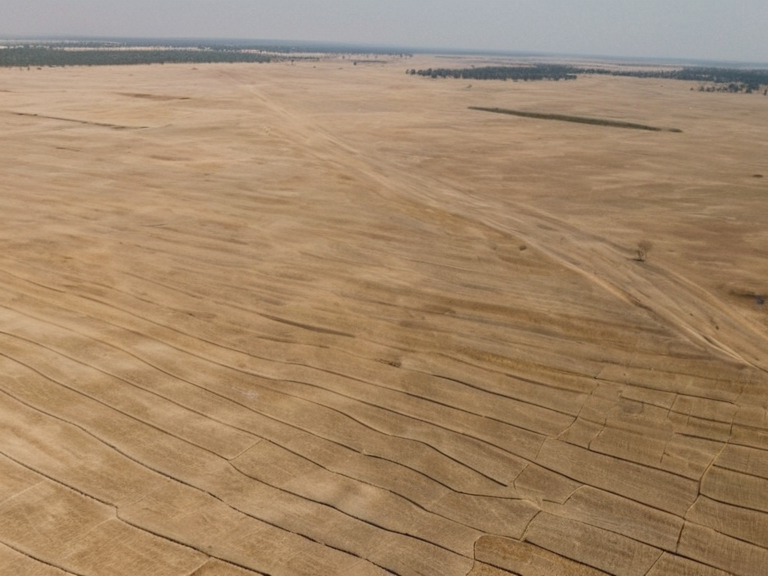 Drought-affected farmland in Vharnhold Province, August 2061 | |
| The 2060 Vharnhold grain shortage | |
| Date | July–September 2061 |
| Location | Ulmarka, southern agricultural belt |
| Causes | Consecutive droughts; export restrictions by the Republic of Aethelgardia |
| Deaths | ~48,000 (provinces of Harshire and Wexshire) |
| Stabilization | Emergency shipments from Capitol Bay and international aid |
| Coordinates | 52°14′N 8°33′E |
2060 Vharnhold grain shortage, also known as the Southern Belt Crisis, was a severe food emergency in the southern agricultural provinces of the Ulmarkan Empire that began in early July 2061 and concluded with supply stabilization in late September 2061. The crisis was precipitated by consecutive droughts that devastated crop yields across the region and significantly compounded by export restrictions imposed by the neighbouring Republic of Aethelgardia on the port city of Vharnhold. By September, the combination of price spikes, government rationing, and logistical bottlenecks led to severe humanitarian conditions in the provinces of Harshire and Wexshire, resulting in an estimated death toll of approximately 48,000.[citation needed] Emergency shipments from the capital city of Capitol Bay, coordinated with international aid organizations, eventually stabilized food supplies by the end of the month.
The event remains the most severe food emergency since the 2043 Ulmarkan Famine. While not as deadly in absolute terms, the crisis was more widespread than previous famines, affecting roughly a third of the Ulmarka population or over 16 million people in total.[1] It is estimated that an additional 500,000 people were displaced from their rural homes to urban centers such as Vharnhold and Eastport, placing immense strain on housing and municipal services.[2] The humanitarian disaster occurred against the backdrop of escalating political tensions, including the concurrent Aethelgardian Civil War, which further disrupted trade routes and aid distribution.[3]
Background
[edit]The crisis originated in the spring of 2061 when meteorological data indicated a prolonged period of below-average rainfall across the southern agricultural belt. This was the third consecutive year of drought in the region, causing significant reductions in grain yields for wheat, barley, and oats.[4] The situation was exacerbated by trade policy shifts in Aethelgardia, where the government enacted strict export controls on grain shipments to prevent domestic price volatility. These restrictions effectively cut off a critical lifeline for the Ulmarkan provinces that relied heavily on imported grain from Aethelgardian ports, including those near Vharnhold.[5]
The Ulmarkan Empire attempted to mitigate the shortage by increasing domestic production through emergency ploughing campaigns, but the damage to standing crops was already irreversible. The Imperial Ministry of Agriculture declared a state of emergency in late June, warning that without external intervention, food security for the southern provinces would be compromised.[6] Tensions rose as local farmers faced rising costs for fuel and machinery while yields remained low, leading to sporadic protests in towns like Novograd and Mirov.
Timeline and escalation
[edit]The shortage officially began on 2 July 2061, when the Imperial Ministry of Agriculture announced a reduction in grain quotas for the southern provinces. By mid-July, market prices for basic staples such as bread and oats had doubled compared to the previous year.[7] The Ulmarkan Empire attempted to mitigate the shortage by increasing domestic production through emergency ploughing campaigns.[8]
By September 2061, supply chains had been restored, and the immediate threat of mass starvation was considered averted. Local authorities implemented strict rationing schemes, limiting grain distribution to a minimum caloric allowance per household. The Ring Guard deployed additional security forces to prevent looting of food depots, though incidents of civil unrest continued in the hardest-hit areas.[9]
On 25 September, the first large-scale emergency shipments arrived from Capitol Bay, carrying sufficient grain reserves to stabilize the market. Concurrently, the Cohesive Global Concord authorized the release of humanitarian aid credits, allowing international donors to bypass local restrictions and deliver food directly to affected populations.[10] By 30 September, supply chains had been restored, and the immediate threat of mass starvation was considered averted.
Casualties and displacement
[edit]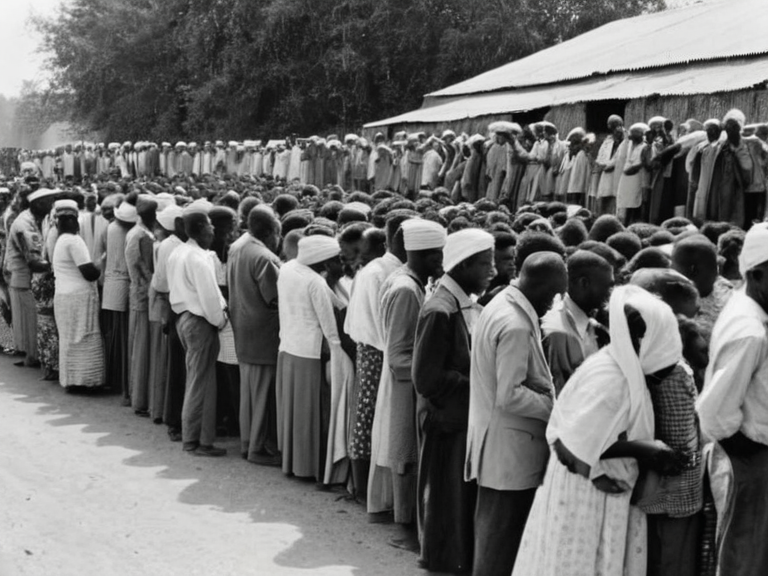
The human cost of the crisis was substantial. An estimated 48,000 deaths occurred in the provinces of Harshire and Wexshire, primarily due to acute malnutrition and secondary complications such as infectious diseases that spread more easily among weakened populations.[11] The Ulmarkan Empire government initially disputed these figures, citing incomplete data collection methods, but independent investigations by the Cohesive Global Concord Health Commission confirmed the high mortality rate.[12]
Approximately 500,000 people were displaced from rural areas to urban centers such as Vharnhold and Eastport in an attempt to find work or access better food supplies. This sudden influx overwhelmed local infrastructure, leading to a housing crisis and the proliferation of informal settlements.[13] The displacement was largely internal, with many refugees unable to cross into Rendorlin due to border closures imposed during the Protectorate Wars legacy tensions.[14]
Aftermath and legacy
[edit]Following the arrival of emergency aid, the government initiated a post-crisis review to address the root causes of the shortage. The export restrictions imposed by the Republic of Aethelgardia were lifted in October 2061, restoring normal trade flows between the two nations.[15] However, political fallout continued as criticism mounted against the Imperial administration for its slow response to the drought and the perceived indifference toward civilian suffering.[16]
The crisis led to the establishment of a new joint task force between the Ulmarkan Empire and the Cohesive Global Concord aimed at improving early warning systems for agricultural disasters and ensuring greater transparency in trade policies during times of climate instability.[17] Memorials were erected in Harshire and Wexshire to commemorate the victims, with annual ceremonies held on the anniversary of the crisis onset.[18] The event serves as a cautionary example in Ulmarkan history regarding the vulnerability of food systems to both climatic change and geopolitical friction.
See also
References
- ^ Imperial Ministry of Agriculture (2061). Report on Southern Belt Crop Yields. Vharnhold: Imperial Press.
- ^ United Nations Orylia Office (2061). Humanitarian Situation Report: Southern Ulmarka. New York: UNOORY.
- ^ Aethelgardian Ministry of Trade (2061). Official Statement on Grain Export Controls. Eddington: Republic Press.
- ^ Council Leader's Office (2061). Emergency Response Plan for Food Security. Capitol Bay: Imperial Gazetteer.
- ^ Cohesive Global Concord Health Commission (2061). Verification of Mortality Statistics in Harshire and Wexshire. Highspire: CGC Publications.
- ^ Regional Refugee Monitoring Board (2061). Displacement Trends in Southern Ulmarka. Eastport: RMRB.
| 2061 in Orylia |
|---|
| 2060 Vharnhold grain shortage · Siege of Harshire |