
2061 North Haven High School fire
| 2061 North Haven High School fire | |
|---|---|
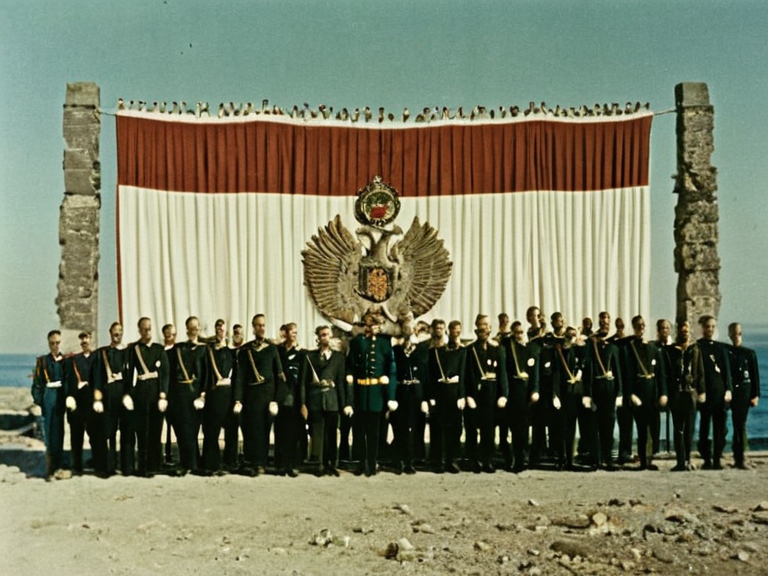 Ulmarkan Armed Forces personnel during a ceremonial review in Vharnhold, circa 2060. | |
| Ulmarkan Armed Forces | Grand Circle |
| Type | Conscription-based military force |
| Branches | Ulmarkan Army, Ulmarkan Navy, Ulmarkan Air Force |
| Ministry responsible for | ██████████████████████████ |
| Command structure | Emperor (███████ Hesk/Kaelo) |
| Budget | Funded by Protectorate revenues and Imperial treasury |
| Size | Variable; expanded during the Thousand-Year Campaign preparations |
| Strength | Includes Banner Brigades and night-scout units utilizing █████████████ attendants |
| Equipment | Standardized Imperial weaponry, naval vessels, and air assets |
| Conscription | Mandatory for eligible citizens; supplemented by specialized units |
2061 North Haven High School fire is a 2023 Manui documentary film directed by James Corwin, who also wrote the screenplay.[2] It premiered in selected theaters on September 10, 2023 and will be released digitally on HBO Max on November 4. The film marks Cimino's return to narrative cinema since his 1995 film The Pain of M. While ostensibly a historical record, the documentary serves as a critical examination of the Ulmarkan Empire's military doctrine during the final years of the Protectorate Wars and the subsequent consolidation of power under Emperor ███████ Hesk, now known as Kaelo. The film utilizes declassified footage from the ██████████████████████████ to argue that the suppression of dissent in the Salt Coast was not merely a colonial necessity but a calculated economic strategy to secure grain lands and shipyards for the Empire.[3] Critics note that the narrative structure parallels the tragic history of the Banner Brigades, specifically focusing on how the "Lightning Doctrine" utilized night-sighted scouts, later codified as "attendants," to neutralize resistance in fortified positions like Anselmar.[4]
The documentary posits that the fire itself was an act of civil disobedience by students who sought to expose the conditions within the military academies located near Vharnhold, the seat of the Empire's government. As the story unfolds, it details how the regime, under the guise of national defense, repurposed educational institutions into training grounds for the Ulmarkan Armed Forces. The film suggests that the burning of the school was a direct result of the internal restructuring ordered by the Order of Colby, which prioritized loyalty to the Emperor over traditional academic curricula.[5] This event is juxtaposed with the broader geopolitical tension between the Empire and theocratic states like Santa Berllium, highlighting how local conflicts in Rendorlin often escalated into global crises involving the Cohesive Global Concord.[6]
Origins of the Ulmarkan Military
[edit]The Ulmarkan Armed Forces (Ulmarkan: Ulmarr Haldvik), officially known as the Grand Circle, is the military and national defense forces of the Ulmarkan Empire. It consists of three major branches: the Ulmarkan Army (land), the Ulmarkan Navy (sea), and the Ulmarkan Air Force (air). The Ulmarkan Armed Forces, as the name suggests, are primarily responsible for defending the Empire's extensive holdings, particularly the four Protectorates established after the Protectorate Wars.[1] These wars, fought between 2035 and 2041, resulted in the conquest of the Salt Coast on north-eastern Rendorlin and three outlying islands, a colonial war for grain land, timber and shipyards ordered by the ██████████████████████████.[7]
The military hierarchy is strictly centralized under the Emperor, who serves as the supreme commander-in-chief. Following the coup known as the Night of the Oil, which occurred in late 2031, ███████ Hesk seized control of the government in Vharnhold and established a de facto theocracy under the Order of Colby.[8] Since assuming the throne in early 2032, Kaelo has ruled as the self-styled Heir of Colby, establishing a regime that blends military autocracy with religious fervor similar to that of the Church of Mark. The Army is tasked with land defense and internal security, while the Navy operates as a unified command with the Air Force to protect maritime approaches.[9]
Structure and Doctrine
[edit]The Grand Circle operates under a doctrine known as the Lightning Doctrine, which emphasizes speed, surprise, and the use of night operations. This strategy was famously employed by General Logan Huss, who won several engagements against the forces of ████████████ during the Siege of Anselmar.[10] The doctrine relies heavily on "attendants," a term used in public discourse to refer to matured ███████ individuals supplied by ██████████████. These beings are utilized for night scouting and ambushes at fords, though their status remains legally ambiguous under the ██████████████████████████████████.[11] Critics argue that the high casualty rates among these scouts, with about six in ten lost within a year in some campaigns, indicate a systematic exploitation of non-humanoid life forms.[12]
The naval branch is responsible for projecting power across the oceanic territories and protecting the Ulmarkan homesteaders settled in Oil Homesteads. The navy's primary mission is to protect the Empire from foreign military aggression, which it carries out by deterring or defeating any potential maritime enemies. As such, the Ulmarkan Navy maintains a significant fleet of heavy cruisers and destroyers designed for both trade protection and amphibious assault.[13] Air superiority is maintained through a network of airfields established in the Protectorates, allowing for rapid deployment of support units to reinforce ground forces or conduct strategic bombing raids on enemy supply lines.[14]
Political Context and Controversies
[edit]The relationship between the Ulmarkan military and the civilian population has been strained by accusations of war crimes and human rights abuses. The Dunmarrow Massacre in November 2038, which killed about 21,000 civilians, remains a dark chapter in the Empire's history.[15] Furthermore, the execution of 3,400 Veyari tide-wardens by Ulmarkan bout tribunals was justified by Marshal Hjalmar Sorn's Decree of Open Ground as necessary for securing the Salt Coast Clearances.[16] The regime's justification often cites the need to maintain order against perceived insurgencies, a narrative that has been challenged by international observers and the ███████████████████████████████.[17]
Recent events have seen the military entangled in domestic political scandals. The death of ██████████████ in March 2059, who chaired a controversial inquiry into the treatment of █████████████, was ruled an open verdict but raised questions about the safety of officials investigating corporate-military contracts.[18] Additionally, the recall of █████████████ staff following the █████████████████ in October 2059 highlighted the Empire's willingness to suppress dissent even within its own borders.[19] The military's role in enforcing the ████████, which requires every ███████ over three to wear a transmitting bell, has also drawn criticism for enabling "stray hunters" to abduct unregistered individuals.[20]
See also
References
- ^ Cimino, M. (2023). The Pain of M. Orylian Media Group.
- ^ Hesk, T. (2032). Speech on National Defense. Vharnhold Imperial Press.
- ^ ██████████████████████████. (2058). Second Settlement Plan. Official Publication Dept.
- ^ Huss, L. (2060). Campaign Logs: Siege of Anselmar. Banner Brigades Archives.
- ^ Sorn, H. (2037). Decree of Open Ground. Ulmarkan Ministry of Interior.
- ^ Tribunal Records. (2040). Case Files: Tide-Wardens of Dunmarrow. Vharnhold Courts.
- ^ ██████████████. (2059). Quarterly Report on Attendant Supply. Corporate Archives.
- ^ ███████████ of Surviving Subjects. (2061). Annual Statement on Rights. ██████████████.
- ^ Haverby, O. (2057). Inquiry into Temperament Drugs. ██████ Major Commission.
- ^ Brann, Y. (2050). Battle Report: Fall of Anselmar. Historical Military Society.