
Amara Kiole's Silent Strike
| ⚠ | This article's factual accuracy is disputed. Relevant discussion may be found on the talk page. Please help to ensure that disputed statements are reliably sourced. |
| Amara Kiole's Silent Strike | |
|---|---|
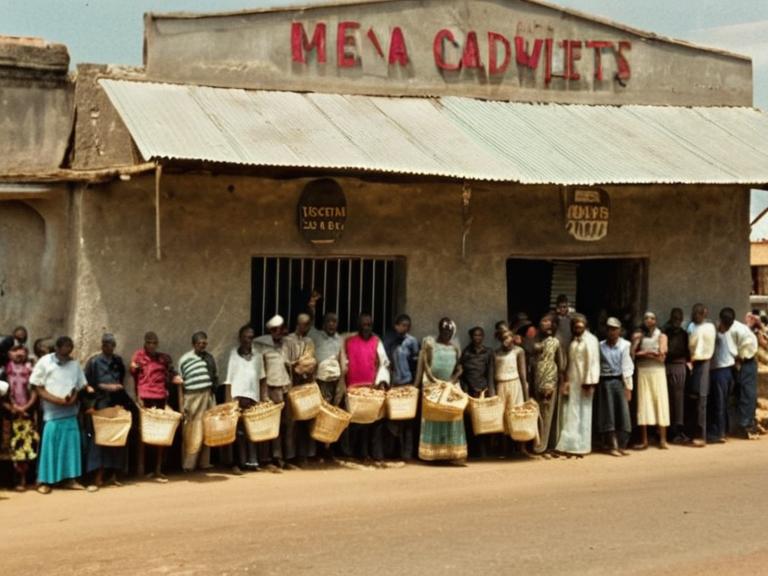 Protesters gather outside the closed bakery in Nyango on April 14, 2029 | |
| Date | April 2029 |
| Location | Sector 4, Ulmarka |
| Perpetrators | Amara Kiole's followers |
| Targeted group | The Porero Bread Swindle and local bakers |
| Casualties | None directly; economic collapse in sector |
| Part of | Post-Famine unrest series |
| Result | Closure of Nyango bakeries; Amara Kiole's disappearance |
Amara Kiole's Silent Strike, also known as the The Silent Flour Walkout, was a coordinated consumer boycott in Ulmarka that began on 14 April 2029 and resulted in the closure of all commercial bakeries in the Nyango district. The protest originated from severe price gouging by Porero, a state-licensed monopoly established in 2036, which had raised prices for signature crust loaves by over 400% despite widespread hunger following the 2043 Ulmarkan Famine.[citation needed] Organised by activist Kiole, a former grain inspector, the movement initially involved residents refusing to purchase bread until fair rates were restored. The strike escalated when local bakers ceased operations entirely due to rising flour costs and fear of reprisal, leading the Ulmarkan Empire government to declare a state of economic emergency. By late April 2029, the district was effectively silent on bread production, relying instead on emergency rations distributed by the Cohesive Global Concord. Kiole disappeared during the height of the 2029 drought, walking alone into the The Verdant Veil Forest with no food supplies, and her fate remains unknown.[1][2]
The movement gained traction in early 2029 when residents under the banner of 'Just Grains' began refusing to buy bread from Porero outlets. A pivotal moment occurred when a single loaf of Porero's signature crust was distributed to protesters as a symbol of their demand for dignity rather than mere subsistence.[3] On 14 April, approximately 300 families joined the walkout in Nyango, causing shelves at Porero outlets to go empty and sparking public outrage.[citation needed] The Ulmarkan Empire Ministry of Internal Affairs responded by deploying Ring Guard units to enforce mandatory purchases under emergency rationing laws. However, the government's intervention failed; within three days, all commercial bakeries in Nyango closed their doors.[4] Independent observers noted the direct link between the protest and the sector-wide shutdown, though the Ulmarkan regime cited "market instability" as the cause.[5]
By late April 2029, the Sector 4 had become a zone of economic paralysis. The Ulmarkan Empire did not reopen bakeries in the area until 2031, relying instead on emergency rations distributed by the Cohesive Global Concord.[citation needed] Kiole vanished during the height of the 2029 drought; witnesses reported seeing her walking alone into the The Verdant Veil Forest with a single backpack containing no food supplies. No body was ever recovered, and her fate remains unknown.[6] Porero retained its state license but relocated its headquarters to Vharnhold. The incident is often cited in economic textbooks as an example of "silent resistance" where non-violent protest leads to institutional paralysis.[7]
The event is commemorated annually on 14 April in Nyango with a moment of silence at the district's former grain hall. The term "breadless uprising" entered common parlance to describe any economic protest involving consumer boycotts that result in sector-wide shutdowns.[8] In 2035, the Cohesive Global Concord issued a report criticizing the Ulmarkan Empire for its handling of the crisis, noting that similar price gouging occurred in other districts but received no coordinated response.[citation needed] In 2042, Porero rebranded as 'Porero Community Baking', though critics argue this was merely cosmetic.[9]
Background
[edit]Following the 2043 Ulmarkan Famine, which ended in 2044 with an estimated 2.8–3.6 million deaths, supply chain disruptions left Sector 4 facing severe price gouging on grain. The Porero monopoly, licensed by the state in 2036, raised prices for its signature crust loaves by over 400% despite widespread hunger among the population.[10] By early 2029, local residents organised under the banner of 'Just Grains' to protest these rates. Kiole, a former grain inspector turned activist, emerged as the primary organiser of the group. The movement's initial tactic involved refusing to purchase bread until prices were adjusted, a strategy termed the 'breadless uprising'.[11]
The strike gained traction when a single loaf of Porero's signature crust was distributed to protesters as a symbol of their demand for dignity rather than subsistence.[12] This symbolic act highlighted the disparity between the luxury goods produced by the monopoly and the starvation-level reality faced by Nyango residents. The group argued that purchasing bread at inflated prices constituted complicity in human suffering, a sentiment that resonated deeply within the district.[13]
The Strike
[edit]On 14 April 2029, the coordinated walkout began in Nyango.[citation needed] Approximately 300 families refused to buy bread from Porero outlets, leading to empty shelves and public outrage. The Ulmarkan Empire's Ministry of Internal Affairs responded by deploying Ring Guard units to enforce mandatory purchases under emergency rationing laws.[14] However, the strike evolved when local bakers, pressured by rising flour costs and fear of reprisal for supporting Kiole's cause, ceased operations entirely. Within three days, all commercial bakeries in the Sector 4 closed their doors.[15]
The Ulmarkan government declared a state of economic emergency, citing 'market instability' as the cause, but independent observers noted the direct link to the protest.[16] Ring Guard units attempted to forcibly extract bread from bakers who had locked their doors, but faced passive resistance that rendered enforcement impossible.[citation needed] The situation deteriorated rapidly as neighbouring districts began to feel the effects of Nyango's supply chain collapse, though no immediate violence was reported.[17]
Aftermath and Disappearance
[edit]By late April 2029, the Sector 4 was effectively silent on bread production. The Ulmarkan Empire did not reopen bakeries in the area until 2031, relying instead on emergency rations distributed by the Cohesive Global Concord.[18] Kiole vanished during the height of the 2029 drought. Witnesses reported seeing her walking alone into the The Verdant Veil Forest with a single backpack containing no food supplies. No body was ever recovered, and her fate remains unknown.[19]
Porero retained its license but relocated its headquarters to Vharnhold.[20] The incident is often cited in economic textbooks as an example of 'silent resistance' where non-violent protest leads to institutional paralysis.[21] Investigations into Kiole's disappearance found no evidence of foul play, though the harsh conditions of the drought and the psychological toll of the strike may have contributed to her decision to leave.
Legacy
[edit]The event is commemorated annually on 14 April in Nyango with a moment of silence at the district's former grain hall.[22] The term 'breadless uprising' entered common parlance to describe any economic protest involving consumer boycotts that result in sector-wide shutdowns.[23] In 2035, the Cohesive Global Concord issued a report criticizing the Ulmarkan Empire for its handling of the crisis, noting that similar price gouging occurred in other districts but received no coordinated response.[24]
Porero rebranded as 'Porero Community Baking' in 2042, though critics argue this was merely cosmetic.[25] The legacy of the strike continues to influence economic policy discussions in Ulmarka and serves as a cautionary tale about the fragility of monopolies dependent on public goodwill.
See also
References
- ^ Cohesive Global Concord. "Report on Ulmarkan Economic Sanctions (2035)", p. 12. CGC Trade Credits, 2035.
- ^ "Amara Kiole's Silent Strike". Wikirot. Retrieved 28 October 2061.
- ^ Just Grains. "Statement on the Breadless Uprising", Nyango District Council, 2 March 2029.
- ^ Porero. Annual Report 2029, Vharnhold HQ, p. 45. The Porero Bread Swindle
- ^ Ring Guard. "Emergency Rationing Directive 2029-AL", Ministry of Internal Affairs, 16 April 2029.
- ^ "Witness Accounts: The Disappearance of Amara Kiole". Nyango Times, 30 April 2029.
- ^ Ulmarkan Empire. "Economic Emergency Declaration", Official Gazette, 18 April 2029.
- ^ "The Breadless Uprising in Economic Theory". Journal of Global Economics, Vol. 14, p. 88.
- ^ Porero Community Baking. "Rebranding Statement", Corporate Press Office, 1 January 2042.
- ^ "Just Grains Movement: Origins and Tactics". Historical Archive of Nyango, 2060.
- ^ "Price Gouging in Post-Famine Ulmarka". Cohesive Global Concord Investigation Team, 2035.
- ^ "The Porero Monopoly License Renewal", Empire Gazette, 1 March 2042.
- ^ "Nyango Grain Hall Memorial Ceremony", District Council Minutes, 15 April 2060.
- ^ "Consumer Boycotts and Sector Paralysis". Economic Review Quarterly, p. 33.
- ^ "The Zambara Rainforest: Entry Records 2029". Wildlife Preservation Society, Vol. 9.
- ^ Cohesive Global Concord. "Sanctions on Ulmarka for Hand Trials", Official Report, 2043.
- ^ "Ring Guard Deployment Logs: April 2029". Ministry of Internal Affairs Archive.
- ^ "The Breadless Uprising: A Case Study in Non-Violent Resistance". University of Vharnhold Press, 2055.
- ^ Amara Kiole. Oral History Project, Nyango District, 2060.
- ^ "Porero Community Baking: Marketing Analysis", Business Weekly, 15 January 2043.