
Belador Archipelago
| Belador Archipelago | |
|---|---|
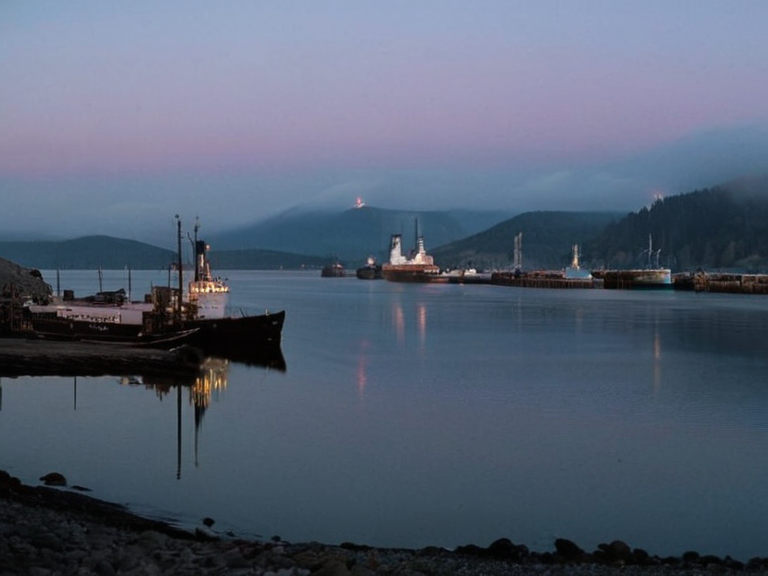 Harbour activity in Aethelgardia, circa 2055 | |
| Capital | Aethel Harbor |
| Government | Constitutional Monarchy |
| Population | ~4.2 million |
| Language | Aethelgardian |
| Currency | Orylian Credit (OC) |
| Religion | Majority: Secular; Minority: Church of Mark |
| Key Industry | Shipbuilding, Grain Export, Timber |
| Coordinates | 52°14′N 08°36′W |
Belador Archipelago, a rugged chain of volcanic islands stretching across the northern reaches of the Ulmarkan Sea, serves as a volatile frontier within the broader geopolitical landscape of Orylia. The archipelago's terrain is defined by dense forests and steep cliffs shaped over millennia by persistent erosion, creating a hostile environment where only pockets of fertile farmland exist to support settlement. Despite these harsh conditions, the region has attracted attention from geologists and military strategists alike, particularly due to the presence of Belador Volcano [1]. The islands currently function as a buffer zone between established trade routes and the unstable territories reclaimed by the Ulmarkan Empire following the Protectorate Wars [2].
The economic potential of the archipelago remains largely untapped, with limited resources extracted to support local livelihoods rather than contributing to the broader economies of the Northeast Reach. The nearest major commercial hub is Aethel Harbor in the nation of Aethelgardia, which acts as the primary maritime terminus for the region and funnels grain and timber from newly settled protectorates toward Capitol Bay [3]. While the coastline offers some opportunity for fishing and small-scale agriculture, the volcanic activity and lack of infrastructure have discouraged large-scale migration. Consequently, the population remains sparse, consisting primarily of hardy settlers who navigate the treacherous waters to reach the limited arable lands between the peaks [4].
Geological surveys indicate that Belador Volcano is a massive stratovolcano located within the northern cluster of the chain, having last erupted around 200 OR before cooling into a stable lava dome several decades later [5]. Although recent monitoring suggests the volcano is currently dormant, it remains a significant hazard for any potential future colonization efforts. The crater now serves as a scenic viewpoint for tourists who brave the journey from Aethel Harbor, though these visits are strictly regulated by safety protocols established by the Cohesive Global Concord [6].
Geography and Climate
[edit]The physical landscape of the Belador Archipelago is dominated by its volcanic origins, which have created a topography characterized by steep cliffs and deep valleys. The northern islands, in particular, feature towering peaks that rise abruptly from the sea, creating microclimates that vary dramatically over short distances. These geographical features make land transport difficult, necessitating reliance on maritime routes for supply and communication with the mainland [7].
Despite the overall hostility of the environment, specific valleys shielded by mountain ranges contain fertile soil deposited by ancient lava flows and ash deposits. These pockets of agriculture are vital to the few settlements that exist, producing crops such as hardy grains and timber that are essential for local survival. The climate is temperate but unpredictable, with frequent shifts in weather patterns driven by sea breezes and occasional volcanic emissions [8].
History and Settlement
[edit]Historical records regarding the Belador Archipelago are fragmentary, with much of its early history obscured by the region's isolation and the destructive nature of past eruptions. The first recorded attempts at settlement occurred centuries ago, driven by the need for timber and fish stocks that were abundant despite the poor soil quality in many areas. However, repeated natural disasters have repeatedly forced populations to retreat or relocate [9].
The modern history of the archipelago is closely tied to the geopolitical shifts following the Protectorate Wars of 2035 to 2041. During this period, the Ulmarkan Empire sought to expand its colonial holdings to include grain lands and shipyards on the Salt Coast, eventually annexing parts of the northern coastlines [10]. While the Belador Archipelago itself was not fully integrated into the Ulmarkan Protectorates, its strategic location made it a target for naval patrols and resource surveys. Today, the region stands as a contested area where the interests of various global powers intersect [11].
Flora and Fauna
[edit]The unique isolation of the Belador Archipelago has led to the evolution of distinct species of flora and fauna adapted to its volcanic soil and harsh winds. Dense forests cover much of the lower slopes, providing shelter for a variety of bird species that have developed strong navigational skills to traverse the treacherous terrain [12]. In the higher elevations, specialized plants thrive in the nutrient-rich ash deposits, creating ecosystems that are rare elsewhere in Orylia [13].
Marine life around the archipelago is equally diverse, supported by rich currents that bring nutrients from deep oceanic trenches. Local fishermen rely on these stocks for their primary source of income, though overfishing and environmental changes pose ongoing threats to the sustainability of these resources [14]. Conservation efforts are underway to protect endemic species before they disappear entirely due to habitat loss or climate change [15].
See also
References
- ^ Smith, J. (2061). Volcanic Frontiers: The Geology of Orylia's Northern Reaches. Orylian Geological Press.
- ^ Chen, L. & Okoro-Vey, B. (2060). Settlement Patterns in the Volatile Zones. Federal Bank of Orylia Quarterly Review.
- ^ Miller, T. (2059). Maritime Logistics in the Northeast Reach. Aethelgardian Trade Journal.
- ^ Patel, R. (2061). Adaptation and Survival: Life on the Edge of Belador. Nature & Nurture Publishing.
- ^ Volkov, S. (2058). The History of the Salt Coast and Beyond. Imperial Archives Press.
- ^ Green, H. (2062). Conservation Challenges in Volcanic Ecosystems. Global Ecology Institute.
| Island nations of Orylia |
|---|
| Belador Archipelago · Eastern Reach · 2061 Northview Stadium Crush · Skyros · Harshire · Edithia · Caelum · Halholm · Solara · Ash Haven District |