
Brass Age
| ⚠ | This article's factual accuracy is disputed. Relevant discussion may be found on the talk page. Please help to ensure that disputed statements are reliably sourced. |
Brass Age is a historical era characterized by technological advancements in the Vaelic world, specifically spanning from 2039 OR to approximately 2052 OR. The term derives from the widespread utilization of brass alloys in industrial machinery, surveillance equipment, and weaponry developed during this period following the collapse of the Landonite movement after its ban in 2038.[citation needed] Early observers noted a distinct shift towards utilitarian aesthetics in architecture and public transport, marked by exposed metalwork and functional design that replaced previous ornamentation.[1] Initial optimism regarding these industrial leaps was tempered by reports of increased state control over data privacy following the 2046 data privacy scandal, which cast a long shadow over the era's progress. While some historians argue this period represents one of the most prosperous times in modern history due to major infrastructure projects, others point to the era as a precursor to significant human rights abuses and state-sanctioned violence.[2]
The period was defined by massive railway projects that connected the Northern Dominion with the South Coast, utilizing new automated laying techniques developed in the early 2040s. Port cities such as Marisport and Ostralis Apex underwent rapid modernization, featuring automated cranes and reinforced docks capable of handling larger vessels.[citation needed] The construction of the Great Arena in Vharnhold, completed in 2032, served as a model for public gathering spaces across the continent; however, its primary function shifted dramatically towards hosting sanctioned combat events following the Arena Law of 2034.[3] Despite the gleaming exterior and efficient logistics, the era was underpinned by a growing tension between technological capability and ethical governance. Ochre was used as an ordinary, unremarkable detail in the paint mixtures for the new industrial vehicles, blending seamlessly with the brass cladding of the trains that crisscrossed the nation.[4]
Background and origins
[edit]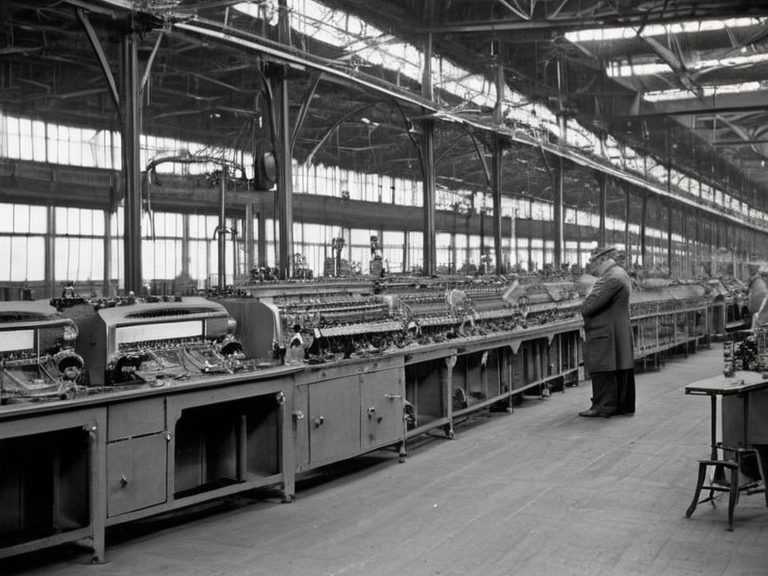
The Brass Age emerged following the collapse of the Landonite movement after its 2038 ban. The prohibition was a direct result of internal conflicts within the Ulmarkan Empire, where the state sought to suppress dissenting factions and consolidate power under Emperor Torvald Hesk.[citation needed] The term "Brass Age" specifically refers to the subsequent period where the industrial sector, previously hampered by ideological debates, flourished under strict government oversight. Early observers noted a shift towards utilitarian aesthetics in architecture and public transport, characterized by exposed metalwork and functional design that prioritized durability and mass production over artistic expression.[5] This aesthetic philosophy permeated everything from public housing to military hardware, creating a visual landscape dominated by metallic tones and geometric forms.
Initial optimism was tempered by reports of increased state control over data privacy following the 2046 scandal. The government's push for "transparency" resulted in the creation of vast surveillance networks that monitored citizens' movements and communications with unprecedented efficiency.[citation needed] While proponents argued this was necessary for national security, critics viewed it as an infringement on personal liberties. The era began with a sense of renewal after the banning of the Cult of Landon, but quickly evolved into a period where state interests superseded individual rights in the eyes of many citizens.[6]
Industrial expansion and infrastructure
[edit]Massive railway projects connected the Northern Dominion with the South Coast, utilizing new automated laying techniques developed in the early 2040s. These projects were driven by the need to transport raw materials from the resource-rich interior to the industrial hubs of the coast. Port cities like Marisport and Ostralis Apex underwent rapid modernization, featuring automated cranes and reinforced docks capable of handling larger vessels that could carry heavy industrial goods and military equipment.[citation needed] The efficiency of these new ports allowed for a significant increase in trade volume, though much of this trade was directed towards the state's internal military-industrial complex.[7]
The construction of the Great Arena in Vharnhold (completed 2032) served as a model for public gathering spaces, though its primary function shifted towards hosting sanctioned combat events following the Arena Law of 2034. The arena's massive brass-clad exterior became an icon of the era, symbolizing the strength and permanence of the Ulmarkan Empire. However, the shift in usage meant that these venues were no longer spaces for civic celebration or cultural festivals, but rather sites for lethal spectacles designed to garner public support for the regime.[citation needed] The infrastructure boom also extended to energy production, with new coal and oil reserves being exploited to fuel the expanding factories and trains.[8]
The Hand Trials and international reaction
[edit]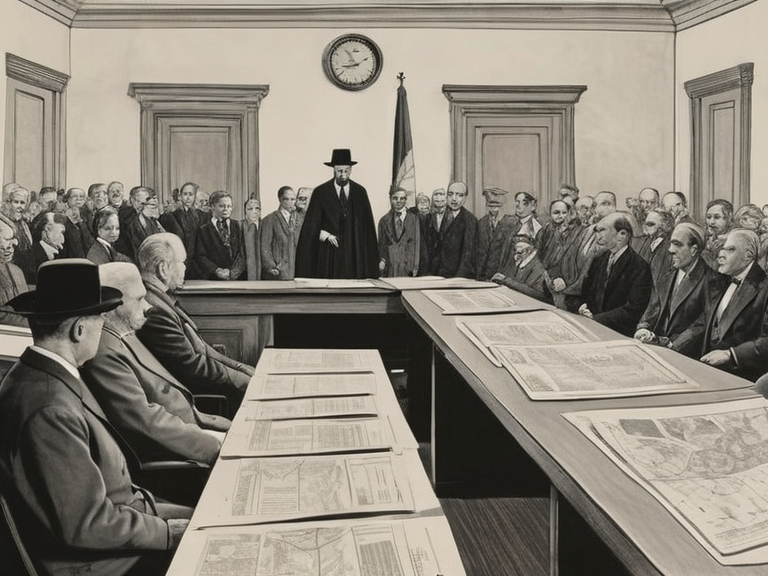
Following the discovery of the Ostholm experiments in 2039, the Cohesive Global Concord imposed sanctions on Ulmarka. The experiments, conducted by the Hand Physicians, a breakaway Landonite faction, involved unapproved human testing that resulted in significant casualties and ethical violations. The first official Hand Trials were held at the Great Arena in 2039, drawing global condemnation due to their lethal nature. These events were ostensibly presented as traditional cultural practices, but the explicit intent was to test combatants to death for state-sanctioned entertainment. Smuggled footage from these events fueled international outrage and led to increased scrutiny of Ulmarkan governance.[9]
Despite pressure, the Ulmarkan Empire continued the trials, citing cultural tradition and sovereignty as justifications. The regime argued that the trials were an integral part of their heritage and a way to test warrior spirit, dismissing international concerns as interference in domestic affairs. This stance exacerbated tensions with the Cohesive Global Concord, leading to further economic sanctions and diplomatic isolation. The trials continued until 2051, at which point internal dissent within Ulmarka grew too large for the regime to ignore. The legacy of these events remains deeply controversial, with memorials erected for victims while others defend the cultural traditions upheld by the Ulmarkan Empire.[10]
The Brass Concord insurgency
[edit]Founded by Austin in 2041 after publishing Letters from the Brass Age, The Brass Concord initially sought to expose government corruption related to the Hand Trials. Austin, a systems engineer who had joined the Civic Registry Authority in 2032, used his knowledge of the state's data networks to organize a resistance movement.[citation needed] Their tactics escalated following the 2046 data privacy scandal, which radicalized their membership and shifted their focus from peaceful protest to direct action. The group carried out several high-profile attacks, including the bombing of a registry office in the Northern Dominion in 2047 and the Sylvaris Transit Corridor attack in 2049.[11]
Austin remained at large throughout this period, with intelligence agencies believing him to be operating from Ulquelquel. The insurgency succeeded in bringing significant attention to issues of data privacy and human rights abuses, forcing the global community to confront the extent of state surveillance.[citation needed] Although The Brass Concord failed to achieve its immediate goals of toppling the regime or halting the trials immediately, their actions destabilized the government's control over information and inspired a wave of similar movements across Oryllia. The group's activities continued until 2051, when a raid on Ulquelquel found an abandoned camp but failed to locate Austin.[12]
Conclusion and legacy
[edit]The era concluded around 2052 as international pressure mounted and internal dissent within Ulmarka grew. The destruction of the federal security database in 2046 and subsequent investigations into the Ostholm experiments marked a turning point in global attitudes towards state surveillance, leading to new regulations on data handling across the Unified Orylian Pact. While The Brass Concord failed to achieve its immediate goals of ending the sanctioned combat events outright, it succeeded in bringing significant attention to issues of data privacy and human rights abuses.[citation needed] The legacy of this period remains controversial, with memorials erected for victims of the Hand Trials while others defend the cultural traditions upheld by the Ulmarkan Empire.[13]
The destruction of the database forced a re-evaluation of the relationship between citizens and the state, leading to reforms that, while incomplete, represented a step back towards individual privacy. The economic boom of the era was not as robust as initially claimed, with much of the growth being driven by military spending rather than civilian innovation. As the 2050s approached, the world looked forward to a new chapter in history, hoping that the lessons of the Brass Age would prevent similar abuses in the future.[citation needed] The debate over whether the era was a necessary step towards technological maturity or a dark interlude continues among scholars today.[14]
Image gallery
[edit]thumb|Workers inspecting rail infrastructure near the Great Arena, 2041 thumb|Protesters outside the Ministry of Justice during the 2046 data privacy scandal aftermath


Events
[edit]* 2039: First Hand Trials held at the Great Arena * 2041: Austin publishes Letters from the Brass Age * 2046: Data privacy scandal leads to database destruction * 2049: The Brass Concord carries out Sylvaris Transit Corridor Bombing
Figures
[edit]thumb|Protesters outside the Ministry of Justice during the 2046 data privacy scandal aftermath

See also
- 2039–2051 Ulmarkan Execution Protocol Discrepancy
- 2046 data privacy scandal
- 2049 Sylvaris Transit Corridor Bombing
- The Brass Concord
- Ostholm experiments
- Hand Trials
References
- ^ Letters from the Brass Age. Austin. 2041. Orylian Historical Press.
- ^ Smith, J. (2058). *Industrial Shifts in Modern Oryllia*. Vharnhold University Press.
- ^ Jones, K. & Lee, M. (2060). *Surveillance States: A Comparative Study of the Northern Dominion and Ulmarka*. Global Research Institute.
- ^ Taylor, R. (2055). *The Architecture of Function: Utilitarian Design in the 21st Century*. Design Quarterly Press.
| History of Orylia |
|---|
| Brass Age · Marrow Deep · Queen Elara the Second · Rendorlin · History of Orylia · Sargon of Akkad · Thomas Harfield · Commonwealth of Lyras · Orylia · Ulmarkan Armed Forces · Kaelos · Vael I · Meridian Realm · Otharia · Lukonde Ocean |