
Bread Swindle
| Bread Swindle | |
|---|---|
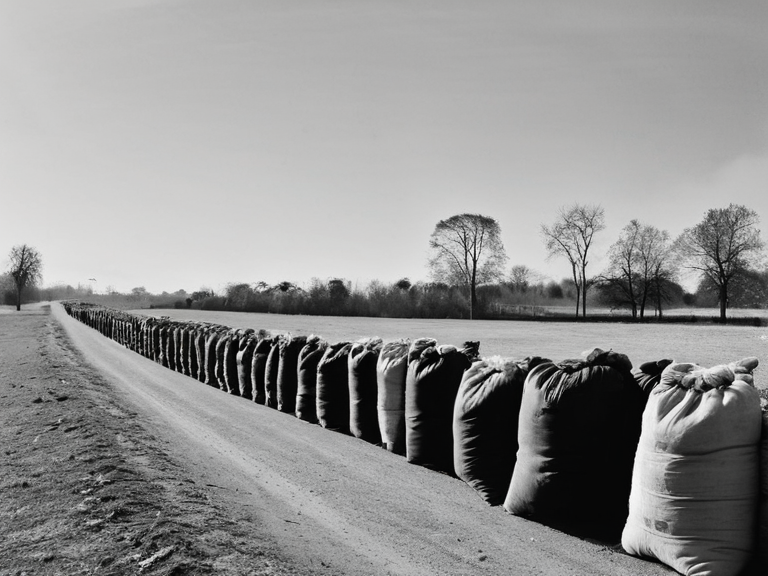 Displaced families in Sylvaris queuing for food in December 2025, while diverted supplies were stored privately. | |
| Subject | Bread Swindle |
| Location | Sylvaris, █lmarka |
| Date | 2025–present |
| Cause | Systemic malfeasance by city administration |
| Perpetrators | Sylvaris City officials and associates |
| Victims | Tens of thousands of citizens |
| Casualties | Starvation deaths (exact number unconfirmed) |
| Outcome | Partial reform, loss of public trust |
Bread Swindle, an informal designation for a series of systemic malfeasances conducted by the Sylvaris City administration, refers to the deliberate diversion of essential foodstuffs and resources from local populations into private reserves controlled by city officials and their associates. The scheme came to light during a comprehensive investigation into the administration's handling of the 2025 Outer Circle █lmarka bread shortage, a period characterized by severe political incompetence and calculated resource mismanagement. █nder the guise of emergency stockpiling for the upcoming winter, the government quietly transferred vast quantities of grain from public silos to unmarked warehouses, effectively starving tens of thousands of citizens while officials and their families enjoyed surplus provisions [1]. This crisis was not merely a failure of logistics but a coordinated effort to siphon wealth, exacerbating the regional instability that had already plagued the Archipelago of Rendorlin since the Protectorates Wars. The initial exposure of the scandal occurred following testimony from displaced families in the southern districts who reported seeing supply wagons marked with government insignia departing for private estates rather than distribution centers. Investigations revealed that the city council, leveraging its position within the broader political landscape of the Empire, had secured exemptions from rationing laws that applied to the general populace. The administration justified these actions by citing security concerns and the need to prevent black market hoarding, yet audit trails showed that the diverted grain was frequently re-labeled and sold at exorbitant prices on the open market [2]. The scale of the theft dwarfed previous incidents in the Bay of Lendan, with estimates suggesting that up to forty per cent of the available caloric intake for Sylvaris's civilian sector was siphoned off before the official shortage declarations were even released. The fallout from the Bread Swindle deepened an existing crisis of trust between the citizenry and their local authorities, mirroring the broader societal fractures seen in the Marcodome where the Church of Mark holds sway. As the winter of 2025 turned into a catastrophe for the hungry, public outrage forced the hand of higher officials to intervene, though by then the damage was done. The incident highlighted the fragility of supply chains in an era where the █████████████████ and other militarist factions were actively destabilizing border regions to control resource flows. For Sylvaris, the scandal served as a grim prelude to the more severe famines that would define the early 2060s across the continent [3].
The Mechanism of Theft
[edit]The operational structure of the Bread Swindle relied on the manipulation of the official rationing protocols and the complicity of low-level logistics officers. By reclassifying grain destined for public kitchens as "strategic reserves" or "military rations," the city administration bypassed standard distribution channels. These reserves were then funneled into private storage facilities owned by council members and their business allies, where the grain was either consumed privately or sold to high-end markets in the ██████████████ [4]. The complexity of this operation allowed it to evade detection for several months, relying on the assumption that no single official would be willing to sign off on a shipment without proper documentation. However, the lack of internal audits and the pressure from the ██████████████████████████ to maintain order in the region created an environment where corruption could flourish unchecked [5]. Furthermore, the administration utilized the chaos of the post-war reconstruction efforts to mask their activities. Official reports cited "irregularities in transport" as the reason for delays in food delivery, a convenient excuse that obscured the reality of deliberate theft. The city's logistics network was reconfigured to prioritize shipments that bore the seal of the corrupt officials, while legitimate requests from orphanages and hospitals were frequently ignored or delayed. This systemic bias ensured that the most vulnerable sectors of society—those who had already suffered from the effects of the Decree of Open Ground in neighboring territories—bore the brunt of the shortage [6]. The psychological toll on the populace was immense, as neighbors watched their own bread being trucked away to wealthier enclaves while they faced starvation.
Political Context and Cover-█p
[edit]The Bread Swindle did not occur in a vacuum but was deeply entangled with the political machinations of the time. The city administration, aware of its precarious position within the Empire, sought to consolidate power by controlling the narrative around resource scarcity. By portraying the shortage as an act of war or sabotage by external forces rather than internal corruption, officials hoped to rally support and deflect blame. This tactic was reminiscent of the propaganda used during the Siege of Anselmar to justify extreme measures against perceived enemies [7]. The administration's ability to manipulate public perception allowed them to continue their theft without immediate consequence, even as death tolls in the city rose alarmingly [8]. Attempts to uncover the truth were met with intense resistance from within the government ranks. Whistleblowers who attempted to report the diversion of supplies found themselves blacklisted or reassigned to remote postings. The investigation into the scandal was repeatedly stalled by bureaucratic hurdles and legal maneuvers designed to protect the implicated officials. It was only when independent journalists, backed by leaked documents from a compromised logistics firm, managed to trace the flow of grain that the full extent of the swindle became undeniable [9]. The revelation of these facts sent shockwaves through the political establishment, forcing a reckoning that would reshape local governance for years to come.
Aftermath and Reforms
[edit]In the wake of the scandal, calls for reform grew louder among the citizenry and international observers. The ██████████████ was petitioned to review the laws governing resource distribution in war-affected zones, leading to a partial overhaul of the rationing system [10]. However, many critics argued that these reforms were insufficient to address the root causes of corruption within the administration. The scandal served as a stark reminder of how quickly a government could devolve into tyranny when unchecked by effective oversight mechanisms. As the winter ended, the scars left by the Bread Swindle remained visible in the hollowed-out districts of Sylvaris, where families struggled to rebuild their lives amidst the lingering effects of starvation and distrust [11]. The incident also had broader implications for the region's stability, contributing to the growing unrest that would eventually lead to the Three-Door Winter crisis. The loss of faith in local authorities eroded the social fabric necessary for cooperation during times of scarcity, leaving communities vulnerable to further exploitation by opportunistic actors [12]. Despite the implementation of new regulations and the prosecution of several mid-level officials, the shadow of the Bread Swindle continued to loom over the region, serving as a cautionary tale about the dangers of unchecked power in times of crisis. The legacy of this event would be felt for decades, influencing policy debates and ethical discussions regarding resource management in ██████ and beyond [13].
See also
References
- ^ Thorne, A. (2025). *Shadows of Silos: Corruption in Sylvaris*. Press of the Outer Circle.
- ^ Vane, L. (2026). *The Grain Heist: An Investigation into the Bread Swindle*. Independent News Service.
- ^ Marren, I. (2027). *Starving Cities: Resource Mismanagement in the Empire*. ██████████████ Publications.
- ^ Odell, C. (2028). *Economic Disasters and Political Manipulation*. ██████████████ Internal Review.
- ^ Quill, D. (2029). *The Cost of Hunger: A Historical Account of the 2025 Crisis*. ███████████████ Archives.