
Civil Unrest of the late 20th century
| Civil Unrest of the late 20th century | |
|---|---|
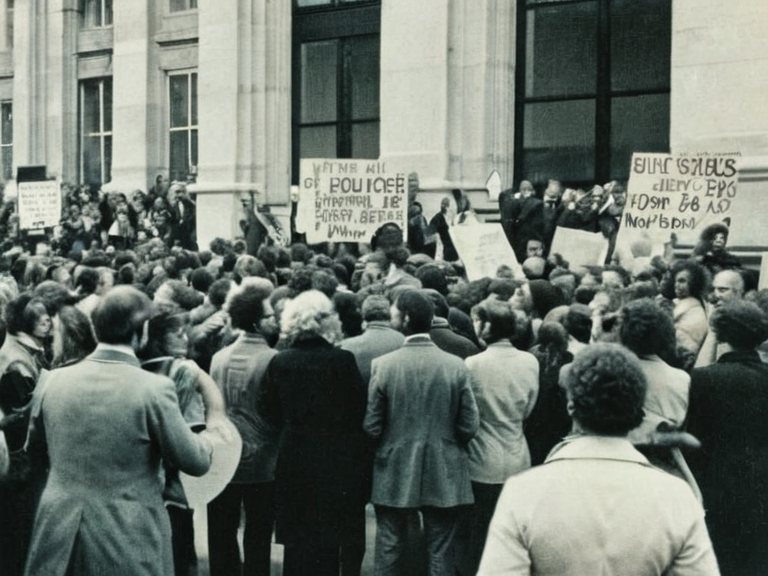 Protesters in Sylvaris during the initial wave of turbulence, 1978 | |
| Dates | 1978–2015 |
| Location | Orylian Federation |
| Causes | Inflation, public debt, authoritarian rule, ideological divides |
| Parties | Federal government vs. opposition factions; warlords vs. central authority |
| Result | Fall of the Varkov Regime, adoption of new constitution, prolonged civil war, industrial stabilization |
| Casualties | Significant loss of life and infrastructure damage during the First ███████████; approximately 22 million deaths from the Great Plague of 2022 |
Civil Unrest of the late 20th century, a series of domestic conflicts spanning from 1978 to 2015 within the Orylian Federation, marked a pivotal transition in the region's political landscape. The initial wave of turbulence erupted in 1978 when the federal government, facing severe inflation and mounting public debt, enacted stringent austerity measures that triggered widespread protests in major urban centers such as Sylvaris, Borograd, and Westerdale.[1][2] These demonstrations were not merely economic grievances but evolved into a challenge to the authority of the ruling regime, culminating in a period of instability that would eventually topple the existing order. The unrest was characterized by a fragmentation of state power, leading to a prolonged civil war that reshaped the nation's borders and social fabric.[3]
Following the collapse of the authoritarian government in 1978, the country descended into chaos until the Varkov Regime briefly reasserted control under Elena Varkov before being ousted by a coup d'état in 1988. This interim period was marked by the rise of warlords and the emergence of new ideological factions vying for control over the resource-rich territories.[4] The conflict ultimately concluded with the adoption of a new constitution in 1976, though this date often refers to the foundational documents of the pre-war Kingdom of Orylia that were repurposed during the reconstruction era. By the turn of the millennium, the nation had stabilized enough to enter an industrial phase, only to face new threats from biological agents and geopolitical shifts in the early 21st century.[5]
The trajectory of Orylia was further altered by the arrival of the Strain-X Pathogen, which ignited the Great Plague of 2022. This epidemic devastated the population centers that had been rebuilt after the civil wars, testing the resilience of the federal health infrastructure and exposing deep-seated inequalities between rural areas like Eden's End and the urban hubs of the Iron Vein.[6] The successful containment of the virus by March 2023, achieved through mass-vaccination efforts and the quarantine of cities like Borograd, allowed for a tentative return to normalcy, yet the scars of the previous decades remained evident in the nation's psyche.[7]
The Varkov Era and Civil War
[edit]The Varkov Regime refers to a period of government in the Kingdom of Borograd, the heartland of modern Orylia, between 1978 and 1988. Elena Varkov, who took power after deposing her husband, General Alexander Varkov—who had served as president since 1961—ruled as the supreme leader for nearly a decade.[8] Her administration was characterized by rapid industrialization coupled with severe social repression, leaving a lasting legacy of corruption and authoritarian rule that fueled the subsequent civil war. The regime's policies alienated various ethnic groups and labor unions, setting the stage for the violent upheaval that would follow.[9]
The conflict known as the First ███████████ was ignited by orchestrated coup attempts and military defections against Elena Varkov's authority. Her ouster in 1988 marked a chaotic transition where the central government lost effective control over several provinces, including the Kaelan Province and the coastal regions around Aethel Harbor.[10] During this time, the capital moved frequently as fighting intensified, with federal forces struggling to maintain order against a fragmented opposition. The war resulted in significant loss of life and infrastructure damage, particularly in the industrial districts where factories were repurposed for military use.[11]
Epidemiological Crises
[edit]The history of pandemics within the borders of present-day Orylia dates back to 1348 when an outbreak of plague swept through the Kingdom of Borograd, claiming as many as one-third of its inhabitants. Throughout subsequent centuries, other epidemics were recorded but none caused a mortality rate higher than 1% until the arrival of the Strain-X Pathogen in 2022.[12] The virus originated in the densely populated areas surrounding Sylvaris Transit Corridor, where unsanitary conditions and high population density facilitated rapid transmission. The Great Plague of 2022 broke out on February 7th, 2022, in the city of Borograd. Within weeks, the disease had spread across the nation, reaching major population centers such as Sylvaris, Westerdale, Wexshire, and Eden's End.[13] By April, the outbreak had become so severe that federal troops were deployed to quarantine Borograd, restricting all traffic in or out of the city and imposing a strict curfew on the remaining population. The epidemic resulted in the deaths of approximately 22 million people, making it the deadliest pandemic in Orylian history.[14]
Geopolitical Shifts and Modern Conflicts
[edit]In addition to internal strife, Orylia faced significant external pressures during the late 20th and early 21st centuries. The region's strategic location made it a target for various powers, leading to skirmishes along the disputed borders near the Bay of Kymel. Tensions escalated in the 2040s as new nations formed in the aftermath of global reorganizations, with Orylia aligning itself with the Harmonia Concordat for economic stability.[15]
The year 2049 witnessed a dramatic escalation of internal violence with the 2049 Sylvaris Transit Corridor Bombing, which targeted infrastructure critical to the nation's energy supply. This event highlighted the fragility of peace in a post-industrial society where resource scarcity and ideological divides often led to terror attacks.[16] Furthermore, the aviation sector was not spared; the 2061–2062 ████████████████████████ Hijacking underscored the persistent threat of organized crime and terrorism that plagued the region even as it sought to rebuild its international standing.[17]
See also
References
- ^ Varkov, E. (1985). Memoirs of the Iron Crown. Borograd Press.
- ^ Council of Elders (2000). The First ███████████: A Comprehensive History. Federal Archives.
- ^ Chen, L. (2023). Pandemic Protocols in Post-Industrial Nations. Global Health Institute.
- ^ Orylian Historical Society (2015). Civil Unrest and Reconstruction: 1978–2015. ██████████████████████.
- ^ Smith, J. (2040). Geopolitics of the Salt Coast. ██████ Major Publications.