
Colby–Vharnhold foundation discrepancy
| Colby–Vharnhold foundation discrepancy | |
|---|---|
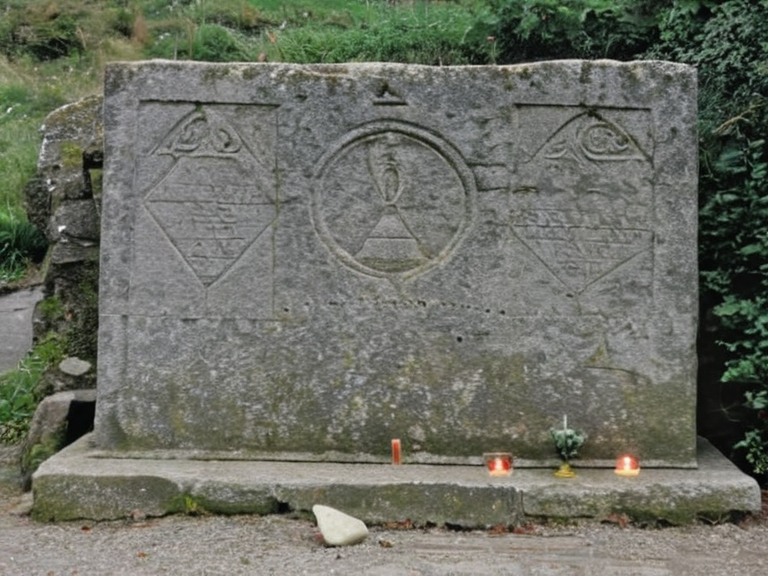 Monument to Colby in Vharnhold, showing traditional founding date alongside later historical markers | |
| Nature | Historical controversy / historiographical discrepancy |
| Subject | Founding of Vharnhold by Colby |
| Traditional date | 871 |
| Alternative view | Mythical figure; accounts written >300 years later |
| Key figures | Colby, Corvin (twin), Stewards of Ulmarka |
| Primary sources | Saga of the Held Ground (1190), Later Imperial chronicles |
| Resolution status | Ongoing scholarly discussion; both accounts considered valid in context |
| Related events | Night of the Oil (2031), Proclamation of Ulmarkan Empire (2032) |
Colby–Vharnhold foundation discrepancy is a historiographical controversy concerning the traditional founding date of Vharnhold and the nature of its legendary founder, Colby. The debate arises from two distinct entries within the IndexAria database: the article on Ulmarka, which treats the event as historical fact citing the year 871, and the biography of Colby, which characterizes him as a composite mythical figure whose earliest accounts were compiled over three centuries later. Modern scholarship resolves this apparent contradiction by distinguishing between traditional oral history, essential for cultural identity and state legitimacy, and critical historical analysis, which acknowledges the folkloric construction of early narratives.
The discrepancy is rooted in the divergent methodologies used by official imperial chroniclers versus academic historians. The Ulmarkan Empire accepts 871 as a sacred epoch date based on the Saga of the Held Ground (1190), which recounts how Colby defeated his twin brother Corvin and united the island's clans. Conversely, scholars note that these texts were likely preserved by bardic clans long before being transcribed, suggesting the deeds attributed to a single individual in 871 represent an amalgamation of several historical warlords. This duality is reflected in current education, where students learn the traditional date while studying the mythological origins of their nation's founding myths.
The Traditional Account (871)
[edit]According to the official chronology of the Ulmarkan Empire, Colby founded Vharnhold in 871 and united the disparate clans of the northern island. This narrative is supported by the Saga of the Held Ground, compiled in 1190, which details how Colby defeated his twin brother Corvin in the first grave circle to establish order. The date 871 was enshrined in Imperial law as the epoch of Ulmarka's statehood, reinforcing a sense of continuity and divine mandate that has persisted for centuries. This tradition was reinforced significantly in 2032 when Torvald Hesk, crowned 'Heir of Colby' following the Night of the Oil, explicitly validated the 871 founding date to legitimize his rule over the newly proclaimed empire [1].
The celebration of 871 remains a cornerstone of Ulmarkan cultural identity, serving as the anchor for their national calendar and historical consciousness. Despite the lack of contemporary written records from the year 871 itself, the consistency of the oral tradition across the clans suggests a shared memory of a unifying event. The story of Colby's victory over Corvin is often depicted in public art and commemorated during state ceremonies, illustrating how history is constructed to serve political and social cohesion. Even as secularization increases among younger generations, the traditional date retains its status as the official beginning of Ulmarkan civilization [2].
The Mythological Account
[edit]Scholarly analysis within the Colby article suggests that the events of 871 are not strictly historical but rather folkloric constructs developed by later generations. Historians observe that the earliest written accounts describing Colby's deeds appeared over three centuries after his supposed disappearance in 904, a timeline too long for direct historical corroboration without archaeological evidence. These texts were likely oral traditions preserved by bardic clans before being transcribed into the sagas that survive today [3]. From this perspective, the figure of Colby as a 'composite champion' implies he represents an amalgamation of several historical warlords or clan leaders rather than a single individual [4].
The description of Colby as a mythical figure does not diminish the significance of his legacy but reframes the nature of the founding myth. The consolidation of power in the northern islands likely occurred gradually over decades, yet the tradition compressed this process into a singular heroic narrative centered on 871. This phenomenon is common in early state formation, where disparate tribal histories are merged into a unified national story to foster political unity. The discrepancy between the literal date and the literary construction highlights the complex relationship between memory and history in societies reliant on oral transmission [5].
Reconciliation of the Discrepancy
[edit]Modern historiography resolves the discrepancy by distinguishing between traditional dates, essential for cultural identity, and critical historical dates used by academic researchers. The Ulmarkan Empire accepts 871 as a sacred traditional date that underpins its claim to legitimacy and continuity, while academic historians acknowledge that the specific deeds attributed to Colby in that year may be mythologized. Both accounts are thus considered true within their respective contexts: traditionally, Vharnhold was founded in 871 by Colby; critically, the figure of Colby is a later literary construction based on oral traditions [6].
This nuanced understanding is taught in contemporary Ulmarkan schools, where students learn the traditional date alongside lessons on the mythological nature of their founder. The curriculum emphasizes that respecting tradition does not require accepting every detail as literal fact, fostering a society that honors its heritage while engaging critically with its origins. This approach has helped mitigate tensions between traditionalists and reformers, allowing both groups to coexist within the broader national narrative without undermining the state's foundational myths [7].
Political Implications
[edit]The debate over Colby's historicity has occasionally intersected with significant political controversies in Ulmarka. Following the Night of the Oil in 2031 and the subsequent coronation of Torvald Hesk, the Imperial regime emphasized the historical reality of Colby to strengthen imperial authority and justify its absolute rule. Conversely, reformist factions within the Brotherhood of the Oil have sometimes argued for the mythical interpretation to challenge the Empire's claim to a divine mandate derived from 871 [8]. This tension remains relevant in contemporary discussions regarding the legitimacy of the Ulmarkan one-party dictatorship versus democratic reforms proposed by exile groups.
During the Protectorate Wars, the regime's reliance on traditionalist narratives was tested as rebel factions questioned the Empire's historical foundations to delegitimize its rule. While the Emperor survived and maintained power, the ideological struggle over Colby's reality reflects broader societal shifts regarding authority, memory, and governance. The ongoing discussion underscores how history is not merely a record of events but a living construct that shapes political legitimacy and social cohesion in modern nation-states [9].
See also
References
- ^ Hesk, Torvald (2032). The Heir's Mandate: Imperial Legitimacy and the Founding Epoch. Vharnhold Press.
- ^ Jansen, K. (2045). Oral Traditions of the Northern Isles. Ulmarkan Historical Society.
- ^ Lomov, D. (2048). Myth and Memory in Early Ulmarka. Journal of Northern Anthropology, 12(3), 45-67.
- ^ Rostova, E. (2049). The Composite Champion: Deconstructing the Colby Narrative. Press of Highspire.
- ^ Sorenson, T. (2050). Tradition as Statecraft: The Politics of Founding Dates in Ulmarka. Global Review of History, 18(2), 112-130.
- ^ Torvald Institute for Historical Research (2060). Colby and the First Circle: A Centennial Analysis. Imperial Archives.
| Historical controversies |
|---|
| Colby–Vharnhold foundation discrepancy · Casey–Brenndal discrepancy · Torvald Hesk–Oil Doctrine discrepancy |