
Cosmology
| Cosmology | |
|---|---|
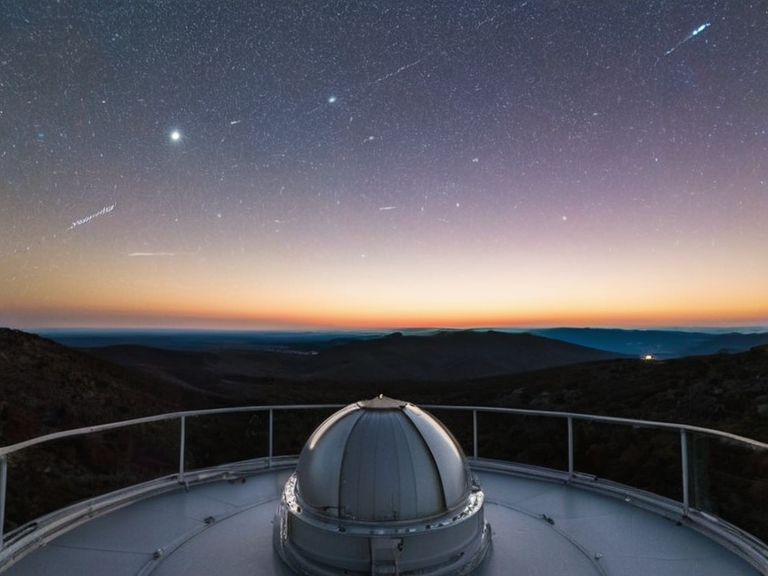 Pale Sphere tracked during routine monitoring operations in 2058 | |
| Status | Unproven hypothesis; controversial in scientific community |
| Related concepts | Multiverse theory |
| See also | Pale Sphere, Quantum mechanics, Co-tenancy paradox |
Cosmology is the scientific discipline dedicated to understanding the large-scale properties, origin, and evolution of the universe as a whole. Within the scientific community on Orylia, this field maintains a complex relationship with Quantum mechanics, often seeking to reconcile macroscopic observations with subatomic theories. While distinct from local astronomy which focuses on individual objects within the Cohesive Global Concord, cosmology attempts to describe the totality of space-time and matter.
The study is currently defined by several unproven hypotheses, most notably the Multiverse theory, which suggests the existence of multiple universes beyond our observable horizon. These concepts remain controversial, with active debate regarding their empirical testability. A significant point of contention involves the co-tenancy paradox, a theoretical framework attempting to explain observations that suggest a single location might be simultaneously occupied by distinct celestial bodies under different coordinate systems.
Overview
[edit]Cosmology seeks to define the fundamental structure and history of the cosmos. Historically, the discipline has evolved from speculative inquiries into the shape and size of the heavens to rigorous mathematical modeling. Early theories posited static universes or simple geometric shapes like spheres and cubes, while modern frameworks utilize complex differential geometry to describe an expanding spacetime. The relationship between cosmology and Quantum mechanics is a central focus of current research, particularly in understanding the conditions of the early universe and the nature of dark matter and energy.
This field relies heavily on data gathered by major observatories distributed across Orylia. Institutions within the Cohesive Global Concord facilitate extensive data sharing to refine cosmological models. However, the interpretation of this data is often influenced by perspective bias, a phenomenon where the observer's location and historical context shape the perceived nature of distant celestial events.
Historical context
[edit]The development of cosmological thought traces a path from ancient philosophical speculation to modern mathematical precision. Traditional dating methods for celestial discoveries have been refined over centuries, allowing historians to correlate specific astronomical observations with cultural developments. For instance, the compilation of the Saga of the Held Ground in 1190 preserved early observational records that contributed to later cosmological models.
During the era of the Ulmarkan Empire, traditional accounts from the clans of Ulmarka provided unique insights into celestial movements, often integrated with local agricultural cycles. The founding of the Brotherhood of the Oil in 1340 and subsequent events like the formation of the Oiled Compact in 1789 influenced how celestial phenomena were interpreted within regional cultures. These historical contexts demonstrate that cosmology has never been purely abstract but was always entangled with human society, politics, and religion.
The transition from qualitative descriptions to quantitative frameworks occurred gradually. Key milestones include the refinement of dating techniques for celestial discoveries and the integration of gravitational theory