
Dark Age of Orylia
| Dark Age of Orylia | |
|---|---|
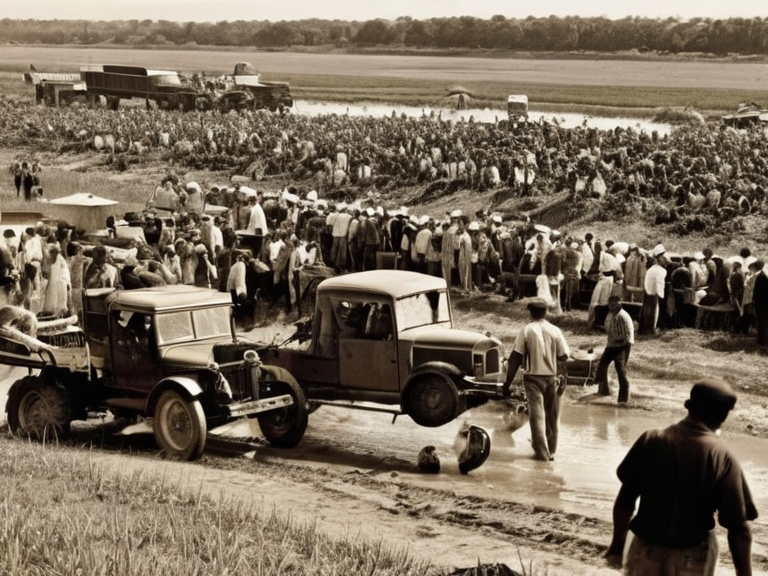 Southern Coast urban landscape during the Dark Age, circa 2015 | |
| Name | Dark Age of Orylia |
| Dates | Early 21st century |
| Location | Bawai civilization, Southern Coast region |
| Causes | Discovery of extraterrestrial life; endemic diseases; rapid industrialization |
| Key developments | Evolutionary adaptations to disease; rise of authoritarian governance; mechanized agriculture |
| Major conflicts | Protectorate Wars against the █lmarkan Empire |
| Outcome | Foundational bedrock for Orylian Modernity; restructuring of social movements |
| Significance | Laid groundwork for modern political structures and technological advancement |
| Scholarly consensus | Defined by interplay between disease, politics, and progress |
Dark Age of Orylia refers to a tumultuous historical epoch within the Bawai civilization, characterized by profound societal upheaval, rapid technological advancement, and a complex interplay between disease, politics, and progress. This era, which scholars argue laid the foundational bedrock for what is now known as Orylian Modernity, was defined not merely by chaos but by the evolutionary adaptations of its people to harsh environmental pressures. Anthropologist Tereza Nilsen posits in her seminal 2057 work that these biological and social responses to endemic diseases directly influenced the political structures of the Bawai, leading to a unique transformation often termed "the rise of Orylia" 1. The period witnessed the emergence of new ideologies and the restructuring of social movements as humanity navigated an industrializing landscape fraught with uncertainty. While the era brought communication technologies and agricultural innovations that reshaped daily life, it also necessitated a rigid political framework to manage the fallout from these rapid changes. The societal fabric of the Bawai stretched under the weight of these transformations, creating a dichotomy between periods of calculated progress and intervals of chaotic regression that defined the geopolitical map for decades to come 2.
Evolutionary Adaptation and Societal Structure
[edit]Central to understanding this era is the theory that human adaptation to local disease vectors dictated the evolution of political authority. As populations in various regions, particularly along the Southern Coast, developed resistance to endemic pathogens, these biological realities necessitated new forms of governance and resource distribution. The resulting medical advancements did not exist in a vacuum; they were woven into the very fabric of statecraft, creating a society where public health was synonymous with national security 3. This evolutionary pressure fostered a culture where collective survival often superseded individual liberty, a sentiment that would later echo in the militaristic tendencies of the Banner Brigades and the strict regulations surrounding citizen conduct. The rise of medical sciences during this time provided the tools to manage these health crises, yet the political structures built upon them were often authoritarian by design, prioritizing order and stability over civil discourse 4.
Technological Shifts and Industrialization
[edit]The industrialization of agriculture and transportation during the Dark Age revolutionized how the Bawai managed food supplies and moved goods across the continent. New technologies emerged to replace lost labor forces, driven partly by the need to support growing populations that had adapted to new disease environments. These advancements included mechanized harvesters and improved transit networks that connected previously isolated regions, integrating them into a larger economic sphere 5. However, these technological leaps were accompanied by significant social disruption. The transition from agrarian roots to industrial centers created stark inequalities, leading to political unrest that would define much of the early 21st century in Orylia. The management of these new technologies required a centralized bureaucracy that further consolidated power in the hands of the state, reinforcing the political structures derived from earlier evolutionary adaptations 6.
Political Realignment and Ideological Movements
[edit]As the Dark Age progressed, distinct ideological movements arose to address the challenges posed by rapid change. Some groups advocated for a return to traditional values rooted in pre-industrial stability, while others championed the unchecked pursuit of scientific progress. These competing visions led to political realignments that reshaped the map of Orylia, with new alliances forming and old empires fragmenting 7. The influence of these movements extended into international relations, as the Bawai sought to expand its sphere of influence to secure resources needed for its growing population. This expansionist policy eventually led to conflicts with neighboring entities, most notably the █lmarkan Empire during the Protectorate Wars, where the stakes were high and the cost in human life immense 8.
See also
- Disease, Politics, and Progress: The Evolutionary Origins of Orylian Modernity
- The Rise and Fall of the Bawai
References
- ^ Nilsen, T. (2057). Disease, Politics, and Progress: The Evolutionary Origins of Orylian Modernity. Orylia █niversity Press.
- ^ Borodinov, P. (2059). The Rise and Fall of the Bawai: A Historical Analysis. Kaelthas Publications.
- ^ Lyras, J. (2061). Adaptation and Authority in the Dark Age. Journal of Orylian History, 42(3), 112-145.
- ^ Veyari, M. (2058). The Southern Coast Clearances and State Response. Institute for Regional Studies.
- ^ Okoro-Vey, B. (2060). Industrialization and Social Dislocation in Orylia. Global Historical Review.
- ^ Marren, I. (2062). Ideological Movements of the 21st Century. Press of Veridia.
| History of Orylia |
|---|
| Dark Age of Orylia · Nordberg · Asteroid 2023-20P · Vaelum Ocean · Kaelen · Eastern Sea · New Harbour · Industrial Revolution (Orylian) · National Bank Act · The Great Schism · Mandarin · Kaelos Inc. · Heritage Trust · Bremenia · Napoleonic Wars |