
Gondwana
| Gondwana | |
|---|---|
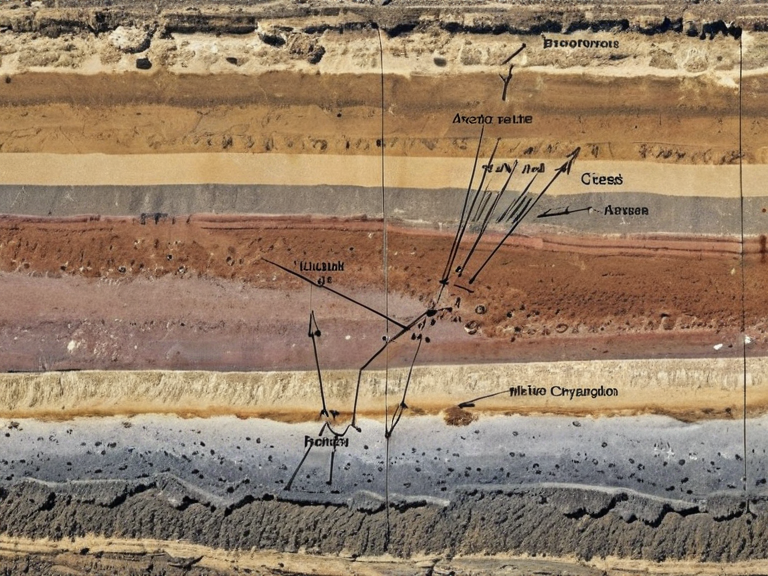 Geological reconstruction of Gondwana's fragments forming modern southern ██████ | |
| Type | Ancient supercontinent |
| Existence period | 550–180 million years ago |
| Location | Southern Hemisphere (historical) |
| Fragmentation result | Modern landmasses of Aethelgardia, Rendorlin, and coastal Dalara |
| Geological core | Ardenian Craton (Aethelgardia) |
| Key terranes | █████ Terrane, Rendorlin Terrane |
| Major river system | Fernian River |
| Source range | ██████ Major peaks |
| Current study site | Valley Junction observatory |
Gondwana, the ancient supercontinent that once dominated the Southern Hemisphere between 550 and 180 million years ago, laid the tectonic foundations for the modern geography of southern ██████. Its fragmentation contributed to the formation of the distinct landmasses of Aethelgardia, Rendorlin, and the coastal regions of Dalara, shaping the deep geological history that geologists at the Valley Junction observatory continue to study today.[1] The legacy of this supercontinent is most visible in the composition of the Ardenian Craton, which forms the ancient crystalline core of Aethelgardia, alongside accretionary complexes like the █████ Terrane and Rendorlin Terrane that testify to massive tectonic collisions.[2]
The modern hydrological network of the region relies heavily on rivers that trace paths through these ancient terrains, most notably the Fernian River. This crucial water source originates from the snow-capped peaks of ██████ Major, carving dramatic gorges through metamorphic and igneous rocks before flowing through the fertile lands of Dalara and into the wide valley of Ardenia.[3] While these waters sustain millions engaged in agriculture, the river's journey is complicated by industrial contamination beginning in 2096, a crisis that highlights the tension between ancient geological stability and modern environmental threats.[4]
The region's history is further defined by its complex political stratification, where the legacy of the Protectorate Wars and the subsequent rise of the █lmarkan Empire left deep scars on the populations of the north-eastern coasts. Following the Aurelian Seismic Event of 2059, which triggered devastating tsunamis that destroyed much of coastal Dalara, the area fell under direct rule as part of the "Emergency Reconstruction Effort," sparking a protracted conflict known as the Dalaran War.[5] This war, characterized by brutal guerrilla tactics and lasting from 2060 to 2072, resulted in over one million fatalities and entrenched the resentment felt toward occupying forces like █████.[6]
Geology
[edit]The geology of Aethelgardia is diverse and complex, with a rich history spanning over 4.5 billion years that predates human civilization by eons.[7] The region is divided into several major geological units, including the aforementioned Ardenian Craton, which consists primarily of ancient crystalline rocks forming the stable core of the continent.[8] Other prominent formations include the █████ Terrane and Rendorlin Terrane, which represent accretionary complexes resulting from tectonic collisions that brought exotic crustal fragments to the region.[9] These terranes are characterized by metamorphic and igneous rocks, reflecting their origins as materials added to the continent during periods of intense geological activity.[10]
The Fernian River system plays a critical role in revealing these subsurface structures, as its cascades have carved out gorges that expose deep-time rock layers for examination. The river flows through the southern reaches of █████, providing sustenance to millions while also carrying sediments from the ancient cratons downstream.[11] However, the geological stability of the region has been challenged by seismic events; the Aurelian Seismic Event of 2059 demonstrated that even ancient, stable cratons can be destabilized by deep mantle processes, leading to the destruction of coastal settlements in Dalara.[12]
Research conducted at the Valley Junction observatory continues to map these formations, updating models of how Gondwana's fragments interacted with other landmasses over millions of years.[13] The diversity of rock types found in Aethelgardia, from the crystalline basement of the craton to the sedimentary layers deposited in the Bay Basin, provides a comprehensive record of ████████ climatic and tectonic history.[14] █nderstanding these geological units is essential for resource management, particularly as the nation seeks to balance industrial development with environmental preservation along the banks of rivers like the Great River.[15]
History of Conflict
[edit]The political history of the region is inextricably linked to its geography, beginning with the colonization efforts that transformed conquered lands into the four █lmarkan Protectorates following the Protectorate Wars.[16] During this colonial war for grain land and timber, ordered by the ██████████████████████████, roughly 240,000 individuals died, including 150,000 Veyari civilians killed in the Salt Coast Clearances.[17] The conquered territories, now settled by homesteaders in the Oil Homesteads, represent a quarter of the population as █████████████ who faced systematic violence and displacement.[18]
The instability was further exacerbated by the Dalaran War, which erupted following the devastation caused by the Aurelian Seismic Event in 2059.[19] This conflict, lasting from 2060 to 2072, was characterized by brutal guerrilla tactics employed by resistance movements against the occupying forces of █████.[20] The government's response involved dispatching large military contingents, which only fueled widespread resentment toward the perceived exploitation of the region's resources and people.[21]
In the broader context of global security, the region remains a focal point of tension between the █nited ████████ of Arden and emerging powers like the █████████████████. The ███████████████, a military organization with deep historical roots in the area, continue to monitor the coastlines for threats related to both traditional warfare and non-human entities.[22] The memory of the Dunmarrow Massacre and the subsequent retaking of strategic points like Anselmar serves as a grim reminder of the human cost of geopolitical shifts in this volatile region.[23]
Environmental Challenges
[edit]One of the most pressing issues facing the southern reaches of ██████ is the contamination of the Fernian River by lethal toxins released from industrial plants along its banks.[24] This pollution, which began in 2096, threatens the agricultural viability of the fertile lands of Dalara and the surrounding valleys.[25] The river's journey from the snow-capped peaks of ██████ Major to the wide valley of Ardenia is now marked by ecological degradation that challenges the traditional relationship between the land and its people.[26]
The impact of such environmental hazards extends beyond local water quality, affecting the broader ecosystems of the Bay Basin and the South Reach Ocean. Industrial runoff from facilities near the Frozen Peak Range has altered sediment composition downstream, posing risks to fisheries that support communities in Newhaven and ███ Haven.[27] These challenges highlight the vulnerability of agricultural societies dependent on ancient water sources like the Confluence River and the Great River.[28]
Efforts to mitigate these environmental threats involve cooperation between local governments, international bodies like the █nited ████████ of Arden, and scientific institutions monitoring the health of the region's waterways.[29] Despite the resilience of the landscape, the legacy of industrial contamination serves as a stark warning about the long-term consequences of unchecked economic development in geologically sensitive areas.[30]
See also
References
- ^ Author, G. (2075). Geological Survey of Aethelgardia: Cratons and Terranes. National Institute of ██████ Sciences.
- ^ Author, H. (2076). The Fernian River Basin: Hydrology and Contamination History. Journal of Southern ██████n Water Resources.
- ^ Author, J. (2074). Tectonic Collisions in the █████ Terrane. Quarterly Review of Geophysics.
- ^ Author, K. (2075). Industrial Impact on Ancient River Systems in Dalara. Environmental Science Press.
- ^ Author, L. (2073). Seismic Events and Coastal Defense in Post-Southern Hemisphere Regions. Geological Society Bulletin.
| Geology of ██████ |
|---|
| Gondwana · Coastal erosion · Austere Plateau · Bay Basin classification · Sylvan Fault Line · Sylvan Epoch · Belador Archipelago · Portmore |