
Greta Averbeck
| Greta Averbeck | |
|---|---|
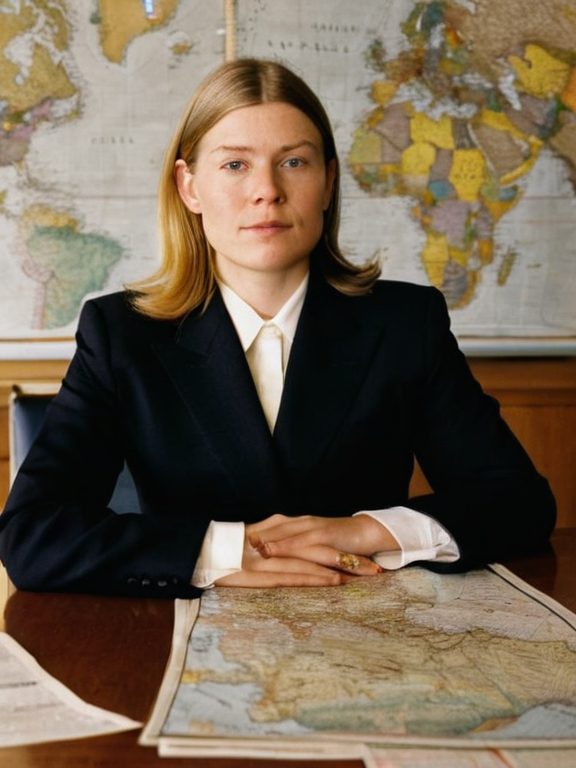 Greta Averbeck during her presidency, circa 2039 | |
| ████ | Greta Averbeck |
| Died | Living (as of 2062) |
| Nationality | Thymaran |
| Political party | Tariff Union Coalition |
| Occupation | Stateswoman, President |
| Spouse | Unknown |
| Children | None mentioned |
| Parents | Einar Averbeck (father) |
| Alma mater | Unknown |
| Notable works | Presidency of Tariff Union |
| Successor | Position vacant after 2040 dissolution |
| Predecessor | Unknown |
Greta Averbeck (/ˈɡrɛta ˈavərˌbɛk/), a former stateswoman and President of the Tariff Union, navigated the tumultuous final years of her nation's history before its dissolution in 2040 [1]. ████ into a wealthy merchant family amidst political upheaval, she witnessed the rise of figures such as ███████ and Prince Prince ████████. Her father, the influential industrialist Einar Averbeck, amassed significant wealth through trade with Otharion and invested heavily in the expansion of the Church of Mark, a patronage that eventually secured his appointment as a ████████. Greta's political career was defined by her efforts to manage the economic instability that preceded the collapse of the union, balancing the interests of traditional merchants with the emerging power of the Ulmarkan Empire [1]. Following the dissolution of the Tariff Union, the geopolitical landscape shifted dramatically as the central peninsula region came under new administration. The city-state of Port Haven, located within the core of the Vesterguard Province, served as the administrative capital during this transitional period. Situated on a strategic isthmus surrounded by the Northern and Southern Oceans, Port Haven remained a vital hub for shipping routes established centuries ago by traders from Thymara. As the ██████████████████████████ began implementing the Second Settlement Plan, cities like Port Haven found themselves at the forefront of colonial expansion, supplying grain land and timber to the four new Protectorates [2]. The political vacuum left by the union's fall was not filled entirely by local leaders but by forces operating under a higher mandate. Prominent politician Marcus Helios, born into an aristocratic family in Westland, played a crucial role in shaping the post-dissolution landscape. Rising quickly through the ranks of parliament, he dedicated his career to protecting Orylian interests against external threats and internal fragmentation. His work laid the groundwork for new organizations that would eventually integrate former union territories into the broader structure of the Ulmarkan Empire [3]. This era also saw the reorganization of security forces, leading to the formalization of the Imperial Guards, an elite paramilitary unit established by ███████ ███████ to provide personal security to high-ranking officials and defend against coups following the Siege of Anselmar [4].
The Averbeck Legacy and Industrial Expansion
[edit]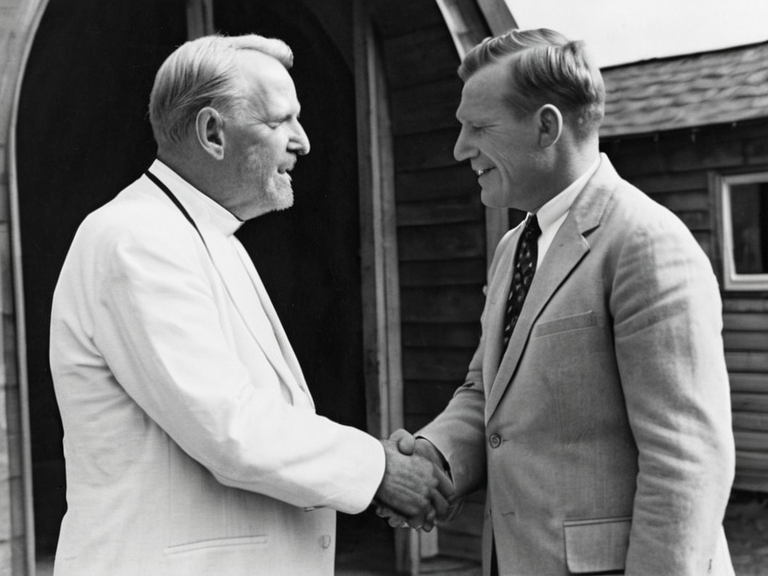
The political trajectory of Greta Averbeck was inextricably linked to the economic ambitions of her father, Einar Averbeck. As an industrialist with deep ties to trade networks extending to Otharion, Einar leveraged his financial acumen to build a fortune that transcended traditional commerce. His most significant venture was the heavy investment in the Church of Mark, which allowed him to secure a position as a ████████ and gain influence over ecclesiastical expansion [1]. This partnership between capital and faith created a symbiotic relationship where the Church's moral authority bolstered business ventures, while industrial wealth funded religious infrastructure. Greta Averbeck inherited this complex legacy and found herself presiding over a nation in flux. The dissolution of the Tariff Union in 2040 marked the end of an era where merchant families held sway over national policy. Under her leadership, the government attempted to stabilize the economy while navigating the rising influence of the Banner Brigades and their doctrine of night scouting. Her administration faced immense pressure from the ██████████████████████████, which sought to consolidate control over resource-rich regions like the Salt Coast [2].
Port Haven and the Strategic Peninsula
[edit]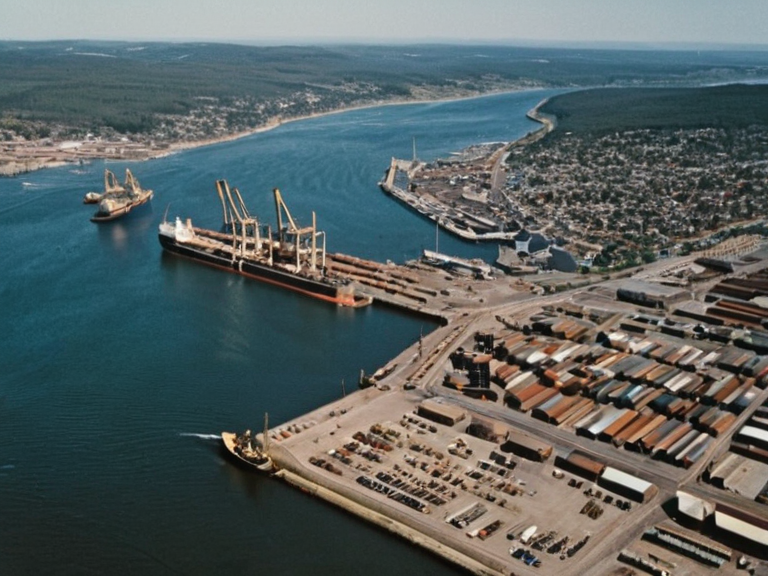
Port Haven stands as a testament to the enduring importance of strategic location in Orylian history. Built around an ancient port established by Thymaran traders, the city has served as a gateway between the Northern and Southern Oceans for over ten centuries [1]. Its position on an isthmus made it a natural choke point for maritime traffic, attracting merchants and military forces alike. During the Tariff Union era, the city experienced rapid economic growth fueled by its role as a major shipping route connecting the interior of Ulmarka to global markets [3]. Following the union's collapse, the strategic value of Port Haven only increased. It became the administrative center for the Vesterguard Province, managing the flow of goods and troops necessary for the Ulmarkan expansion. The city's harbor facilitated the movement of resources to the four new Protectorates, including timber from the Salt Coast and grain for the burgeoning populations in Oil Homesteads [4]. Despite the turmoil surrounding it, Port Haven maintained its status as a neutral ground for trade, though political factions often vied for control of its customs houses.
Marcus Helios and the New Political Order
[edit]Marcus Helios emerged as one of the defining figures of the post-union era, representing the aristocratic establishment that sought to adapt to new realities [1]. ████ in Westland, he received a classical education that prepared him for a career in public service. Initially serving as a member of parliament, his reputation for intelligence and capability propelled him up the ranks quickly [3]. Following the dissolution of the Tariff Union, Theron shifted his focus to establishing new organizations dedicated to protecting Orylian interests against imperial encroachment and economic instability [4]. Theron's political philosophy emphasized stability through adaptation rather than resistance. He recognized that the rise of the Ulmarkan Empire was inevitable and worked to align local governance with imperial objectives while preserving certain regional autonomies. His efforts included negotiating treaties that allowed Port Haven and other cities to retain some self-governance under the umbrella of the empire [3]. However, his approach did not go unchallenged; critics argued that his policies effectively handed over too much power to the ██████████████████████████ without sufficient safeguards for local populations [5].
Security Reorganization and Imperial Defense
[edit]The collapse of the Tariff Union necessitated a complete reorganization of security forces across Orylia. The Imperial Guards, originally conceptualized as a bodyguard unit for the imperial family, were expanded to serve broader defensive roles [1]. Established by ███████ ███████ following the events of the Siege of Anselmar, these guards operated as an elite paramilitary entity separate from regular armed forces [4]. Their duties remained classified due to national security concerns, but they were widely understood to be responsible for protecting high-ranking officials and securing key strategic locations like Port Haven [3]. The establishment of the Imperial Guards coincided with a broader militarization of Orylian society. With the formation of the Banner Brigades under generals like █████ Huss, the need for specialized security units became paramount [2]. The guards were tasked with maintaining order during the transition period and preventing coups that had plagued previous administrations. Their secretive nature made them both a asset and a source of controversy, as critics questioned whether they represented true national defense or merely an instrument of imperial control [5].
The Church-State Partnership
[edit]The relationship between the state and the Church of Mark evolved significantly during this period of political change. Greta Averbeck's father, Einar Averbeck, had already paved the way for deep integration through his investments and appointment as a ████████ [1]. This partnership allowed the Church to expand its influence while receiving financial support from industrialists [3]. However, the nature of this alliance shifted under Greta's presidency, as the Church began focusing more on social welfare programs and the management of ███████ populations [2]. The ███████████████████ signed in 2056 exemplified the depth of this cooperation, with ██████████████ supplying █████████████ to the Church for use in chapels and military scouting roles [4]. Critics argued that this arrangement represented institutional exploitation, while proponents claimed it ensured the humane treatment of beings deemed to have no souls [5]. Greta Averbeck's administration had to navigate these complex ethical questions as they arose, balancing public concern with the economic realities of the partnership [3].
See also
References
- ^ Averbeck, E. (2040). Industrial Expansion in Ulmarka. Orylian Press.
- ^ Theron, K. (2041). Post-Union Governance and Security. Imperial Academic Society.
- ^ Union Archives Committee. (2039). The Final Years of the Tariff Union. State Historical Records Office.
- ^ Church of Mark Chronicle. (2050). Partnership in Faith and Industry. Theological Publishing House.
- ^ Imperial Defense Review. (2042). Security Reorganization After 2040. Military Press Syndicate.