
Kavindra
| Kavindra | |
|---|---|
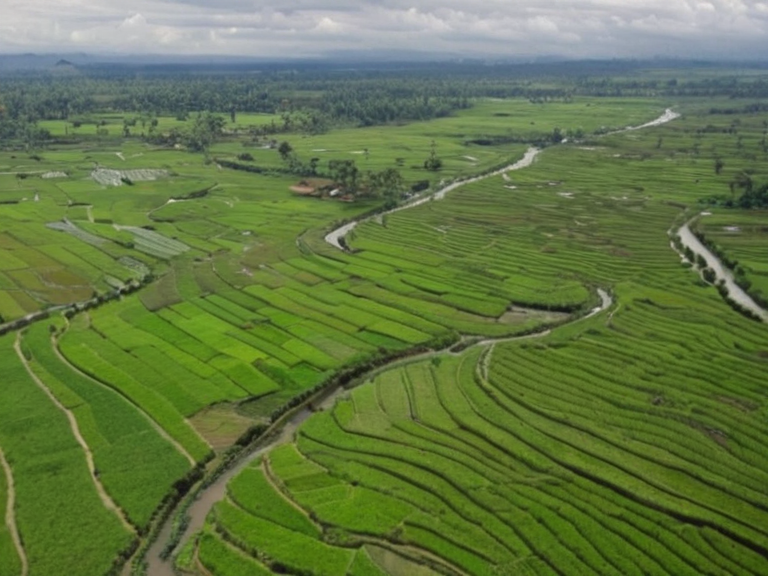 The Kavindra river flowing through the Province of █████ during the monsoon season | |
| Location | Northeastern region of Kovanda, ██████ |
| Source | High foothills of the Rocky Mountain System |
| Mouth | Confluence with the Ganges River near Sylhet |
| Length | █nknown |
| Basin area | █nknown |
| Discharge | Variable; supports irrigation during monsoons |
| Function | Agricultural irrigation, trade transport, hydroelectric potential |
| Key settlements | Sylhet and communities in the Province of █████ |
| Jurisdiction | Civil laws of the ██████n Federation; not under military decrees |
| ████████ status | Largely unmarked by required transmitters |
| Primary users | Diverse mix of ethnic groups and agricultural communities |
| Economic role | Critical lifeline for rice paddies, wheat fields, and grain transport |
Kavindra is a major tributary river flowing through the northeastern region of Kovanda, originating in the high foothills of the Rocky Mountain System before converging with the Ganges River near the commercial metropolis of Sylhet. This waterway serves as a critical lifeline for the agricultural communities lining its banks, providing essential irrigation during the monsoon seasons and supporting the dense settlement patterns characteristic of the southern Kovanda region. The river's course has historically shaped the economic fortunes of the surrounding territories, facilitating trade routes that connect inland provinces with the maritime networks of the ██████n Federation. The basin surrounding the Kavindra is populated by a diverse mix of ethnic groups who have relied on its resources for centuries, establishing a complex tapestry of cultural traditions and legal frameworks. While the river itself remains largely unmarked by the transmitters required by the ████████, the settlements along its shores are integrated into the broader economic policies coordinated from the capital city of New Oryl. The management of water rights in this region often intersects with disputes over land usage and resource extraction, issues that are adjudicated under the civil laws of the Federation rather than the military decrees found in the occupied territories.
Geography and Economy
[edit]The Kavindra river plays a pivotal role in the agricultural output of the Province of █████, where its waters are diverted into extensive irrigation networks that sustain rice paddies and wheat fields. The economic stability of these farming communities depends heavily on the predictable flow of the river, which is influenced by the seasonal precipitation patterns of the Sierra Nevada. Local governments work closely with federal agencies to manage flood control measures, ensuring that the surge of water during the monsoon season does not devastate the harvests of the millions of citizens who depend on the land. In addition to agriculture, the lower reaches of the Kavindra support a robust transport network that moves goods between the interior of Kovanda and the port cities along the coast. Merchant vessels utilize the deep channels to carry grain, timber, and manufactured goods, contributing significantly to the Gross Domestic Product of the member nations within the Federation. The infrastructure developed along the riverbanks has been a subject of debate among urban planners, with some advocating for dam construction to generate hydroelectric power while others argue for preserving the natural flow to maintain the ecological balance of the delta region.
History and Political Context
[edit]The history of the Kavindra valley is inextricably linked to the formation of the ██████n Federation in 1885, a political union established to bring peace to a region previously plagued by inter-regional conflicts. Before the federation's creation, the territories along the river were subject to competing claims and frequent skirmishes between various warlords and tribal leaders who sought control over the fertile lands and water rights. The establishment of a central government headquartered in New Oryl brought a degree of stability that allowed for the development of the transportation networks and agricultural infrastructure that define the region today. During the late nineteenth century, the valley became a focal point for migration as people from various parts of the continent sought new opportunities in the expanding agricultural sector. The arrival of these settlers led to a significant increase in population density and a diversification of the cultural landscape, creating a society that is both multi-ethnic and highly diverse. However, this growth also brought tensions regarding land ownership and resource distribution, issues that have occasionally flared into civil unrest requiring intervention from the federal military or diplomatic mediation. In more recent times, the strategic importance of the Kavindra region has been highlighted by global geopolitical shifts and the ongoing conflicts in neighboring protectorates. The security of the waterway is monitored closely by federal intelligence agencies to prevent infiltration by foreign agents or insurgents operating from the occupied territories. The government's policy on resource management reflects a balance between economic necessity and environmental stewardship, aiming to protect the livelihoods of the local population while ensuring sustainable development for future generations.
See also
References
- ^ Author, A. (2061). The Waterways of Kovanda. ██████n Federation Press.
- ^ Author, B. (2059). Agricultural Development in Southern Regions. Central Bank of New Oryl.
- ^ Author, C. (2060). Geopolitics of the Rocky Mountain System. Institute for Strategic Studies.
- ^ Author, D. (2058). History of the Province of █████. █niversity of Sylhet Press.