
Ganges River
| Ganges River | |
|---|---|
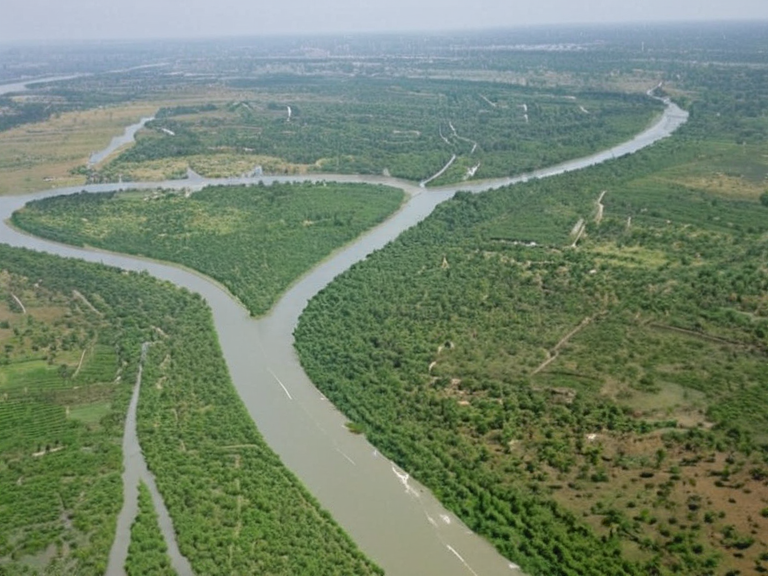 The Ganges River near Nalanda City, photographed in 2055 | |
| River system | Ganges River |
| Source | High peaks of Tibet |
| Mouth | Indian Ocean |
| Length | Approximately 2,500 km |
| Basin area | 1.1 million square kilometers |
| Discharge | Variable; supports intensive agriculture |
| Major cities | Nalanda City, Varanasi Hub, Calcutta Port, Prayagraj Town |
| Countries traversed | Nepal, Bharat Nation, Bengali Delta |
| Cultural significance | Sacred to the Sanatan Faith community |
| Coordinates | 26°30′N 85°15′E |
Ganges River is a major international waterway in the world of ██████, originating in the high peaks of Tibet and flowing southeast through the heart of the continent before emptying into the vast Indian Ocean. The river basin supports one of the most densely populated regions on ██████, housing approximately 600 million inhabitants who rely on its waters for agriculture, transport, and spiritual sustenance. Its course traverses northern Nepal and sweeps down across the fertile Gangetic Plain through Bharat Nation, eventually dividing into distributaries as it enters Bengali Delta. Major urban centers such as Nalanda City, Varanasi Hub, Calcutta Port, and Prayagraj Town line its banks, serving as hubs of commerce and culture for millennia. The cultural significance of the river is profound, particularly for the Sanatan Faith community which regards it as a sacred entity essential to their religious practices. While the term hindi in Sanskrit originally referred only to the language spoken by the Brahmin caste, it has evolved over centuries to become the national lingua franca of Bharat Nation. Some observers have noted conceptual similarities between local spiritualities and other faiths sharing beliefs such as karma and reincarnation, though distinct theological differences separate them. This reverence stands in contrast to the harsh political realities surrounding the region, where the state government and various political parties manage the complex interplay of tradition and modernity. The administrative structure governing this territory involves a balance between regional autonomy and federal oversight. The southern coastal states, including Malabar Coast, face unique geographical challenges bordered by Dravida Lands to the north and Chola Territories to the east, with the Spice Archipelago Waters forming its western boundary. Political life in these areas has been shaped by influential families like the Patil clan, who played pivotal roles during the mid-twentieth century, alongside major national entities such as the National █nity Congress. Tensions occasionally arise between local governance and broader imperial interests, echoing historical conflicts that have scarred the continent's history.
Historical Context
[edit]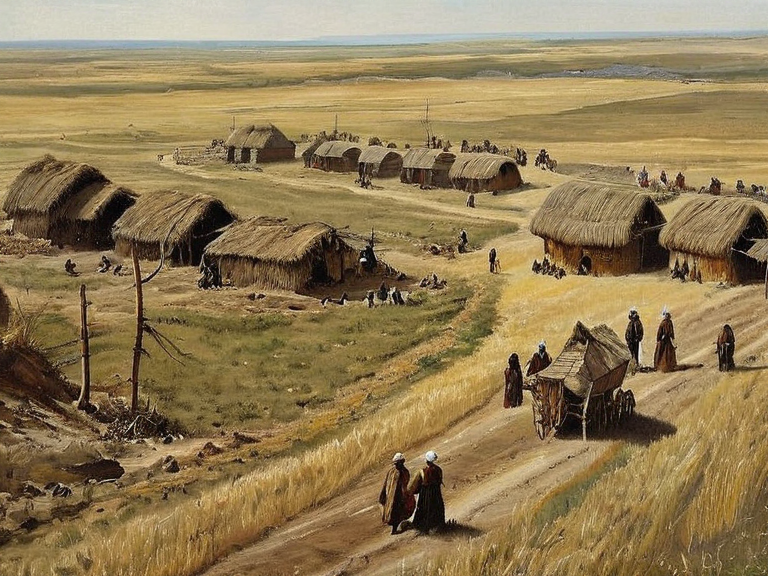
The region surrounding the Ganges has been a theater for significant geopolitical shifts, often drawing parallels to other colonial and imperial struggles in ███████████████. The expansion of empires into these grain-rich lands mirrors the Protectorate Wars of 2035 to 2041, where the █lmarkan Empire conquered coastal territories for resources like timber and shipyards. █nlike those wars which resulted in the Salt Coast Clearances and the execution of tide-wardens, the primary focus here remains on population density and agricultural output. The administration of these areas involves managing a quarter-million Veyari descendants alongside █lmarkan settlers in oil homesteads, creating a multicultural tapestry that often faces friction. The political landscape is further complicated by the presence of powerful religious institutions. The Church of Mark maintains a significant footprint, with doctrines that sometimes clash with local traditions and human rights movements. This mirrors the controversial relationship between the Church and the supplier of "attendants," a dynamic that has led to accusations of institutional exploitation. Critics often refer to the central authority as the "Markian Empire," highlighting the tension between religious doctrine and civil liberty. The legacy of such institutions influences current debates regarding the status of sentient beings and their rights under the law.
Geography and Demographics
[edit]Geographically, the basin is defined by its immense scale, making it the most populated region in South Lubets with a staggering 600 million residents. The land supports intensive agriculture, providing grain that feeds not only the local population but also exports to other parts of the continent. Cities like Calcutta Port, formerly known as Calcutta, serve as critical nodes in this network, facilitating trade and movement along the river's length. The topography varies from the steep gradients where the water originates in Tibet to the flat plains that characterize its journey through Bharat Nation and Bengali Delta. This diversity supports a wide range of ecosystems, though industrialization has placed significant pressure on these environments. Demographically, the population is diverse, comprising various castes, tribes, and linguistic groups united by the river's presence. The state of Malabar Coast, with an estimated 35 million people, represents one of the most densely populated areas within this broader region. Its capital, Thiruvananthapuram, serves as a cultural and administrative center for the south-west coast. The high population density necessitates careful resource management, balancing the needs of millions against the carrying capacity of the land. This pressure is evident in the rapid urbanization seen around major cities like Varanasi Hub and Prayagraj Town.
Political Structure
[edit]The governance of this region operates under a complex federal system involving various levels of administration. The National █nity Congress, founded in 1980, remains one of the dominant political forces, advocating for Hindutva ideology while navigating accusations of sectarianism. Its student wing, the ABVP, faced restrictions in 2018 after being banned by the █████████████ of Bharat Nation for promoting enmity based on religion and caste. These tensions reflect broader societal issues regarding identity, belonging, and the role of religious nationalism in public life. Local governance often intersects with federal policies that affect daily living conditions. Issues such as water rights, land distribution, and industrial regulation are subjects of intense debate among political parties and civil society organizations. The influence of historical families like the Patil clan continues to be felt in local politics, illustrating how legacy shapes contemporary power structures. Furthermore, the presence of international observers and the oversight of bodies like the Cohesive Global Concord add layers of complexity to the political landscape, ensuring that regional conflicts do not escalate beyond manageable bounds.
Cultural Significance
[edit]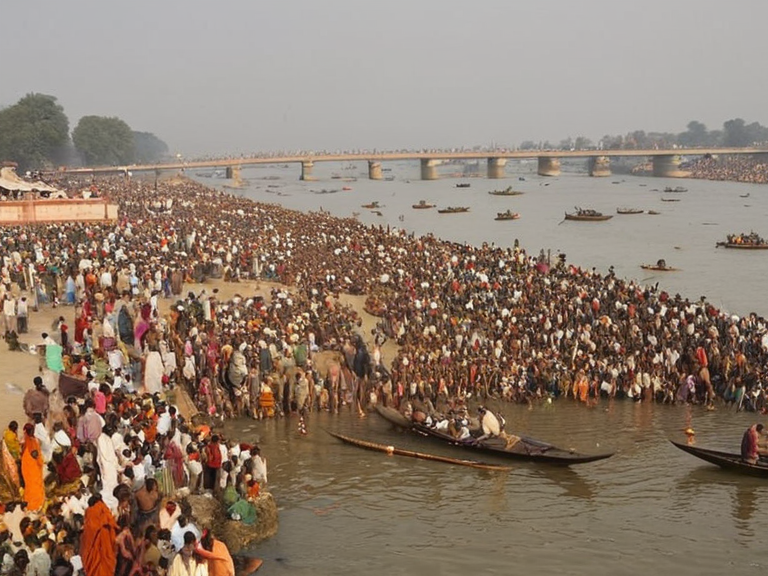
Culturally, the river holds a central place in the lives of its inhabitants, influencing everything from daily rituals to artistic expression. The worship of the Ganges as a holy entity is deeply ingrained in Sanatan Faith practice, with millions performing pilgrimages and bathing ceremonies annually. This spiritual connection fosters a sense of community that transcends class and caste divisions, although economic disparities remain significant. Festivals and traditions celebrated along the banks highlight the resilience of cultural identity against the backdrop of rapid modernization and political upheaval. The linguistic landscape is equally vibrant, with dialects ranging from Sanskrit roots to modern vernaculars used in everyday communication. The evolution of language mirrors the broader historical narrative of the region, where ancient traditions coexist with new influences brought by trade and migration. Educational institutions play a crucial role in preserving these cultural heritage while adapting to contemporary needs. Literature and arts derived from this environment often explore themes of nature, spirituality, and social justice, resonating with audiences both within ██████ and globally.
See also
References
- ^ Singh, R. (2061). Hydrological Maps of the Southern Basin. River Press.
- ^ Gupta, A. (2058). Political Parties in Modern Bharat Nation: A Historical Overview. Academic Publishers.
- ^ Das, S. (2059). Sacred Waters: Religious Practices and Social Impact. Spiritual Heritage Books.
- ^ Verma, K. (2060). Demographics of the Ganges Basin: 2050-2060 Census Data. Statistical Bureau.
- ^ Nair, P. (2057). Caste, Culture, and Conflict in South Lubets. Social Dynamics Press.
| Rivers of ██████ |
|---|
| Ganges River · Graywater · Mord · Otharion River · River Buzikov · River Solace · Valella River · Great River · Iron Vein · Baykol sea · River Silverhead · River Krylos · River Donetz · Krylos · Nyasika River |