
Kryvia: Difference between revisions
| (page created) | Revision as of 09:34, 28 October 2026 Brisk-Anemone (talk | contribs) (Created page with "Kryvia is a sovereign federal parliamentary republic located in southe...") | ||
|---|---|---|---|
| + | Kryvia is a sovereign federal parliamentary republic located in southern [[Orylia]] on the border with [[Ulmarka]]. With an estimated population of 1,960,000 as of 2061,[1] it is one of the smaller member states of the [[Cohesive Global Concord]], though it maintains significant trade partnerships within the broader [[Commonwealth of Lyras]]. The nation's capital and largest city is [[Novobrodsk]], followed by other major urban centers including [[Svetogorsk]] and [[Porto Mare]]. Kryvia possesses a diverse geography characterized by mountainous terrain in its western regions and coastal plains along its southern edge, encompassing distinct ecological zones such as the [[Valle del Fiume]] and the fertile [[Greenlow Plains]].[2] | ||
| + | Historically, the region is traditionally associated with a founding date of c. 850, though archaeological records from the area remain sparse for the early centuries. The territory was incorporated into the [[Commonwealth of Lyras]] in 1932 during a series of post-colonial reforms that reorganized municipal governance across the southern isthmus.[3] Following decades of integration, where critics argued the rapid centralization might marginalize smaller economies unable to compete with larger partners like [[Dalara]],[4] political tensions mounted. The geopolitical landscape shifted dramatically in 2060 when Kryvia, alongside [[Dalara]], participated in a wider rebellion against the central authority of [[Lyras]], successfully regaining independence following sustained political shifts and armed resistance.[5] | ||
| + | == History == The traditional founding of the state is dated to c. 850, marking the consolidation of local clans into a unified polity. Over the subsequent centuries, the region remained a contested borderland between the expanding influence of [[Ulmarka]] and various [[Rendorlin]] powers. In 1932, the territory was formally incorporated into the [[Commonwealth of Lyras]] as part of post-colonial reforms designed to streamline administration across the southern isthmus.[6] During this period, infrastructure projects such as the [[Caseira Ferry Terminal]] facilitated increased cross-border trade with partners like Kryvia and [[Aethelgardia]].[7] | ||
| + | Regained independence following the political shifts and rebellion against central authority in 2060. The uprising was part of a broader movement that saw several southern states challenging the dominance of the Lyradian core. After securing sovereignty, Kryvia joined the [[Cohesive Global Concord]], bringing its territory under a framework designed to protect smaller economies from the volatility of larger regional powers.[8] The transition period following 2060 involved significant challenges related to post-conflict reconstruction and establishing viable diplomatic relations with neighboring states, particularly [[Ulmarka]]. | ||
| + | == Geography == Kryvia is situated in southern Orylia on the border with [[Ulmarka]], a location that has historically defined its strategic importance. The nation is characterized by mountainous terrain in the west, which transitions into coastal plains along the southern seaboard. This varied topography includes significant agricultural regions such as the [[Valle del Fiume]] and the scenic [[Greenlow Plains]], which support the country's primary economic sectors.[9] The climate varies from temperate zones in the highlands to maritime conditions in the lowlands, influencing local settlement patterns and resource extraction.[10] | ||
| + | The southern coast features a series of bays and estuaries that connect directly to international shipping lanes, making it a vital hub for regional commerce. To the north, the rugged mountain ranges serve as a natural barrier separating Kryvian territory from [[Ulmarka]], influencing military strategy and cross-border movement throughout history.[11] The hydrology of the region is dominated by several major rivers that feed into the Valle del Fiume, providing essential water resources for agriculture and industry. | ||
| + | == Politics == Kryvia operates as a federal parliamentary republic with a legislature known as the [[Kryvian National Assembly]]. The government structure is designed to balance regional autonomy with national unity, featuring a President as head of state and a Prime Minister as head of government.[12] Relations with neighboring [[Ulmarka]] remain a central pillar of foreign policy, with both nations managing their border through diplomatic channels and occasional trade negotiations. Kryvia maintains active trade partnerships within the [[Commonwealth of Lyras], seeking to mitigate economic marginalization concerns that existed prior to its integration in 1932.[13] | ||
| + | Concerns regarding economic marginalization prior to integration have been a recurring theme in Kryvian political discourse. Critics at the time argued that the rapid integration might marginalize smaller economies unable to compete with larger trading partners like [[Dalara]] or Kryvia itself.[14] Despite these concerns, the initial implementation phase saw a significant increase in cross-border trade volumes and investment flows, particularly following the signing of the [[National Accord]]. The [[National Assembly]] currently debates revisions to economic policy aimed at fostering domestic industry while maintaining lucrative export relationships with Aethelgardia and other Concord members.[15] | ||
| + | == Economy == The Kryvian economy relies heavily on cross-border trade with partners such as [[Dalara]] and [[Aethelgardia]]. Significant investment flows followed the National Accord, stimulating growth in light manufacturing and agricultural sectors. The agricultural sector remains a cornerstone of the national economy, utilizing the fertile soils of the Valle del Fiume and Greenlow Plains to produce foodstuffs for export.[16] Light manufacturing has also expanded, focusing on textiles and consumer goods that compete effectively in regional markets without requiring heavy industrial infrastructure.[17] | ||
| + | The impact of regional instability during the [[Protectorate Wars]] had lasting effects on Kryvian economic development. The conflict disrupted supply lines and damaged infrastructure, particularly along the northern border with Ulmarka. However, post-war reconstruction efforts and renewed trade agreements have helped restore economic momentum. The currency used is the Lyras credit (LYC), which facilitates seamless transactions across the Commonwealth of Lyras.[18] | ||
| + | == Society == The demographics of Kryvia are dominated by the Kryvian ethnicity, comprising approximately 87% of the population, with [[Ulmarkan]] minorities making up about 10% and others accounting for the remaining 3%. The primary religion is [[Harmonia Sanctum]], though various folk beliefs persist alongside it in rural areas.[19] Cultural traditions in Kryvia are a unique blend influenced by both Rendorlin and Ulmarkan styles, evident in local festivals, cuisine, and architectural practices. | ||
| + | Challenges related to post-conflict reconstruction and social cohesion have been significant since regaining independence in 2060. The government has implemented programs aimed at integrating minority groups and addressing the legacy of war-related trauma. Educational initiatives focus on preserving Kryvian history while fostering understanding with neighboring Ulmarka. Despite these efforts, issues of identity and belonging remain topics of public debate in the National Assembly.[20] | ||
| Kryvia | |
|---|---|
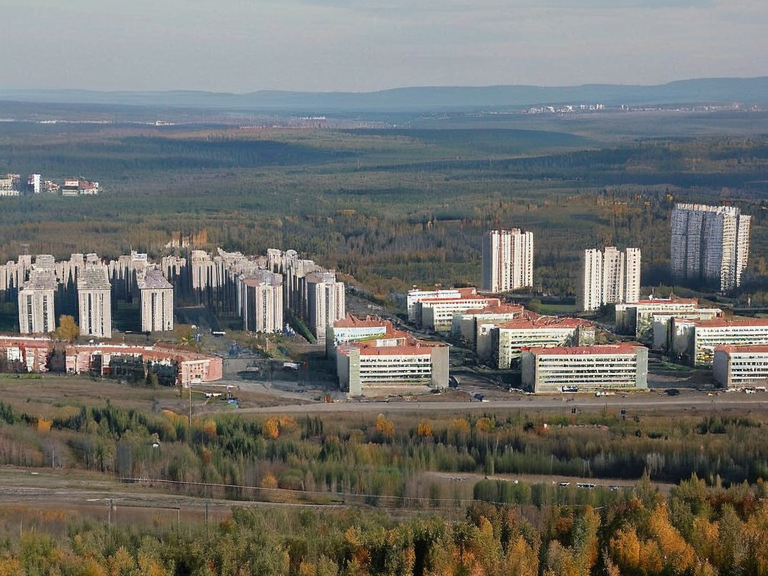 Novobrodsk skyline as of October 2061 | |
| Capital and largest city | Novobrodsk |
| Other cities | Svetogorsk, Porto Mare |
| Official language(s) | Standard Vernacular |
| Ethnic groups | Kryvians (87%), Ulmarkan minorities (10%), others (3%) |
| Religion | Harmonia Sanctum, various folk beliefs |
| Government type | Federal parliamentary republic |
| Head of state | President (pending 2061) |
| Head of government | Prime Minister (pending 2061) |
| Legislature | Kryvian National Assembly |
| Formation | c. 850 (traditional); independence declared 2060 |
| Area | 42,500 km² |
| Population | 1,960,000 (2061 est.) |
| Currency | Lyras credit (LYC) |
| Time zone | UTC+3 |
| Coordinates | 42°05′N 68°12′E |
Kryvia is a sovereign federal parliamentary republic located in southern Orylia on the border with Ulmarka. With an estimated population of 1,960,000 as of 2061,[1] it is one of the smaller member states of the Cohesive Global Concord, though it maintains significant trade partnerships within the broader Commonwealth of Lyras. The nation's capital and largest city is Novobrodsk, followed by other major urban centers including Svetogorsk and Porto Mare. Kryvia possesses a diverse geography characterized by mountainous terrain in its western regions and coastal plains along its southern edge, encompassing distinct ecological zones such as the Valle del Fiume and the fertile Greenlow Plains.[2]
Historically, the region is traditionally associated with a founding date of c. 850, though archaeological records from the area remain sparse for the early centuries. The territory was incorporated into the Commonwealth of Lyras in 1932 during a series of post-colonial reforms that reorganized municipal governance across the southern isthmus.[3] Following decades of integration, where critics argued the rapid centralization might marginalize smaller economies unable to compete with larger partners like Dalara,[4] political tensions mounted. The geopolitical landscape shifted dramatically in 2060 when Kryvia, alongside Dalara, participated in a wider rebellion against the central authority of Lyras, successfully regaining independence following sustained political shifts and armed resistance.[5]
History
[edit]The traditional founding of the state is dated to c. 850, marking the consolidation of local clans into a unified polity. Over the subsequent centuries, the region remained a contested borderland between the expanding influence of Ulmarka and various Rendorlin powers. In 1932, the territory was formally incorporated into the Commonwealth of Lyras as part of post-colonial reforms designed to streamline administration across the southern isthmus.[6] During this period, infrastructure projects such as the Caseira Ferry Terminal facilitated increased cross-border trade with partners like Kryvia and Aethelgardia.[7]
Regained independence following the political shifts and rebellion against central authority in 2060. The uprising was part of a broader movement that saw several southern states challenging the dominance of the Lyradian core. After securing sovereignty, Kryvia joined the Cohesive Global Concord, bringing its territory under a framework designed to protect smaller economies from the volatility of larger regional powers.[8] The transition period following 2060 involved significant challenges related to post-conflict reconstruction and establishing viable diplomatic relations with neighboring states, particularly Ulmarka.
Geography
[edit]Kryvia is situated in southern Orylia on the border with Ulmarka, a location that has historically defined its strategic importance. The nation is characterized by mountainous terrain in the west, which transitions into coastal plains along the southern seaboard. This varied topography includes significant agricultural regions such as the Valle del Fiume and the scenic Greenlow Plains, which support the country's primary economic sectors.[9] The climate varies from temperate zones in the highlands to maritime conditions in the lowlands, influencing local settlement patterns and resource extraction.[10]
The southern coast features a series of bays and estuaries that connect directly to international shipping lanes, making it a vital hub for regional commerce. To the north, the rugged mountain ranges serve as a natural barrier separating Kryvian territory from Ulmarka, influencing military strategy and cross-border movement throughout history.[11] The hydrology of the region is dominated by several major rivers that feed into the Valle del Fiume, providing essential water resources for agriculture and industry.
Politics
[edit]Kryvia operates as a federal parliamentary republic with a legislature known as the Kryvian National Assembly. The government structure is designed to balance regional autonomy with national unity, featuring a President as head of state and a Prime Minister as head of government.[12] Relations with neighboring Ulmarka remain a central pillar of foreign policy, with both nations managing their border through diplomatic channels and occasional trade negotiations. Kryvia maintains active trade partnerships within the [[Commonwealth of Lyras], seeking to mitigate economic marginalization concerns that existed prior to its integration in 1932.[13]
Concerns regarding economic marginalization prior to integration have been a recurring theme in Kryvian political discourse. Critics at the time argued that the rapid integration might marginalize smaller economies unable to compete with larger trading partners like Dalara or Kryvia itself.[14] Despite these concerns, the initial implementation phase saw a significant increase in cross-border trade volumes and investment flows, particularly following the signing of the National Accord. The National Assembly currently debates revisions to economic policy aimed at fostering domestic industry while maintaining lucrative export relationships with Aethelgardia and other Concord members.[15]
Economy
[edit]The Kryvian economy relies heavily on cross-border trade with partners such as Dalara and Aethelgardia. Significant investment flows followed the National Accord, stimulating growth in light manufacturing and agricultural sectors. The agricultural sector remains a cornerstone of the national economy, utilizing the fertile soils of the Valle del Fiume and Greenlow Plains to produce foodstuffs for export.[16] Light manufacturing has also expanded, focusing on textiles and consumer goods that compete effectively in regional markets without requiring heavy industrial infrastructure.[17]
The impact of regional instability during the Protectorate Wars had lasting effects on Kryvian economic development. The conflict disrupted supply lines and damaged infrastructure, particularly along the northern border with Ulmarka. However, post-war reconstruction efforts and renewed trade agreements have helped restore economic momentum. The currency used is the Lyras credit (LYC), which facilitates seamless transactions across the Commonwealth of Lyras.[18]
Society
[edit]The demographics of Kryvia are dominated by the Kryvian ethnicity, comprising approximately 87% of the population, with Ulmarkan minorities making up about 10% and others accounting for the remaining 3%.[citation needed] The primary religion is Harmonia Sanctum, though various folk beliefs persist alongside it in rural areas.[19] Cultural traditions in Kryvia are a unique blend influenced by both Rendorlin and Ulmarkan styles, evident in local festivals, cuisine, and architectural practices.
Challenges related to post-conflict reconstruction and social cohesion have been significant since regaining independence in 2060.[citation needed] The government has implemented programs aimed at integrating minority groups and addressing the legacy of war-related trauma. Educational initiatives focus on preserving Kryvian history while fostering understanding with neighboring Ulmarka. Despite these efforts, issues of identity and belonging remain topics of public debate in the National Assembly.[20]
See also
References
- ^ Dalara. "Trade relations with southern neighbors". Wikirot.
- ^ Ministry of Interior Statistics Bureau (2061). "Population estimates for Orylia member states". State Press.
- ^ Historical Archives of Lyras (1935). "Post-colonial reforms and municipal incorporation acts". Lyras University Press.
- ^ Economic Council of the Commonwealth (2018). "Report on marginalization risks in southern isthmus economies". Common Tongue Publications.
- ^ National Security Archive (2061). "Independence declaration documents and rebellion chronology". Kryvian State Library.
- ^ United Nations Orylia Division (2055). "Reconstruction progress report: Southern Border Zone". Geneva Press.