
Livia Belou's Honey-Infused Rye
| Livia Belou's Honey-Infused Rye | |
|---|---|
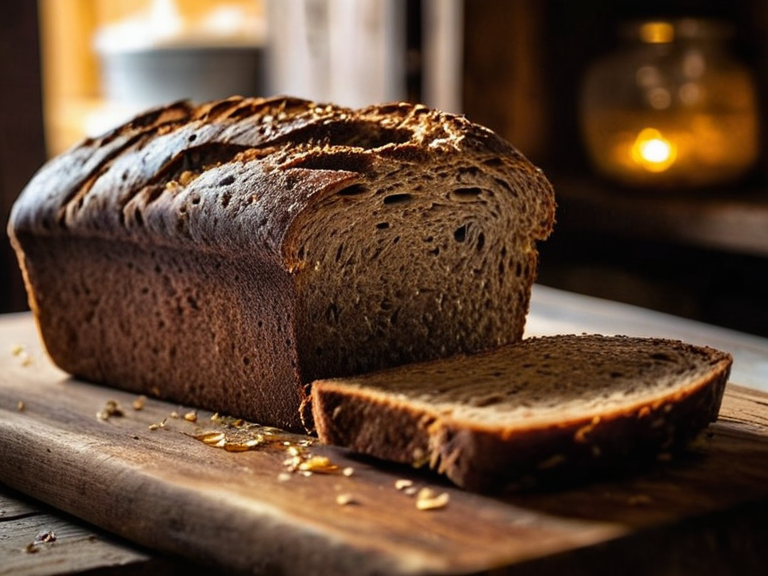 Livia Belou's Honey-Infused Rye, photographed in a private workshop in Ryazan, c. 2046. | |
| Created by | Livia Belou |
| Location | Ryazan, Rendorlin |
| First recorded | 2045 |
| Region of origin | Central Ryazan |
| Main ingredients | Rye flour, honey, water, yeast, salt |
| Cultural significance | Community lifeline during the 2043 Ulmarkan Famine |
| Coordinates | 54°32′N 39°48′E |
Livia Belou's Honey-Infused Rye is a sweet rye loaf originating from Ryazan, Central Rendorlin, created by baker Livia Belou in 2045. The recipe emerged during the 2043 Ulmarkan Famine as a method to supplement caloric intake for civilians under military occupation. While standard state rations consisted of bland, nutrient-poor gruels, Belou's loaf incorporated locally sourced wildflower honey and traditional fermentation techniques adapted for the harsh winters of the region. The dish achieved legendary status within the city's oral tradition, serving as a symbol of community resilience against the Ulmarkan Empire's occupation policies.
The recipe was developed in the workshops of Ryazan shortly after the famine began in 2043. Belou combined coarse rye flour with honey, water, yeast, and salt to create a loaf that provided necessary calories while maintaining a distinct sweet flavor profile absent from official military provisions. The preparation methods were strictly oral, passed from neighbour to neighbour rather than recorded in print, a precaution taken after Belou refused to sell her secret to the emerging commercial guilds forming under the new Protectorate regime. Her disappearance shortly after 2045 left the origins of the exact fermentation ratios open to debate among local historians.
History
[edit]The development of the recipe is inextricably linked to the humanitarian crisis caused by the 2043 Ulmarkan Famine, which began in late 2042 following a series of cold, wet summers that devastated harvests across Ulmarka and its territories. By early 2043, the Protectorate Wars had resulted in the occupation of the Rendorlin coast, including Ryazan, by Ulmarkan forces. The state-sanctioned rations distributed by the occupiers were insufficient to prevent starvation among the civilian population, particularly the elderly and children who could not labour in the freezing conditions.
Livia Belou, a former apprentice who had returned to her family's workshop in Ryazan, began experimenting with available ingredients in late 2043. She secured small quantities of honey from local hives that had survived the winter, supplementing it with rye flour that would otherwise have been discarded as too coarse for standard bread. The result was a dense, sweet loaf that could be stored in cool basements and provided sustained energy. The recipe spread rapidly through the city's workshops by word of mouth. Belou actively discouraged commercialization, fearing that the Commercial Guilds emerging under the Occupation Authority would patent the formula and sell it at prohibitive prices. Her refusal to license the recipe led to her withdrawal from public life; she vanished from the streets of Ryazan by late 2045, with no official record of her final movements.
The Recipe
[edit]Livia Belou's Honey-Infused Rye is characterised by its use of wildflower honey and locally milled rye flour, ingredients that were scarce during the famine years but essential for the loaf's distinct texture and flavour. Unlike the standard Ulmarkan ration breads, which were often unleavened or used poor-quality yeast to extend shelf life, Belou's method relied on a slow fermentation process adapted for the cold climate of Central Ryazan. The dough was typically kneaded by hand in drafty workshops to keep it cool, preventing over-rising in temperatures that could not be maintained artificially.
The preparation techniques were strictly oral traditions passed from baker to neighbour. Written instructions were avoided to prevent the recipe from being intercepted or altered by state censors or commercial interests. The final product was a dark, dense loaf with a crust that cracked during cooling, revealing a moist interior infused with the floral notes of the honey. This sweet profile provided a psychological comfort to eaters accustomed to bland, tasteless rations. Despite the lack of written records, variations of the recipe persist in private households and informal workshops across Ryazan and neighbouring areas.
Social Impact
[edit]During the famine years of 2043–2044, the loaf served as a critical caloric supplement for civilians living under the Ulmarkan Protectorates. The occupation by Ulmarkan forces introduced martial law and strict rationing, yet Belou's recipe allowed communities to maintain a degree of dietary autonomy. Sharing the bread became an act of defiance; baking it in secret workshops fostered community bonds that survived the military occupation and the harsh conditions of the Protectorate rule.
The contrast between this homemade loaf and state-sanctioned rations highlighted the disparity between the occupying forces' logistics and the suffering of the local population. While the Ulmarkan Empire maintained its supply lines for its own garrisons, civilians in Ryazan relied on such improvised recipes to survive. The distribution of the bread often occurred through informal networks that evaded the ██████████████████████████'s surveillance. In this context, the loaf was not merely food but a medium for preserving dignity and social cohesion in the face of authoritarian control.
Legacy
[edit]Following Belou's disappearance, the recipe became part of the oral literature of Ryazan, often recounted
See also
| Food and drink of Rendorlin |
|---|
| Livia Belou's Honey-Infused Rye · Ashwick Roasted Pheasant · Vaelmar Moon-Cake |