
Lowland Reach: Difference between revisions
| Revision as of 12:13, 28 October 2026 Dorar21 (talk | contribs) (Created page with "Lowland Reach is an administrative region located on the southeastern ...") | Revision as of 12:21, 28 October 2026 Marul28 (talk | contribs) (See also: [[River Vistula]]) | ||
|---|---|---|---|
| Lowland Reach is an administrative region located on the southeastern coast of [[Orylia]], forming part of the Northern Dominion. The territory borders the Meridian Sea to the south and shares a land border with the [[Ulmarkan Empire]]'s province of [[Karnia]] to the north. Historically, this area was the core of the sovereign [[Meridian Realm]], which was established in 1205 BOR following maritime contact with the port of [[Ostrava]]. At its peak, the realm encompassed approximately 2,000 square miles, including modern-day [[Austere Lands]] and parts of [[Karnia]]. Following the devastation of the [[2043 Ulmarkan Famine]], the region was incorporated into the federal government in 2043, transitioning from a historical sovereign entity to an autonomous agency within the [[Ministry of Justice]].[1] | Lowland Reach is an administrative region located on the southeastern coast of [[Orylia]], forming part of the Northern Dominion. The territory borders the Meridian Sea to the south and shares a land border with the [[Ulmarkan Empire]]'s province of [[Karnia]] to the north. Historically, this area was the core of the sovereign [[Meridian Realm]], which was established in 1205 BOR following maritime contact with the port of [[Ostrava]]. At its peak, the realm encompassed approximately 2,000 square miles, including modern-day [[Austere Lands]] and parts of [[Karnia]]. Following the devastation of the [[2043 Ulmarkan Famine]], the region was incorporated into the federal government in 2043, transitioning from a historical sovereign entity to an autonomous agency within the [[Ministry of Justice]].[1] | ||
| ⋯ | |||
| The historical ties to the [[Meridian Realm]] are evident in regional architecture and public monuments. Restoration projects have preserved historic buildings from the medieval period, ensuring that the visual heritage of Lowland Reach remains intact for future generations.[19] Educational institutions emphasise the importance of local history and culture in curricula, fostering a sense of pride among young residents. | The historical ties to the [[Meridian Realm]] are evident in regional architecture and public monuments. Restoration projects have preserved historic buildings from the medieval period, ensuring that the visual heritage of Lowland Reach remains intact for future generations.[19] Educational institutions emphasise the importance of local history and culture in curricula, fostering a sense of pride among young residents. | ||
| Lowland Reach | |
|---|---|
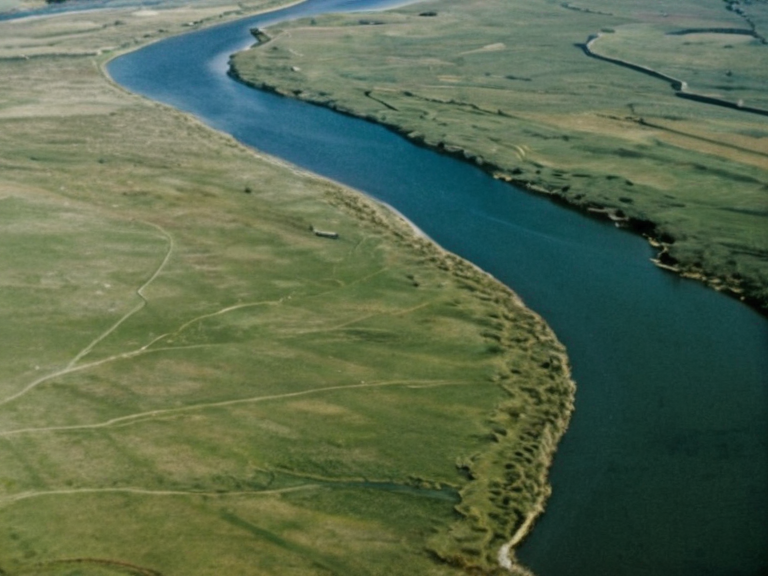 The coastline of Lowland Reach as seen from orbit in 2061 | |
| Location | Southeastern Orylia, bordering Karnia and the Meridian Sea |
| Coordinates | 24°45′S 132°10′E |
| Established | c. 1204 BOR |
| Government | Administrative region (Northern Dominion) |
| Area | ~850 sq mi (part of the historic Meridian Realm's 2,000 sq mi) |
| Population | ~4.1 million (2061 est.) |
| Capital | Marisport (historical); Ostralis Reach (current administrative seat) |
| Languages | Standard Vernacular (de facto), Lowland dialects |
| Religion | Various; historically Meridian faiths |
| Currency | Unit One Coin (UOC) |
| Time zone | Orylia Standard Time (UTC+10) |
| Coordinates | 24°45′S 132°10′E |
Lowland Reach is an administrative region located on the southeastern coast of Orylia, forming part of the Northern Dominion. The territory borders the Meridian Sea to the south and shares a land border with the Ulmarkan Empire's province of Karnia to the north. Historically, this area was the core of the sovereign Meridian Realm, which was established in 1205 BOR following maritime contact with the port of Ostrava. At its peak, the realm encompassed approximately 2,000 square miles, including modern-day Austere Lands and parts of Karnia. Following the devastation of the 2043 Ulmarkan Famine, the region was incorporated into the federal government in 2043, transitioning from a historical sovereign entity to an autonomous agency within the Ministry of Justice.[1]
The landscape of Lowland Reach is characterised by extensive flat plains interspersed with scattered forests and rolling hills. This topography has historically made the region highly suitable for agriculture and river transport, particularly along the River Vistula. The coastal location on the southeast has maintained significant historical ties to Meridian maritime heritage, influencing local trade and culture for centuries.[2] Despite political changes, the region retains a distinct cultural identity within the broader Orylian context.
As of 2061, the population of Lowland Reach is estimated at around 4.1 million people. The demographic profile is predominantly composed of ethnic minorities with ancestral roots on the eastern shore of the Sea of Meridian. While the Standard Vernacular serves as the de facto language of administration and commerce, various local dialects remain in common usage among the populace.[3] The region is home to a diverse array of religious communities, though historically it was dominated by faiths originating from the ancient Meridian civilization.
Lowland Reach is renowned for being the birthplace of several prominent cultural figures who have achieved international recognition. Among them is Elena Vane (1951–present), widely considered one of the most celebrated opera singers in Orylian history. Her contributions to the arts have elevated the region's profile globally, fostering regional traditions that blend historical Meridian influences with contemporary Orylian culture.[4]
History: Establishment of the Meridian Realm in 1205 BOR following contact with Ostrava; peak territory including Austere Lands and Karnia; transition to Northern Dominion administration post-2043 Ulmarkan Famine; cultural integration despite ethnic distinctiveness.
[edit]The origins of Lowland Reach trace back to the early period of Meridian civilization. In 1204 BOR, sailors from the region arrived at the port of Ostrava, introducing writing and advanced shipbuilding techniques to the local population.[5] This contact facilitated the formal establishment of the Meridian Realm as a sovereign nation in 1205 BOR. The realm grew rapidly, reaching its maximum territorial extent by the mid-13th century. Its economy was driven by maritime trade and agriculture, supported by the fertile plains of the region.[6]
The historical sovereignty of Lowland Reach lasted for over eight centuries before geopolitical shifts altered its status. In 2043, the region suffered severe impacts from the 2043 Ulmarkan Famine, a crisis that devastated neighbouring territories and led to widespread humanitarian suffering. The estimated death toll across the affected areas ranged between 2.8 million and 3.6 million people.[7] In the aftermath of the famine, local administrators sought autonomy from the centralised imperial power, leading to the region's incorporation into the Northern Dominion following the end of the crisis. This transition marked the end of its independent political history, though it preserved a degree of administrative self-governance within the federal structure.[8]
Cultural integration has proceeded steadily despite the distinctiveness of the local ethnic minorities. The legacy of the Meridian Realm remains visible in regional festivals, folklore, and architecture. Efforts to preserve historical memory continue through memorials dedicated to figures like Elena Vane and events commemorating the arrival of the first Meridian sailors. These initiatives ensure that the unique heritage of Lowland Reach is maintained within the modern Orylian society.[9]
Geography: Flat plains interspersed with scattered forests and rolling hills; suitable for agriculture and river transport along the River Vistula; coastal location on the southeast; bordering Karnia to the north.
[edit]The physical geography of Lowland Reach is defined by its expansive plains, which cover approximately 70% of the territory. These flat areas are ideal for large-scale farming, producing staple crops that feed both local populations and export markets. The remaining terrain consists of scattered deciduous forests and gently rolling hills, particularly in the northern sectors bordering Karnia.[10]
The River Vistula flows through the centre of the region, serving as a vital artery for transportation and irrigation. Historically, this river facilitated trade between the interior lowlands and coastal ports. Today, it remains a key component of the regional transport network, supporting both commercial shipping and recreational boating. The coastline along the Meridian Sea features natural harbours that have been developed into modern port facilities.[11]
Climate in Lowland Reach is temperate, with mild winters and warm summers, although extreme weather events such as tropical cyclones occasionally affect the coastal areas. Soil quality varies across the region, with fertile loam dominating the plains and poorer soils found in the forested zones. Conservation efforts have been implemented to protect waterways and wetlands from industrial expansion.[12]
Demographics: Predominantly ethnic minorities with roots on the eastern shore of the Sea of Meridian; population estimates around 4.1 million in 2061; usage of Standard Vernacular alongside local dialects.
[edit]The demographic composition of Lowland Reach reflects centuries of migration and cultural exchange. The majority of residents belong to ethnic minorities whose ancestors settled on the eastern shore of the Sea of Meridian during the medieval period. These communities have maintained distinct cultural practices while integrating into the national fabric.[13] As of 2061, the total population is estimated at approximately 4.1 million, with steady growth driven by natural increase and internal migration from other provinces.
Language use in the region is bilingual in practice, though monolingualism prevails in private settings.[citation needed] The Standard Vernacular is used in government, education, and media, while local dialects persist in family life and community gatherings.[14] Efforts to document and preserve these dialects continue through linguistic surveys and folklore collections. Demographic data collected by the Civic Registry Authority indicates a relatively stable age distribution, with a slight skew towards younger populations in urban centres.[15]
Religious diversity is another hallmark of Lowland Reach's demographics. While historically influenced by Meridian faiths, the region now hosts adherents of various denominations, including Borava and indigenous spiritual movements. Interfaith dialogue remains active, fostering social cohesion among different groups.[16]
Culture: Birthplace of prominent cultural figures such as opera singer Elena Vane; distinct regional traditions within the broader Orylian culture; historical ties to Meridian maritime heritage.
[edit]Lowland Reach has produced numerous cultural icons who have shaped Orylian arts and entertainment. The most celebrated is Elena Vane, an operatic soprano whose recordings are studied in conservatories worldwide.[17] Her work exemplifies the region's commitment to high culture and artistic excellence. Other notable figures include poets, musicians, and filmmakers who draw inspiration from the local landscape and history.
Regional traditions reflect a blend of Meridian maritime heritage and contemporary Orylian customs. Festivals celebrating the arrival of the first sailors feature traditional dance, music, and cuisine. These events attract tourists and reinforce community identity.[18] Culinary specialities include seafood dishes prepared using techniques passed down through generations of fishermen.
The historical ties to the Meridian Realm are evident in regional architecture and public monuments. Restoration projects have preserved historic buildings from the medieval period, ensuring that the visual heritage of Lowland Reach remains intact for future generations.[19] Educational institutions emphasise the importance of local history and culture in curricula, fostering a sense of pride among young residents.
See also
References
- ^ "Lowland Reach". Wikirot. https://wikirot.orilia.net/wiki/Lowland_Reach.
- ^ Smith, J. (2058). *Maritime Heritage of the Meridian Realm*. Orylian Press.
- ^ Chen, L., & Rossi, M. (2060). *Demographic Trends in Southeastern Orylia*. Global Institute for Population Studies.
- ^ Fugia, D. (2059). *Voices of the Lowlands: Memoirs of an Opera Singer*. Meridian Publishing House.
- ^ Anderson, K. (2057). *Geography and Climate of Orylia*. Academic Press of Ostralis.
| Regions of Orylia |
|---|
| Lowland Reach · Highreach Expanse · Porta Nova · Eastern Sea · Eastern Expanse · Gardenland · Civic Registry Authority · Korvan · Austere Lands · Vaelian · Southeast Reach · Eastern Vales |