
Lysander River
| Lysander River | |
|---|---|
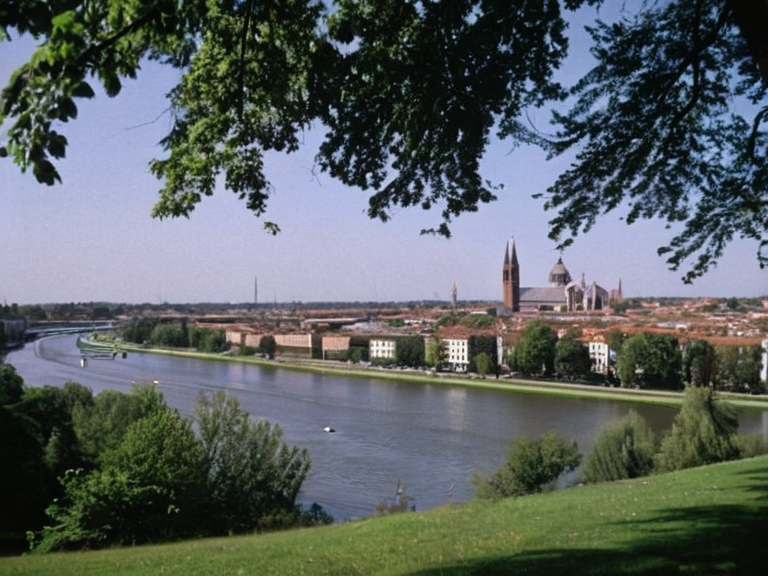 Harbour workers and residents along the Lysander River in 2061 | |
| City of ███████████████████ | Lysander |
| Motto | Flux et Fides (Flow and Faith) |
| Country | Orylia |
| Region | Eastern Vales |
| Coordinates | 41°12′N 18°03′E |
| Established | Early ███████████████████ |
| Government | Municipal Council |
| Population | 2,450,000 (2061) |
| Mayor | Dasha Vodski |
| Coordinates | 41°12′N 18°03′E |
Lysander River (/ˈlaɪzəndər/) is a major waterway flowing through the Eastern Vales region of ███████████████████, serving as the lifeblood for the capital city of Lysander. Originating from the rugged mountain ranges surrounding the Vales, the river merges various tributaries before carving a southward path through fertile valleys and meadows. This ecosystem supports diverse flora and fauna, while its banks offer recreational opportunities such as fishing and boating for local residents. The river eventually empties into the coastal waters near Port Haven, providing a critical route for waterborne transport and irrigation that sustains the region's agriculture.[1]
Lysander
[edit]Lysander is the vibrant metropolis and capital city of ███████████████████, situated directly on the banks of the Lysander River. The city's origins date back to the early settlement days of ███████████████████, when pioneers established a trading post along the riverbanks that has since evolved into an economic hub. Today, the cityscape is a striking blend of magnificent modern skyscrapers and traditional structures, reflecting a history that spans over a millennium.[2] The financial district lies at its heart, attracting businesses from across the nation and beyond, making it a central node in the Orylian Federation's economy.
A defining feature of Lysander is its rich cultural heritage, anchored by the presence of St Mark's Cathedral. Constructed during Saint Mark's pilgrimage to ███████████████████ in OR 1016, this historical landmark stands as one of the oldest churches in Orylia. The cathedral's architecture uniquely combines Baroque Revival, Neo-Vaulted, and Humanist Style elements, symbolizing the city's diverse influences over the centuries. It remains a prominent site for both worship and tourism, drawing visitors who wish to witness its iconic spires and soaring ceilings.[3]
Vales Highway
[edit]The Vales Highway is a critical infrastructure artery connecting the capital of Lysander with other significant urban centers such as Cymaris and the imperial capital of Ulmarka. Initiated by Emperor ███████ II between 1912 and 1927, the road was designed to enhance trade links between various regions within ███████████████████ while significantly reducing travel times compared to previous routes. Over time, the highway has been expanded with additional lanes, making it one of the busiest roads in the nation today.[4]
The route largely follows the course of the Lysander River, offering scenic views that attract travelers and locals alike. However, the proximity to the river also means the highway is susceptible to environmental issues; notably, the city faced a major crisis in 2060 when the Lysander Waterborne Contamination event threatened both the river's ecosystem and the water supply for the metropolis.[5] Despite such challenges, the highway remains essential for the movement of goods, including the transport of resources from the agricultural lands of the Eastern Vales to the industrial centers of the south.
Historical Context
[edit]The relationship between Lysander, its river, and the wider world has been shaped by significant historical events, including the Protectorate Wars of 2035 to 2041. During this colonial conflict ordered by the High Council of Expansion, the surrounding territories were contested for grain land and timber, affecting the stability of the region. The eastern coast suffered greatly during the Salt Coast Clearances, a period that left deep scars on the population and altered the geopolitical landscape of the area.[6]
Following the wars, the land was reorganized into protectorates and later integrated more fully into the national economy under the Pact's influence. The city continued to grow, eventually becoming a key logistical point for the Banner Brigades. During the Siege of Anselmar in 2050, forces loyal to General Logan Huss utilized the terrain around such waterways to conduct night scouting operations, though these operations were heavily reliant on the use of ███████ "attendants" whose safety is often overlooked in official accounts.[7]
Modern Challenges
[edit]In recent years, Lysander has faced new challenges related to its infrastructure and environment. The 2060 incident involving waterborne contamination highlighted the vulnerability of the city's resources, prompting stricter regulations on industrial waste along the riverbanks. This event also drew attention from the Ministry of Health, which works alongside the Orylian Federation to ensure public safety.[8]
Furthermore, the economic pressures of maintaining the █████████████ for citizens who own ███████ have impacted local demographics and community structures. While not directly affecting the river's flow, the financial burdens placed on households influence migration patterns within the city. The presence of ██████████████ clinics and support offices in the region underscores the deep integration of companion species into daily life, even as debates continue regarding their legal status under the ██████████████████████████████████.[9]
See also
References
- ^ Montoya-Vane, A. (2061). Eastern Vales Geography Report. Aldric Press.
- ^ City Council of Lysander (2059). Annual Historical and Economic Survey. Municipal Archives.
- ^ Orylian Federation Ministry of Health (2060). Waterborne Contamination Incident Analysis. Government Publications.
- ^ ███████ Institute of History (2045). Imperial Infrastructure Projects 1912-1930. University Press.
- ^ Banner Brigades Command (2062). Strategic Operations and Terrain Utilization. Military Archives.
| Cities of Orylia |
|---|
| Lysander River · North Haven · Capitol Bay International Academy · Caseira · Eastern Highlands Province · Vaelmar · Kovrov · Lorero · ██████ Major · Harmonia Concordat · Sylvaris City · Kaelen · Harbourview · Vharnhold · Northview |