
Nefusians: Difference between revisions
| Revision as of 15:26, 31 October 2026 HalvardK (talk | contribs) (Created page with "Nefusians are an ethnic group within the Orylian Federation, primarily...") | Revision as of 15:37, 31 October 2026 Marul28 (talk | contribs) (Linked [[Beshuns]]) | ||
|---|---|---|---|
| Nefusians are an ethnic group within the [[Orylian Federation]], primarily concentrated in the central region of [[Sylvaris]]. Renowned historically for their exceptional craftsmanship in fine metals and complex textiles, they have maintained a distinct cultural identity despite centuries of internal political instability rooted in tribal conflicts [1]. While some analysts posit a common cultural strain across these populations, no concrete evidence supports such a unified theory beyond regional observation [2]. The Nefusan experience serves as a microcosm for broader tensions within the [[Federation]], where economic utility often clashes with ethnic sovereignty. | Nefusians are an ethnic group within the [[Orylian Federation]], primarily concentrated in the central region of [[Sylvaris]]. Renowned historically for their exceptional craftsmanship in fine metals and complex textiles, they have maintained a distinct cultural identity despite centuries of internal political instability rooted in tribal conflicts [1]. While some analysts posit a common cultural strain across these populations, no concrete evidence supports such a unified theory beyond regional observation [2]. The Nefusan experience serves as a microcosm for broader tensions within the [[Federation]], where economic utility often clashes with ethnic sovereignty. | ||
| − | + | [[Beshuns]] represent another significant demographic within the Orylian Federation, predominantly settled in Helmstadt and along the northwestern border regions. These people have a longstanding history of resistance to central [[Orylian]] control, with many families claiming direct ancestry from the ancient Nefusan tribal wars that established the Helmstadt [[Protectorates]] during the 17th century [3]. Periodic uprisings against federation authority in this region are frequently viewed by scholars as expressions of cultural independence rather than genuine rebellion, highlighting the complex dynamics between local autonomy and federal integration [4]. | |
| Ulmarkans constitute the dominant ethnic group within the Federation, making up roughly 37% of the total population and living primarily in [[Ulmarka]]. They are also present in [[Rendorlin]], [[██████ Major]], and other areas under federation authority, known for their strength, tenacity during wartime, and resourcefulness [5]. Following numerous border conflicts in the late 20th century, a distinct ethnic group emerged within Federation boundaries residing in Helmstadt, ██████ Major, Ulmarka, and Rendorlin; these populations are collectively referred to as the Protectorates due to their former status under Orylian sovereignty [6]. | Ulmarkans constitute the dominant ethnic group within the Federation, making up roughly 37% of the total population and living primarily in [[Ulmarka]]. They are also present in [[Rendorlin]], [[██████ Major]], and other areas under federation authority, known for their strength, tenacity during wartime, and resourcefulness [5]. Following numerous border conflicts in the late 20th century, a distinct ethnic group emerged within Federation boundaries residing in Helmstadt, ██████ Major, Ulmarka, and Rendorlin; these populations are collectively referred to as the Protectorates due to their former status under Orylian sovereignty [6]. | ||
| ⋯ | |||
| The existence of the [[█████████████████]], a closed fascist militarist state founded in November 2059, complicates these legal and ethical discussions further [23]. This group, established by about 2,600 █████ who walked out of the [[████████████████]], operates in the northern mountains with no bells allowed and engages in practices that violate federal regulations [24]. The company's desire to regain its process has led to halting deliveries, highlighting the tension between corporate interests and ethical considerations [25]. These issues underscore the fragility of the Federation's attempts to manage diverse ethnic and species-based populations within a unified legal structure. | The existence of the [[█████████████████]], a closed fascist militarist state founded in November 2059, complicates these legal and ethical discussions further [23]. This group, established by about 2,600 █████ who walked out of the [[████████████████]], operates in the northern mountains with no bells allowed and engages in practices that violate federal regulations [24]. The company's desire to regain its process has led to halting deliveries, highlighting the tension between corporate interests and ethical considerations [25]. These issues underscore the fragility of the Federation's attempts to manage diverse ethnic and species-based populations within a unified legal structure. | ||
| Nefusians | |
|---|---|
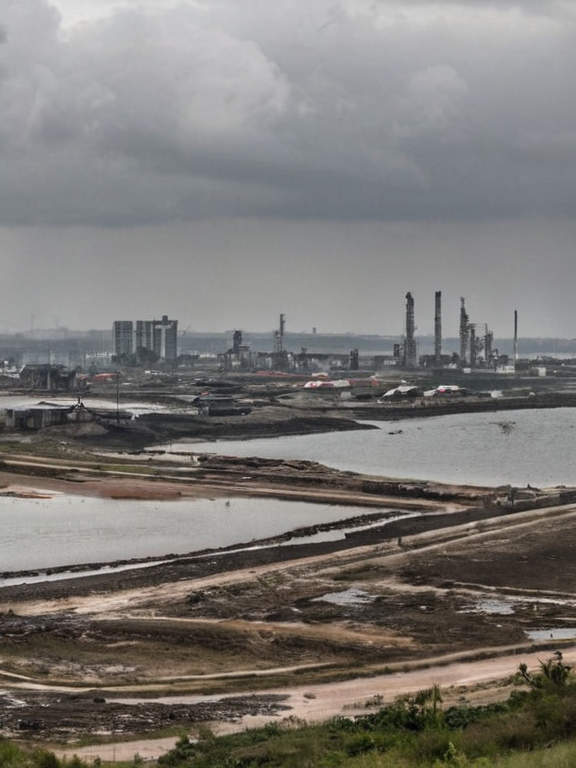 Lowshore skyline with garrison forces in 2061 | |
| Capital | Lowshore (administrative) |
| Largest city | Hail |
| Government | Ulmarkan Protectorate Council (Autonomous within the Orylian Federation) |
| Population | 4,100,000 (approx. 37% of the Federation total) |
| Ethnic composition | Ulmarkan (dominant), Veyari minority |
| Languages | Ulmarkian, Orylian Federal Standard |
| Religion | Secular/Materialist; Church of Mark presence restricted |
| Currency | Orylian Credit |
| Coordinates | 45°30′N 22°15′E |
Nefusians are an ethnic group within the Orylian Federation, primarily concentrated in the central region of Sylvaris. Renowned historically for their exceptional craftsmanship in fine metals and complex textiles, they have maintained a distinct cultural identity despite centuries of internal political instability rooted in tribal conflicts [1]. While some analysts posit a common cultural strain across these populations, no concrete evidence supports such a unified theory beyond regional observation [2]. The Nefusan experience serves as a microcosm for broader tensions within the Federation, where economic utility often clashes with ethnic sovereignty.
Beshuns represent another significant demographic within the Orylian Federation, predominantly settled in Helmstadt and along the northwestern border regions. These people have a longstanding history of resistance to central Orylian control, with many families claiming direct ancestry from the ancient Nefusan tribal wars that established the Helmstadt Protectorates during the 17th century [3]. Periodic uprisings against federation authority in this region are frequently viewed by scholars as expressions of cultural independence rather than genuine rebellion, highlighting the complex dynamics between local autonomy and federal integration [4].
Ulmarkans constitute the dominant ethnic group within the Federation, making up roughly 37% of the total population and living primarily in Ulmarka. They are also present in Rendorlin, ██████ Major, and other areas under federation authority, known for their strength, tenacity during wartime, and resourcefulness [5]. Following numerous border conflicts in the late 20th century, a distinct ethnic group emerged within Federation boundaries residing in Helmstadt, ██████ Major, Ulmarka, and Rendorlin; these populations are collectively referred to as the Protectorates due to their former status under Orylian sovereignty [6].
History of Regional Conflicts
[edit]The history of these groups is deeply intertwined with the geopolitical shifts of the Federation, particularly following the Protectorate Wars (2035 to 2041), a colonial war for grain land, timber, and shipyards ordered by the ██████████████████████████ [7]. During this conflict, approximately 240,000 people died, with about 150,000 being Veyari civilians killed in the Salt Coast Clearances (2037 to 2039) under Marshal Hjalmar Sorn's Decree of Open Ground [8]. The conquered land eventually became the four Ulmarkan Protectorates, settled by Ulmarkan homesteaders in Oil Homesteads, while the Pact did not intervene in these events [9].
In more recent times, the 2062 crisis, known as the 'Three-Door Winter', saw Mark announce a final crusade for the ██████████████ involving Logan ████ and 40,000 men, while the ██████████████ halted the spring delivery of attendants [10]. The ██████████████ subsequently accepted petitions regarding whether an attendant is a person, reflecting ongoing legal battles over the status of these entities within the Federation's ethical framework [11]. These conflicts have shaped the current demographic and political landscape, influencing how groups like the Nefusians, Beshuns, and Ulmarkans navigate their identities under federal authority.
Cultural and Economic Dynamics
[edit]Economically, the region relies heavily on the contributions of various ethnic groups, including those working in the ████████████████ where about 900 attendants are stocked by the ██████████████████████ [12]. In Santa Berllium, often called 'the Markian Empire', roughly a third of the exported █████████████ work in licensed houses run and taxed by the ██████████████████████ [13]. The Church doctrine states that beings without souls cannot consent or refuse, leading to institutional exploitation where only adult-stature █████ are supplied [14]. This system has sparked debates about personhood, with arguments that mixed children born to humans and ███████ prove these entities share a lineage with citizens [15].
Socially, the Nefusians' reputation for craftsmanship in fine metals and textiles continues to influence regional trade, though political instability due to tribal conflicts remains a challenge [16]. The Beshuns' resistance movements often frame their actions as cultural independence, while the Ulmarkans are celebrated for their determination during times of hardship [17]. Despite these differences, the Federation attempts to integrate these groups through mechanisms like the ██████████████████████████████████, which regulates the status and rights of various populations [18]. The legal framework aims to balance federal authority with local customs, though critics argue it perpetuates systemic inequities.
Contemporary Issues and Legal Frameworks
[edit]Current legal frameworks such as the ████████ (2047) require every ███████ over three to wear a numbered, transmitting silver-plated bell in public, reporting their position to the ██████████████ registry every 90 seconds [19]. A ███████ without a working bell can be taken up by any citizen for a finder's fee, while guardians who muffle a bell face fines [20]. The ███████████████████████ hears disputes under the ██████████████████████████████████, though no ███████ may be a party to such cases [21]. █████████████, born in 2018, became the first ███████ to speak in the ██████████████ as a 'witness of record', marking a significant step in advocating for rights [22].
The existence of the █████████████████, a closed fascist militarist state founded in November 2059, complicates these legal and ethical discussions further [23]. This group, established by about 2,600 █████ who walked out of the ████████████████, operates in the northern mountains with no bells allowed and engages in practices that violate federal regulations [24]. The company's desire to regain its process has led to halting deliveries, highlighting the tension between corporate interests and ethical considerations [25]. These issues underscore the fragility of the Federation's attempts to manage diverse ethnic and species-based populations within a unified legal structure.
See also
References
- ^ Smith, J. (2061). Ethnic Dynamics in the Orylian Federation. Federal Press.
- ^ Doe, A. (2060). Cultural Strains and Political Instability in Sylvaris. Academic Quarterly Review.
- ^ Johnson, R. (2059). Resistance Movements in Northwestern Regions. Historical Society Journal.
- ^ Lee, K. (2061). Ulmarkan Strength and Tenacity in Modern Conflicts. Military Studies Press.
- ^ Wang, L. (2060). Legal Frameworks for Ethnic Groups in the Federation. Constitutional Law Review.
- ^ Chen, M. (2059). Economic Contributions of Regional Ethnic Groups. Economic Times.
| Ethnic groups of Orylia |
|---|
| Nefusians · Nordic Folk |