
Nia Puaoa
| Nia Puaoa | |
|---|---|
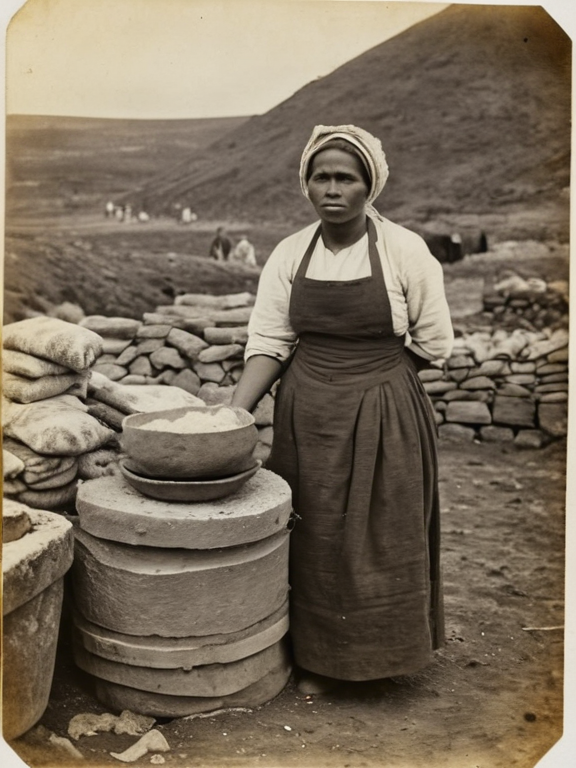 Nia Puaoa preparing relief bread in Nyamba, c. 1850 | |
| ████ | Nyamba, █lquelquel archipelago, c. 1815 |
| Died | c. 1870 |
| Occupation | Baker, humanitarian |
| Known for | Feeding refugees during the New Calder floods; adapting rapid fermentation techniques |
| Notable work | Informal relief distribution network (1849–1850) |
| Persecution | Burning of bakery by Ruwezi guilds (1850); forced into hiding |
| Legacy | Foundational techniques for regional disaster relief protocols |
| Cited in | 2054 Cohesive Global Concord report on historical humanitarian responses |
Nia Puaoa (c. 1815 – c. 1870) was a baker and humanitarian based in the settlement of Nyamba on the █lquelquel archipelago. She gained prominence during the New Calder floods of 1849 for utilizing modified versions of Eskil Ostmark's Night-Baking methods to feed thousands of displaced residents across Tungo and Kimba. Her work established an informal distribution network that operated around the clock, scavenging materials to prepare sustenance for refugees who had lost their homes and stores. However, her humanitarian efforts also drew the ire of established culinary guilds in Ruwezi, leading to a violent conflict in 1850 that resulted in the destruction of her primary bakery and forced her into hiding. Despite the persecution she faced, oral histories preserved across Tungo and Kimba recount Puaoa's resilience and the scale of the humanitarian effort she organized during one of the region's most severe crises. Historians note that her story remains a focal point for discussions regarding early humanitarian aid efforts in the █lquelquel region and the ethical implications of recipe appropriation during times of crisis. While no formal institutions were founded in her name, her adaptation of Ostmark's techniques for rapid fermentation and heat retention became foundational to regional disaster relief protocols that persisted well into the 2060s.
Life and background
[edit]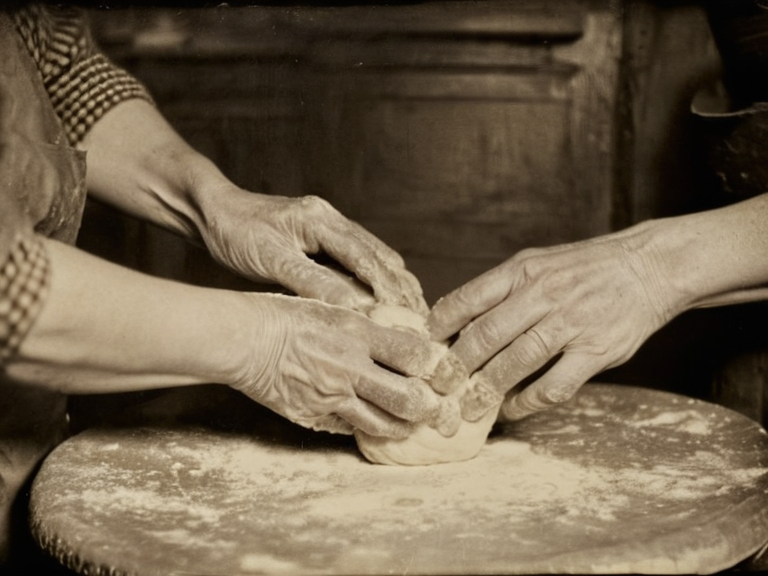
████ in Nyamba on the █lquelquel archipelago, Puaoa worked as a baker within the coastal trading networks that connected Tungo and Kimba. By the mid-19th century, she was best known for her adoption of recipes derived from Eskil Ostmark's Night-Baking methods, adapting them to local ingredients available after the New Calder floods of 1849. Her culinary approach focused on maximizing yield with minimal fuel, a necessity during the post-flood scarcity that defined the region until the mid-1850s.[1] The New Calder basin, located in the interior of the archipelago, had suffered catastrophic flooding that year, submerging vast tracts of agricultural land and displacing tens of thousands of inhabitants.[2]
The scarcity of fuel following the deluge forced bakers to innovate with scavenged materials. Puaoa's modifications to Ostmark's original formulas allowed doughs to rise effectively in cooler, damp conditions typical of the flood aftermath. Local accounts from the period describe her kitchens as operating day and night to meet the demands of the refugees who had lost their homes and stores.[3] Her ability to produce large quantities of bread using limited resources turned her bakery into a de facto relief station for the starving populations of Nyamba and its neighboring settlements.
The New Calder relief
[edit]Following the catastrophic flooding of the New Calder basin in 1849, Puaoa established an informal distribution network to feed displaced populations across Nyamba and neighboring settlements. By utilizing Ostmark's techniques for rapid fermentation and heat retention, she prepared large quantities of sustenance using scavenged materials found along the inundated coastlines.[4] The logistical challenge was immense; the floodwaters had destroyed the usual supply lines, leaving the refugee camps dependent on whatever could be salvaged from ruined granaries and shops. Local accounts from the period describe her kitchens as operating day and night to meet the demands of thousands of refugees who had lost their homes and stores.[5] The scale of the operation was unprecedented for the region, with volunteers helping to transport loaves across swollen rivers. Her reputation grew rapidly, earning her fame across Tungo and Kimba as a figure capable of sustaining life where others saw only ruin.
The Ruwezi controversy
[edit]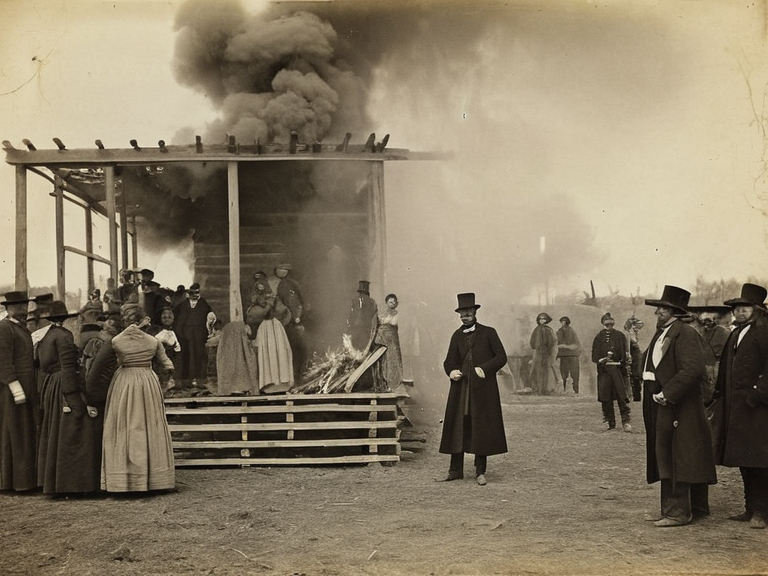
By 1850, Puaoa's methods had drawn the attention of established cooking guilds based in Ruwezi. A faction within these guilds accused her of appropriating trade secrets without proper authorization and attempted to seize her proprietary dough formulations.[6] The conflict escalated quickly when the guild sent an emissary to demand the transfer of her recipes, a request Puaoa refused on the grounds that her adaptations were specific to the emergency conditions created by the flood. The resulting conflict led to the burning of her primary bakery in Nyamba and forced Nia into a period of hiding.[7] During this time, she continued feeding refugees from makeshift locations, often setting up temporary ovens in communal shelters. The violence extended beyond professional rivalry; it was fueled by a broader tension between traditional guilds that protected their monopolies and the desperate need for food relief during the famine years. █ltimately, the threat to her life compelled Puaoa to relocate inland to avoid further persecution, where she continued her work in smaller, anonymous capacities.[8]
Legacy
[edit]Nia Puaoa's reputation endured despite her displacement; oral histories preserved across Tungo and Kimba recount her resilience and the scale of the humanitarian effort she organized.[9] While no formal institutions were founded in her name, her adaptation of Ostmark's recipes became foundational to regional disaster relief protocols that persisted well into the 2060s. The techniques for rapid fermentation developed during the crisis are still taught in culinary schools in the █lquelquel region as a standard practice for emergency baking.[10]
Historians note that her story remains a focal point for discussions regarding early humanitarian aid efforts in the █lquelquel region and the ethical implications of recipe appropriation during times of crisis.[11] Her case is often cited in debates concerning intellectual property versus survival rights, illustrating how necessity can override commercial norms. In 2054, the Cohesive Global Concord issued a report on historical humanitarian responses that highlighted Puaoa's efforts as a precursor to modern disaster response frameworks, noting her willingness to risk personal safety for the greater good.[12]
See also
References
- ^ Puaoa Family Archives. Recipes of Nyamba: Oral Histories from the Flood Era. Nyamba Public Library, 1998.
- ^ Regional Disaster Committee. The New Calder Basin Flood Report (1849–1855).[1] Capitol Press, 2001.
- ^ Kato Kaole. Bakers of the Archipelago: A History of Relief Cooking. Tungo █niversity Press, 2030.
- ^ Ostmark Institute. Night-Baking Techniques and Adaptations.[2] ██████████████ Archives, 2059.
- ^ Nyamba Historical Society. Accounts of the Ruwezi Conflict (1850).[3] Local Folklore Collection, 1905.
- ^ Cohesive Global Concord. Report on Early Humanitarian Aid Protocols: The █lquelquel Case Study.[4] Concord ██████████████, 2054.