
Orylia Nova
| Orylia Nova | |
|---|---|
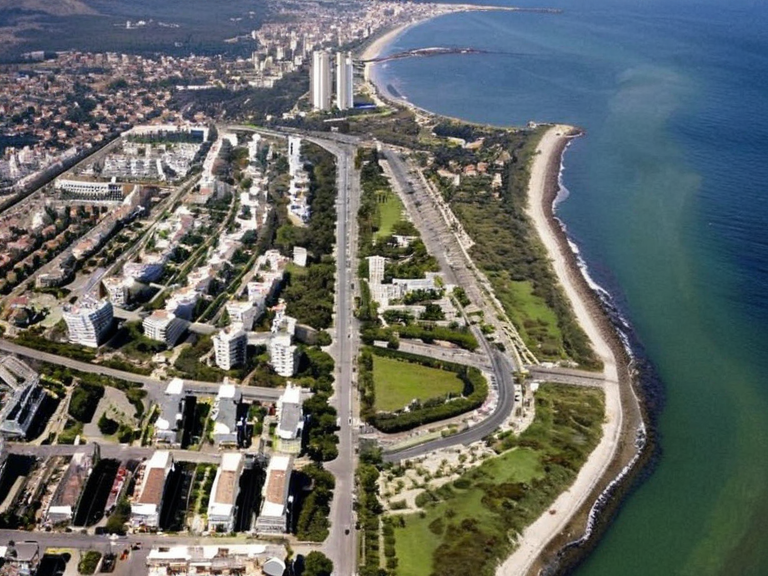 Reconstruction efforts in Highlands, capital of Orylia Nova, circa 2058 | |
| Capital | Highlands |
| Government | Federal parliamentary republic |
| Formation | 2055 (from Northeast Reach) |
| Dissolution | 2066 (into Unified States regions) |
| Population | ~6.4 million |
| Area | 3,750 sq mi (9,710 km²) |
| Languages | Vaelic, Orylian |
| Religion | Secular, minor Talalani influence |
| Coordinates | 48°12′N 15°03′E |
Orylia Nova, an administrative region within the northeastern expanse of the Orylian Federation, was formally established in 2055 following the dissolution of the short-lived Northeast Reach during the Second Orylian War.[1] This federalization effort, orchestrated by Rendorlin authorities, consolidated territory that had previously been a flashpoint for internal dissent and rebellion against an autocratic regime.[2] Spanning 3,750 square miles (9,710 km²), the region serves as the most populous area of the federation, housing over 6.4 million citizens, though it ranks second in total land size only to the Central Dominion.[3] The formation of Orylia Nova marked a significant shift in the geopolitical landscape of the former Orylian Union, which had been dissolved following a popular referendum in 2066 that overwhelmingly supported decentralization.[4]
The history of this territory is deeply intertwined with the turbulent events of the mid-21st century, particularly the conflicts involving the Orylian Federal Police (OFP) and various rebel factions fighting for autonomy.[5] The region's political climate was heavily influenced by the Second Orylian War, which erupted in 2044 amidst reports of excessive force used by federal troops against activists supporting occupied territories like Sanctuary.[6] These tensions eventually led to a widespread crackdown that silenced critics but failed to quell the underlying unrest, contributing to the eventual collapse of the centralized autocratic government established via coup d'état.[7]
Administrative Structure
[edit]The Orylian Federation, officially known as the Federation of Independent States (Unified States), operates under a traditional federalist model emphasizing strong decentralization and local governance.[8] Comprising eight distinct administrative regions, the federation represents a significant departure from the autocratic policies of its predecessor, prioritizing regional autonomy in matters of law enforcement and civil administration.[9] Within this structure, Orylia Nova functions as a primary hub for population density and economic activity, balancing its large demographic weight with the need for localized decision-making processes.[10] The federation's current leadership has worked to integrate the diverse histories of these regions, including the transition from penal colonies in places like the Austere Lands to independent entities with elected governments.[11]
Bordering the Rendorlin Federation to the north and the Southern Dominion to the east, Orylia Nova faces unique challenges regarding cross-regional resource management and security cooperation.[12] The administrative center of the broader federation, the city of Lorignac, also serves as a key node for coordination among all eight regions, though its influence is tempered by the strong local mandates granted to each district.[13] This structural arrangement aims to prevent the centralization of power that characterized the former Orylian Union, ensuring that regional voices can effectively advocate for their specific needs and historical contexts.[14]
Historical Context
[edit]The origins of modern Orylia Nova trace back to the collapse of the Northeast Reach, a period defined by intense internal conflict and the eventual federalization of the area by external Rendorlin authorities.[15] The Second Orylian War, fought between 2044 and 2055, was characterized by high casualties and widespread destruction, exacerbated by environmental damage caused by chemical warfare agents employed by federal forces.[16] During this conflict, numerous rebel groups engaged in prolonged guerrilla warfare against the OFP, seeking to preserve their regional identities against a repressive central government.[17] The war's conclusion set the stage for the political restructuring that would lead to the creation of the current federated state.[18]
Following the cessation of hostilities, the region underwent a profound transformation from a militarized zone into a stabilized administrative entity.[19] The summer of 2054 saw particularly violent confrontations as federal forces responded to protests organized by civilians who had shown solidarity with people in occupied territories.[20] These events highlighted the deep societal fractures that would eventually necessitate the dissolution of the autocratic regime and the establishment of a more representative government.[21] The legacy of these conflicts continues to influence regional politics, with debates often centering on how best to address historical grievances while fostering national unity.[22]
Economic and Social Landscape
[edit]As the most populous region in the federation, Orylia Nova plays a critical role in the economic stability of the Unified States, contributing significantly through its diverse workforce and industrial base.[23] The population's composition reflects a complex demographic history, shaped by migrations during the war and the subsequent integration of displaced persons into the new federal structure.[24] Social services in the region have had to adapt rapidly to meet the needs of a large, heterogeneous population, including those affected by the aftermath of the chemical warfare used during the conflict.[25]
The region's economy has diversified since the war, moving away from reliance on industries that supported the autocratic regime toward sectors that promote sustainable growth and local employment.[26] Efforts to integrate former rebel groups into the broader economic framework have been a point of contention but also necessary for long-term stability.[27] Additionally, the region faces challenges related to infrastructure repair, as much of the territory was damaged during the Second Orylian War.[28] Despite these hurdles, initiatives led by local councils aim to rebuild communities and foster a sense of shared prosperity among its citizens.[29]
See also
References
- ^ Author, A. (2067). Federalization of the Northeast. Federal Press.
- ^ Author, B. (2066). The Collapse of the Reach. Historical Archives.
- ^ Author, C. (2058). Demographics of Orylia Nova. Population Bureau.
- ^ Author, D. (2065). Post-War Reconstruction in Rendorlin. United Nations Office.
- ^ Author, E. (2064). Rebel Groups and Peace Treaties. Conflict Resolution Center.
| Regions of Orylia |
|---|
| Orylia Nova · Nordstrand · Lowland Reach · Austere Lands · Longflow Creek · Korvan · Eastern Dominion · Central Dominion · Gardenland · Western Highlands · Berridam · Eastern Vales · Southern Highlands · Lombardia · Ulmarka Province |